
Anxiety is not listed as an official side effect of tirzepatide in FDA approved prescribing information for either Mounjaro or Zepbound. The major clinical trials (SURPASS for diabetes, SURMOUNT for weight management) did not identify anxiety as a common adverse event. However, some people do report feeling anxious after starting tirzepatide, and there are a few reasons why that might happen even if drug itself is not directly causing it.
What Does FDA Label Say About Anxiety?
The official prescribing information for both Mounjaro and Zepbound does not include anxiety as a recognized side effect. The most commonly reported adverse reactions in clinical trials were gastrointestinal: nausea (up to 18 to 24% of users), diarrhea (up to 17%), vomiting, constipation, decreased appetite, dyspepsia, and abdominal pain.
That said, Zepbound label does include a warning to monitor patients for emergence or worsening of depression, suicidal thoughts or behaviors, and unusual changes in mood. This warning exists because other chronic weight management medications have been associated with psychiatric events, so FDA requires monitoring as a precaution. In 2024, FDA issued a safety communication stating that their review did not find clear evidence of an increased risk of suicidal thoughts or actions with GLP-1 receptor agonists, but they continue to evaluate data.
Why Might You Feel Anxious on Tirzepatide?
Even though anxiety is not a recognized direct side effect, there are several indirect pathways that can make you feel anxious while taking tirzepatide.
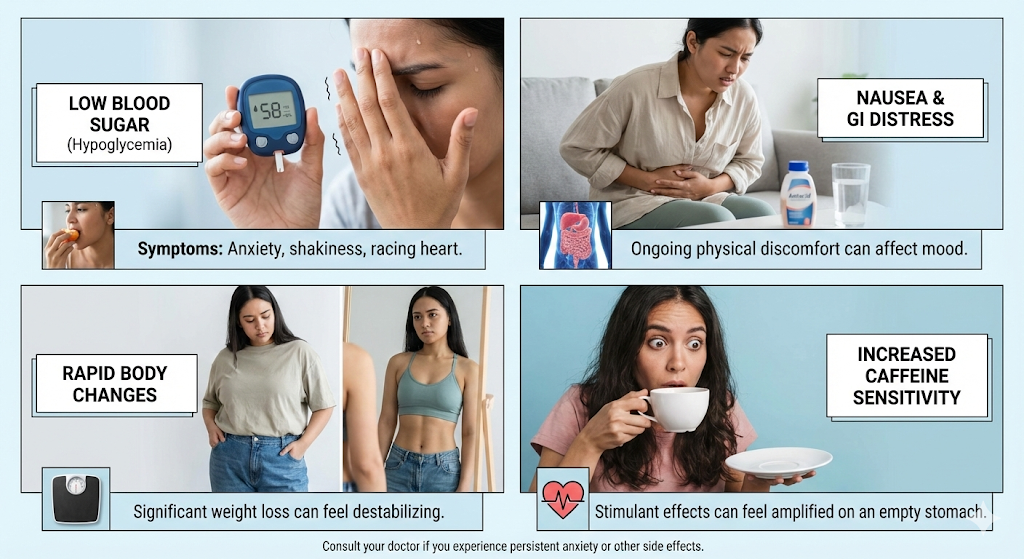
Blood sugar drops. This is one of most common reasons. Tirzepatide lowers blood sugar, and if you are also taking insulin or a sulfonylurea alongside it, your blood sugar can drop too low (hypoglycemia). Symptoms of low blood sugar include anxiety, nervousness, shakiness, a racing heart, sweating, confusion, and irritability. These symptoms can feel identical to a panic attack.
Even if you are not taking other diabetes medications, rapid shifts in blood sugar from eating much less than usual (which is common with tirzepatide's appetite suppression) can trigger anxiety like feelings.
Nausea and GI distress. Persistent nausea, vomiting, and stomach discomfort can take a real toll on your mental state. When your body feels physically unwell for days or weeks at a time, it is normal for anxiety to creep in. The gut and brain are closely connected through vagus nerve, and ongoing GI symptoms can directly affect mood and stress levels.
Rapid body changes. Significant weight loss over a short period can bring unexpected emotional shifts. Changes in body image, shifts in how others treat you, and physical experience of losing weight quickly can all feel destabilizing. Some people describe feeling "not like themselves" during rapid weight loss, which can register as anxiety.
Caffeine sensitivity changes. Some tirzepatide users notice that their tolerance to caffeine shifts as they eat and drink less. If you are still consuming same amount of coffee on a much emptier stomach, stimulant effects can feel amplified.
What Does Research Show About GLP-1 Drugs and Psychiatric Events?
A pharmacovigilance analysis published in PMC reviewed psychiatric adverse event reports for semaglutide, liraglutide, and tirzepatide in European EudraVigilance database. Between January 2021 and May 2023, out of over 31,000 total adverse event reports for these three drugs, 372 included psychiatric events. That about 1.2% of all reports.
Depression was most frequently reported psychiatric event, followed by anxiety and then suicidal ideation. Tirzepatide had far fewer reports overall (740 total adverse event reports during study period), likely because it was approved more recently and had fewer users at time.
It is important to understand what this data means and what it does not. These are voluntary reports, not controlled study results. They show that some people experience psychiatric symptoms while on these medications, but they cannot prove drug caused those symptoms. Many people taking GLP-1 medications already have risk factors for anxiety and depression, including obesity itself, which has a well documented bidirectional relationship with mood disorders.
How Can You Manage Anxiety While on Tirzepatide?
If you are experiencing anxiety after starting tirzepatide, here are some practical steps.
First, check your blood sugar. If you are on diabetes medications alongside tirzepatide, talk to your doctor about adjusting doses to prevent hypoglycemia. Anxiety from low blood sugar usually resolves once levels normalize.
Second, eat regular, balanced meals. Even though your appetite may be reduced, skipping meals entirely can cause blood sugar instability that feeds anxiety. Eating small protein rich meals every few hours can help keep levels steady.
Third, be mindful of stimulants. If you are drinking same amount of coffee or energy drinks but eating significantly less, stimulant effect will hit harder. Consider cutting back and seeing if that helps.
Fourth, stay hydrated. Dehydration common with tirzepatide, especially if you are experiencing vomiting or diarrhea. Dehydration alone can cause lightheadedness, racing heart, and anxiety like symptoms.
If your anxiety is persistent or worsening, talk to your doctor. They can evaluate whether an adjustment to your tirzepatide dose might help or whether anxiety has a separate cause that needs its own treatment. If anxiety medication being considered, it is worth understanding how those drugs interact with weight, since that often a concern for people already on tirzepatide. This article on whether buspirone causes weight gain is a helpful resource for that specific question. Similarly, if an SSRI like escitalopram being considered, this guide on whether Lexapro causes weight gain covers what evidence shows.
When Should You Call Your Doctor?
Reach out to your healthcare provider if you experience any of following:
- Anxiety that is persistent, worsening, or interfering with daily life
- Feelings of depression or hopelessness
- Suicidal thoughts or thoughts of self harm
- Panic attacks or severe episodes of nervousness
- Physical symptoms like rapid heartbeat, trembling, or dizziness that do not resolve with eating
Bottom Line
Anxiety is not a recognized side effect of tirzepatide based on current FDA labeling and major clinical trial data. However, some people do experience anxiety like symptoms, most often because of blood sugar fluctuations, GI distress, rapid body changes, or stimulant sensitivity. If you are feeling anxious on tirzepatide, do not ignore it. Track your symptoms, check your blood sugar if applicable, and talk to your doctor. Most of the time, these symptoms can be managed with practical adjustments or by addressing the underlying cause.
