Health Library
Why Is My Belly Button Bleeding?
February 6, 2026
Question on this topic? Get an instant answer from August.
Finding blood around your belly button can feel alarming, but in most cases, it points to something minor and treatable. Your belly button is a small, sensitive area where skin folds meet, making it prone to irritation, infection, or minor injury. Understanding what might be happening can help you feel more in control and know when to seek care. Let's walk through this together with care and clarity.
What Does Belly Button Bleeding Usually Mean?
Belly button bleeding typically signals irritation or a small infection in that delicate area. The blood you see might be bright red and fresh, or it could be mixed with discharge that looks yellow or crusty.
Most of the time, this happens because the belly button creates a warm, moist environment where bacteria or yeast can grow. The skin inside can also get rubbed or scratched more easily than you might think. These common causes are usually straightforward to address with gentle care at home or a quick visit to your doctor.
Having said that, bleeding can also come from other issues that need a closer look. That doesn't mean something serious is happening, just that your body is asking for a bit more attention. Let's explore the possibilities so you know what to watch for.
What Are the Common Causes of Belly Button Bleeding?
Several everyday issues can lead to bleeding in and around your belly button. Understanding these can help you identify what might be going on and how to respond calmly.
Here are the conditions you're most likely to encounter, each explained so you can recognize them:
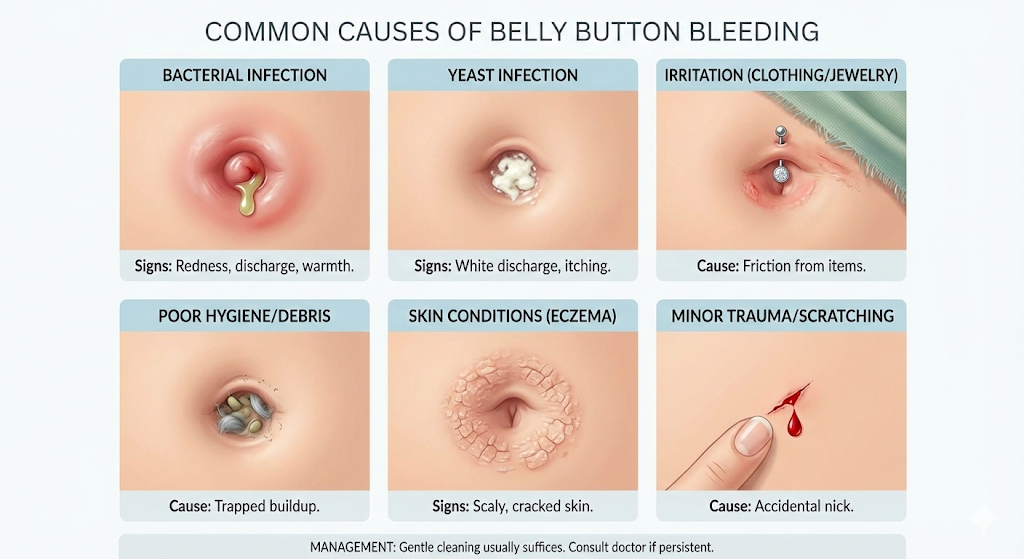
- Bacterial infection: Bacteria can settle into your belly button, especially if moisture or lint gets trapped there. You might notice redness, warmth, swelling, and a smell along with the bleeding. The area may feel tender when you touch it. This happens more often if you have a deeper belly button or sweat a lot.
- Yeast infection: Yeast thrives in warm, damp places, and your belly button can be one of them. You may see a thick, whitish discharge along with bleeding, itching, and redness. This is particularly common if you've recently taken antibiotics or have diabetes, as these can change the balance of organisms on your skin.
- Irritation from clothing or jewelry: Tight waistbands, rough fabrics, or belly button piercings can rub against delicate skin and cause small tears. The bleeding might be light and intermittent, appearing after you've worn certain clothes or touched the area. You might also notice the skin looks raw or slightly scraped.
- Poor hygiene or trapped debris: Lint, soap residue, dead skin cells, and sweat can build up inside your belly button. Over time, this can irritate the skin enough to cause bleeding. You might see small flakes or gunk along with the blood. This is especially common if your belly button is deep or if you forget to clean it regularly.
- Skin conditions like eczema or psoriasis: If you have these conditions elsewhere on your body, they can also appear in your belly button. The skin may look scaly, inflamed, or cracked, and scratching can lead to bleeding. You might notice cycles of itching and flaking that come and go.
- Minor trauma or scratching: Sometimes you might accidentally scratch your belly button in your sleep or while drying off after a shower. Even a small nick can bleed more than expected because the skin there is thin. You may not even remember the injury happening.
These causes share one thing in common: they're manageable with the right approach. Most respond well to gentle cleaning, avoiding irritants, and sometimes a topical treatment your doctor recommends. You're not dealing with something mysterious, just a part of your body that needs a little extra care right now.
Are There Any Less Common or Rare Causes I Should Know About?
While most belly button bleeding comes from the causes we just covered, there are some less common reasons that deserve attention. Knowing about these can help you recognize when something needs a more thorough evaluation.
Let's look at these possibilities with the same calm clarity, understanding that rare doesn't mean impossible:
- Umbilical granuloma: This is a small, reddish bump of tissue that can form in your belly button, usually after an injury or infection heals. It looks moist and may bleed easily when touched. While more common in newborns, adults can develop them too. They're not dangerous, but they often need medical treatment to fully resolve.
- Urachal cyst or sinus: Before you were born, a structure called the urachus connected your bladder to your belly button. Normally it closes after birth, but sometimes a small pouch or channel remains. If this gets infected, it can cause pain, discharge, and bleeding from your belly button. You might also notice discomfort below your belly button or when urinating.
- Endometriosis in the belly button: If you menstruate, you might have endometrial tissue growing in your belly button. This rare condition can cause bleeding that happens around the time of your period. You may also experience pain or swelling in your belly button cyclically. It's called umbilical endometriosis, and it needs specialized care.
- Umbilical hernia: This happens when tissue or intestine pushes through a weak spot in your abdominal wall near your belly button. While hernias don't usually bleed on their own, the overlying skin can become irritated or damaged. You might notice a bulge that gets bigger when you cough or strain, along with discomfort.
- Skin cancer: Very rarely, a persistent sore or bleeding spot in your belly button could be skin cancer. This is more likely if you have a lesion that doesn't heal, changes shape or color, or bleeds repeatedly without an obvious cause. It's important not to panic, but do have it checked if bleeding continues despite treatment.
- Inflammatory bowel disease complications: In rare cases, people with Crohn disease can develop a fistula, which is an abnormal connection between the intestine and the skin. If this happens near the belly button, it can cause drainage and bleeding. You would likely have other symptoms like abdominal pain and diarrhea too.
These conditions are much less common than simple infections or irritation. That said, if your symptoms don't improve with basic care, or if you notice unusual patterns like bleeding tied to your menstrual cycle or persistent lumps, it's worth having a conversation with your doctor. They can help determine what's happening and guide you toward the right care.
What Symptoms Might Come Along With the Bleeding?
Belly button bleeding rarely happens in isolation. Paying attention to other symptoms can give you and your doctor important clues about what's causing the bleeding.
Here are the signs you might notice alongside the bleeding, each one adding a piece to the puzzle:
- Discharge: You might see fluid coming from your belly button that's yellow, green, white, or even brownish. It may have a foul smell if infection is present. The texture can range from thin and watery to thick and creamy.
- Redness and swelling: The skin around your belly button may look inflamed and feel puffy to the touch. The redness might spread outward from the belly button itself.
- Pain or tenderness: The area could feel sore, especially when you press on it or move in certain ways. The pain might be sharp and immediate or a dull, constant ache.
- Itching or burning: You may feel an uncomfortable itch or a burning sensation that makes you want to scratch, which can worsen the bleeding. This is particularly common with yeast infections or skin conditions.
- Warmth: The skin around your belly button might feel warmer than the surrounding areas, which often indicates inflammation or infection.
- Fever or feeling unwell: If the infection is more significant, you could develop a fever, feel tired, or just generally off. This is your body's way of fighting the infection.
- A visible lump or bulge: You might see or feel a bump in or near your belly button that wasn't there before. This could indicate a granuloma, cyst, or hernia.
These accompanying symptoms help paint a fuller picture of what's happening. If you're experiencing several of these together, especially fever or increasing pain, it's a good idea to reach out to your healthcare provider sooner rather than later. They can assess the situation and help you feel better faster.
When Should I See a Doctor About Belly Button Bleeding?
Most belly button bleeding clears up with simple home care, but certain signs suggest it's time to get professional guidance. Knowing when to seek help can prevent complications and give you peace of mind.
Consider reaching out to your doctor if you notice any of the following situations, which signal that your body might need more support:
- Bleeding that doesn't stop: If gentle pressure and cleaning don't slow or stop the bleeding after a day or two, something more persistent might be happening.
- Signs of infection: Increasing redness, swelling, warmth, pus-like discharge, or a bad smell all suggest an infection that may need antibiotics or other treatment.
- Fever: A temperature above 100.4 degrees Fahrenheit along with belly button symptoms means your body is fighting something significant.
- Severe or worsening pain: If the discomfort is getting worse rather than better, or if it's interfering with your daily activities, you need an evaluation.
- A lump or mass: Any new bump or swelling in or around your belly button should be checked, especially if it's growing or changing.
- Bleeding that keeps coming back: If the bleeding resolves and then returns repeatedly, this pattern suggests an underlying cause that hasn't been addressed.
- Bleeding tied to your menstrual cycle: If you notice the bleeding happens around the same time as your period each month, this could indicate endometriosis.
- You have diabetes or a weakened immune system: Infections can become more serious more quickly if your body has a harder time fighting them, so earlier medical attention is wise.
These are not reasons to panic, but they are good reasons to check in with a healthcare provider. They can examine your belly button, possibly run some tests, and help you understand exactly what's going on. Most issues are highly treatable once properly identified.
How Is Belly Button Bleeding Diagnosed?
Your doctor will start by listening to your story and examining your belly button closely. This simple assessment often reveals the cause right away.
They'll look at the appearance of your belly button, check for discharge, and gently feel the area for tenderness or lumps. They may ask about your hygiene routine, recent activities, piercings, or other health conditions. This conversation helps them understand the full context.
If the cause isn't immediately clear, your doctor might take a sample of any discharge to test for bacteria or yeast. This helps them choose the most effective treatment. In some cases, they may order an ultrasound to look at the structures beneath the skin, especially if they suspect a cyst, hernia, or other internal issue.
For persistent or unusual cases, a referral to a specialist like a dermatologist or surgeon might be helpful. They have additional tools and expertise to investigate rare causes. The goal is always to find the root of the problem so you can get the right care.
What Treatments Are Available for Belly Button Bleeding?
Treatment depends entirely on what's causing the bleeding. Once your doctor identifies the issue, they can recommend a plan tailored to your situation.
Here are the most common approaches you might encounter, each one aimed at addressing the specific cause and helping you heal:
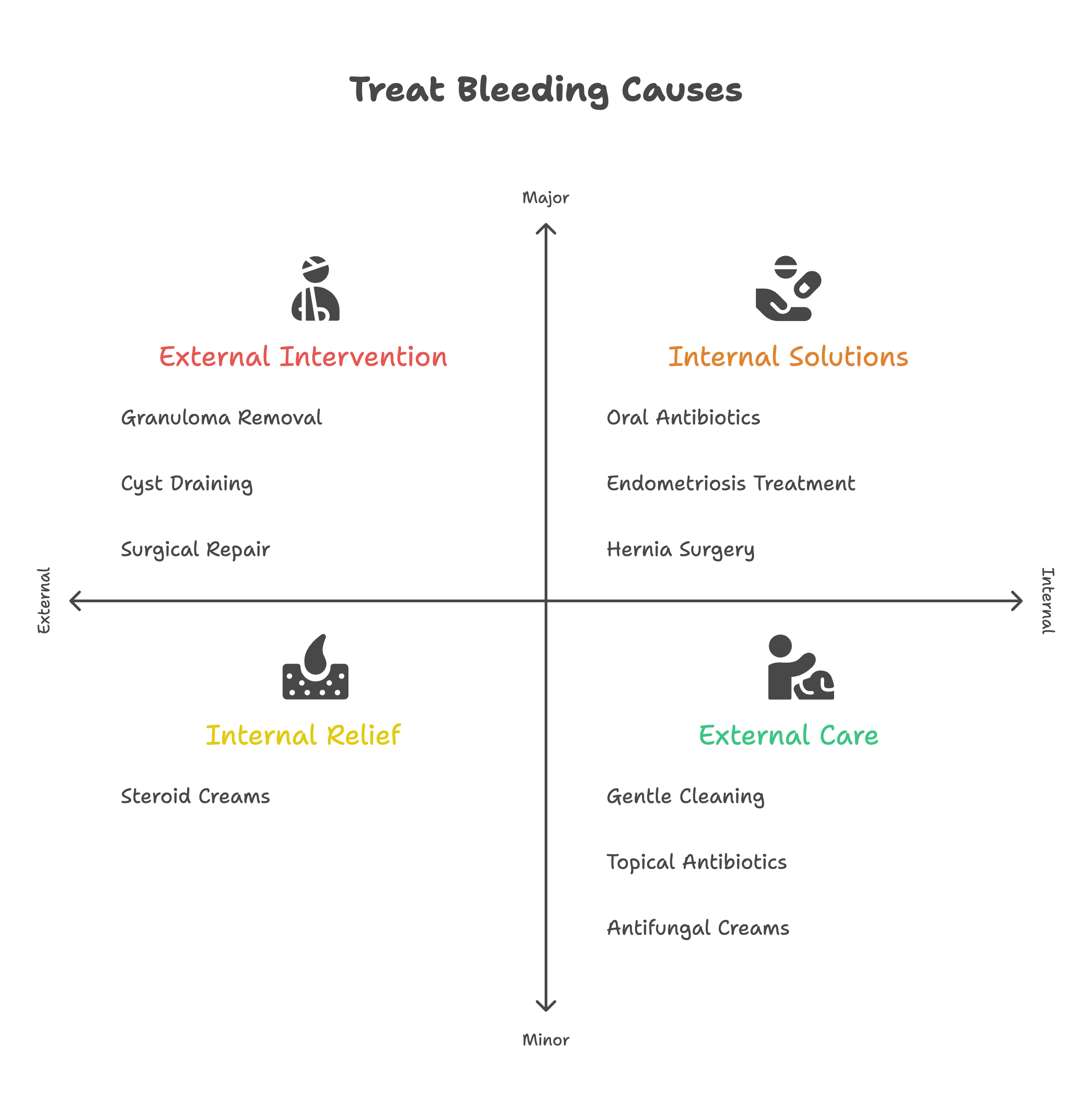
- Gentle cleaning and hygiene: For irritation or minor infection, your doctor may advise washing your belly button daily with warm water and mild soap, then drying it thoroughly. Keeping the area clean and dry can resolve many issues on its own.
- Topical antibiotics: If bacteria are causing the infection, a cream or ointment applied directly to your belly button can clear it up. You'll usually apply this once or twice a day for about a week.
- Antifungal creams: For yeast infections, an antifungal medication helps restore balance. These are often the same creams used for athlete's foot or other fungal skin issues.
- Oral antibiotics: If the infection is deeper or more widespread, your doctor might prescribe pills to take by mouth. This helps your body fight the infection from the inside out.
- Steroid creams: For skin conditions like eczema or psoriasis, a mild steroid cream can reduce inflammation and itching. Your doctor will explain how to use it safely.
- Removal of granuloma: If you have a small tissue growth, your doctor can remove it with a simple in-office procedure. They might use a chemical called silver nitrate or freeze it off. This is quick and usually not very painful.
- Draining a cyst or abscess: If fluid or pus has collected, your doctor may need to drain it with a small needle or incision. This relieves pressure and helps the area heal faster.
- Surgery for structural issues: Rare problems like urachal cysts, fistulas, or hernias may require surgical repair. Your doctor will discuss the procedure, recovery, and what to expect in detail.
- Treatment for endometriosis: If endometrial tissue is causing the bleeding, hormonal medications or surgery might be recommended. A gynecologist or endometriosis specialist can guide you through the options.
Your doctor will walk you through the treatment plan and answer any questions you have. Most causes respond well to treatment, and you should start feeling better within a few days to a couple of weeks. Following their instructions carefully gives you the best chance of a full recovery.
Can I Do Anything at Home to Help?
Absolutely. There are several gentle steps you can take at home to support healing and prevent future problems. These simple practices can make a real difference.
Start by keeping your belly button clean and dry. Wash it gently with warm water and mild, unscented soap when you shower. Pat it completely dry with a clean towel afterward. Moisture left behind can encourage bacteria or yeast to grow.
Avoid tight clothing that rubs or presses on your belly button while it's healing. Loose, breathable fabrics like cotton allow air to circulate and reduce irritation. If you have a belly button piercing, keep it clean and consider removing the jewelry temporarily if it's causing trouble.
Don't pick, scratch, or poke at your belly button, even if it itches. This can introduce more bacteria and worsen the bleeding. If itching is intense, a cool, damp cloth held gently against the area can bring relief.
If you notice signs of infection like increasing redness or discharge, reach out to your doctor rather than trying to treat it yourself with random creams or remedies. Some over-the-counter products can actually irritate the area more. Your doctor can recommend something safe and effective.
Lastly, if you have conditions like diabetes, do your best to keep your blood sugar levels stable. High blood sugar can slow healing and make infections more likely. These small, consistent actions support your body's natural ability to heal.
What Should I Remember Most?
Belly button bleeding can feel worrying, but it's almost always something treatable and manageable. Your body is communicating that a small area needs attention, not signaling a crisis.
Most cases come from minor infections, irritation, or hygiene issues that clear up with gentle care. Even the less common causes have effective treatments available. The key is staying calm, paying attention to your symptoms, and reaching out for help when things don't improve or if you notice concerning signs.
You know your body best. Trust your instincts about when something feels off, and don't hesitate to ask questions or seek guidance. Healthcare providers are there to support you, not to judge.
With a little care and the right approach, your belly button can heal and return to normal. You're doing the right thing by seeking information and taking your health seriously. That's something to feel good about.
Health Companion
trusted by 6M people
Get clear medical guidance
on symptoms, medications, and lab reports.
Your health journey starts with a single question
Download August today. No appointments. Just answers you can trust.
