Health Library
How Long Does Nexplanon Last? Duration, Replacement, and More
February 23, 2026
Question on this topic? Get an instant answer from August.
Nexplanon is approved to prevent pregnancy for up to three years. It a small, flexible rod about size of a matchstick that a healthcare provider inserts just under skin of your upper arm. Once in place, it steadily releases a hormone called etonogestrel, which stops ovulation and thickens cervical mucus to keep sperm from reaching an egg.
After three years, implant should be removed or replaced. Let's break down what that timeline looks like in practice and what you should know along way.
Why Does It Last Three Years?
The three-year timeframe is based on how long implant can release enough hormone to reliably prevent pregnancy. When Nexplanon first inserted, it releases a higher amount of etonogestrel. Over time, that amount gradually decreases. By end of third year, hormone levels are still effective, but they are approaching lower limit.
According to U.S. National Library of Medicine, etonogestrel implant may be replaced after three years if you want to continue using it. You can review full medication details: Etonogestrel Implant
Keeping implant past three-year mark not recommended because hormone levels may drop too low to prevent pregnancy consistently.
What Happens When You Get It Replaced?
Replacing Nexplanon is a quick office visit. Your provider numbs area on your inner upper arm, makes a tiny incision, and removes old implant. If you want to continue using implant, a new one can be inserted through same incision or a nearby spot during same appointment.
The whole process usually takes about 15 to 20 minutes. You may have some bruising, tenderness, or swelling at site for a few days afterward. Most people go back to their normal activities same day.
If you decide not to replace Nexplanon, your fertility can return quickly. Many people are able to get pregnant within weeks of removal, so if you are not planning a pregnancy, you will want to have another form of birth control ready.

People also ask
The removal and insertion process is quick and generally takes about 15 to 20 minutes in a standard office visit. Most people experience minimal discomfort and return to their regular activities the same day. Plan for a few days of potential tenderness or mild bruising at the site.
Your fertility returns very quickly once the device is removed, often within a few weeks. If you are not planning to conceive immediately, you should have another form of birth control ready to go before your appointment. Do not assume you have a buffer period after the removal.
What Are Common Side Effects During Three Years?
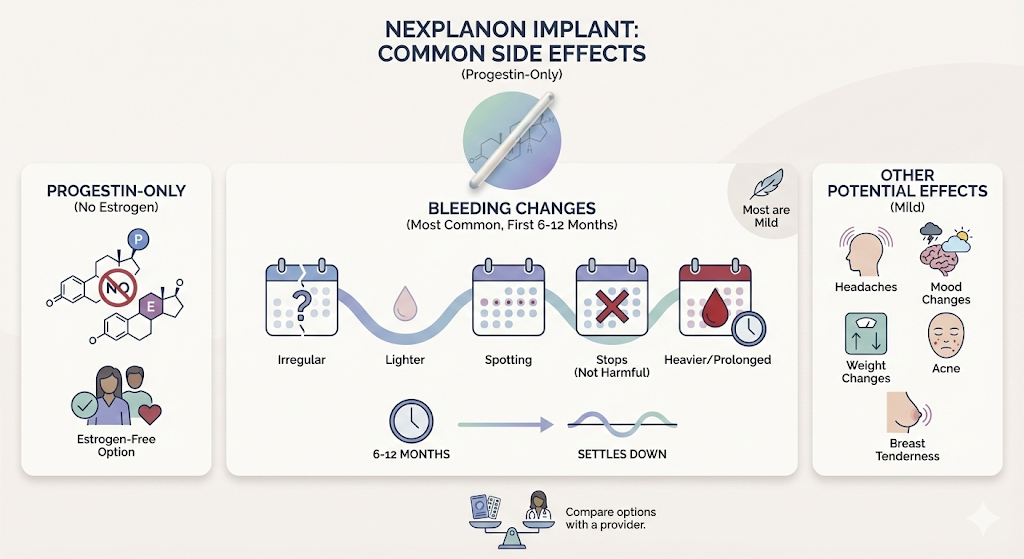
Nexplanon is a progestin-only method, which means it uses just one hormone and does not contain estrogen. This makes it a good option for people who cannot use estrogen-based birth control. But progestin can still cause some side effects.
The most common change people notice in their bleeding pattern. Here what you might experience:
- Irregular periods that come at unpredictable times
- Lighter periods than what you are used to
- Spotting between periods
- Periods that stop completely (this not harmful)
- Occasionally, heavier or prolonged bleeding
Changes in bleeding patterns are most frequent reason people ask about having implant removed early. These changes are usually most noticeable in first six to twelve months and often settle down over time.
Other possible side effects include headaches, mood changes, weight changes, acne, and breast tenderness. Most of these are mild. If you are exploring different birth control options and want to compare how low-hormone methods work, this covers several approaches: Low Estrogen Birth Control Options
People also ask
Many people find that irregular bleeding and other mild symptoms like spotting subside within the first six to twelve months. Your body often needs time to adjust to the consistent hormone levels provided by the implant. Keep a log of your cycles to see if you notice a gradual shift toward consistency.
Most side effects associated with Nexplanon are considered mild, such as headaches or breast tenderness. If you experience severe symptoms or have health concerns that worry you, reach out to your clinic for a checkup. Listen to your body and prioritize professional guidance for anything that feels out of the ordinary.
Can Anything Make Nexplanon Less Effective?
Yes. Certain medications can lower hormone levels from implant and reduce its effectiveness. These include some seizure medications, certain HIV drugs, antibiotic rifampin, and herbal supplement St. John's wort. According to U.S. National Library of Medicine, St. John's wort is specifically flagged as a product that may interact with etonogestrel implant.
If you take any of these medications, let your provider know. They may recommend using a backup method of contraception or switching to a different birth control option that is not affected by these interactions.
People also ask
While most common medications do not interfere, herbal supplements like St. John's wort are known to lower the effectiveness of the implant. Always double-check your current supplement and medication list with your doctor to ensure nothing interacts with your birth control. Use a backup barrier method if you are ever unsure about a new medication.
There is usually no physical sign that your hormone levels have dipped, which makes awareness of drug interactions essential. Since you cannot monitor the hormone output yourself, relying on confirmed medical advice regarding your current prescriptions is your best strategy. Err on the side of caution by using backup protection if a known interaction occurs.
How Do You Know When It Is Time to Replace?
The simplest answer is to mark your calendar. When your provider inserts Nexplanon, they will give you a card with insertion date and date by which it should be removed or replaced. Keeping track of this date is most reliable way to stay on top of your protection.
If you lose track, your provider's office will have your insertion date on file. You can also feel implant under your skin at any time. If you ever cannot feel it, or if it seems bent or broken, contact your provider. They may use imaging to check that it is still in correct position.
Is Nexplanon Right for Long Term Use?
Many people use Nexplanon continuously for years by replacing it at appropriate interval. It is one of most effective forms of birth control available, with a success rate above 99 percent. Because you do not have to remember to take anything daily, there is very little room for user error.
It is also reversible. Unlike permanent sterilization, you can stop using Nexplanon at any time and your ability to become pregnant returns quickly. If you are interested in understanding how different hormonal methods compare, including implants, injections, and pellets, this resource covers a related topic: Side Effects of Hormone Pellets
Bottom Line
Nexplanon is FDA approved to last three years, with updated guidance allowing up to five years for certain individuals. It is one of most effective and low-maintenance birth control methods available. When time comes, replacing it a simple office visit.
If you are approaching your replacement date or wondering whether implant still right for you, a quick conversation with your healthcare provider can give you a clear plan. You are in control of your options, and staying informed best way to make a decision that fits your life.
Health Companion
trusted by 6M people
Get clear medical guidance
on symptoms, medications, and lab reports.
Your health journey starts with a single question
Download August today. No appointments. Just answers you can trust.
