Health Library
Why Is My Semen Watery? Common Causes and What It Means
February 23, 2026
Question on this topic? Get an instant answer from August.
If your semen looks thinner or more watery than usual, you are not alone in noticing. Semen consistency can vary quite a bit from day to day, and most of time, watery semen is completely normal. It does not automatically mean something is wrong with your health or your fertility.
What Does Normal Semen Look Like?
Healthy semen typically a thick, whitish-gray fluid. Right after ejaculation, it usually has a gel-like texture. Within about 15 to 30 minutes, it naturally liquefies and becomes more fluid. This a normal process called liquefaction.
The appearance and thickness of semen can change based on many factors, including how recently you ejaculated, how hydrated you are, your diet, and your overall health. So a single instance of watery semen rarely something to worry about.
According to U.S. National Library of Medicine, a standard semen analysis measures several qualities including volume, sperm count, sperm movement, and time it takes for semen to liquefy. Normal semen volume ranges from 1.5 to 5.0 milliliters per ejaculation. You can learn more about what a semen analysis evaluates here: Semen Analysis Overview
What Are Most Common Causes of Watery Semen?
There are several everyday reasons why your semen may appear thinner than usual. Let's walk through them from most common to less frequent.
Frequent ejaculation. This is most common reason. If you are ejaculating multiple times in a short period, your body may not have had enough time to produce a full volume of semen. The result a thinner, more transparent fluid with a lower sperm concentration. This temporary and resolves on its own with a day or two of rest.
If you have been wondering whether frequent ejaculation can affect your sperm count over time, this article walks through what research says: Does Masturbation Affect Sperm Count?
Dehydration. Your body needs adequate fluid to produce semen. When you are not drinking enough water, semen volume may drop, and its consistency can change. Staying well hydrated one of simplest things you can do to support normal semen quality.
Zinc deficiency. Zinc plays an important role in sperm production and testosterone regulation. Low zinc levels have been linked to reduced semen volume and lower sperm counts. Foods rich in zinc include oysters, red meat, poultry, beans, nuts, and whole grains. If your diet has been lacking in these foods, it may contribute to thinner semen over time.
Pre ejaculate fluid. Sometimes what you are seeing is not semen at all. Pre-ejaculatory fluid, which released before orgasm, clear and watery by nature. If ejaculation happens quickly after arousal, this fluid can mix with semen and make overall appearance thinner.

People also ask
Watery semen is usually temporary and often resolves once the underlying cause, such as dehydration or frequent ejaculation, is addressed. Your body typically restores its normal consistency within a few days of rest and proper hydration. Try tracking your habits for one week to see if the texture returns to normal.
Frequent ejaculation does not cause permanent damage, but it does temporarily lower the concentration of sperm in your fluid. The body naturally replenishes its supply, meaning a short break is all that is typically required to return to your baseline. Most men find that a day or two of rest is sufficient.
Can Watery Semen Be a Sign of Low Sperm Count?
It can, but it is not a reliable indicator on its own. Semen gets much of its volume and thickness from fluids produced by seminal vesicles and prostate gland. Sperm cells themselves make up only a small fraction of total fluid. So semen can look watery even when sperm count normal, and it can look thick even when sperm count low.
That said, consistently watery semen combined with difficulty conceiving may be worth investigating. A semen analysis most accurate way to check your sperm count and overall semen health. This test looks at sperm concentration, movement, and shape, all of which matter more than how semen looks to eye.
According to U.S. National Library of Medicine, about half of couples who are unable to conceive have a male factor contributing to infertility. Causes of male infertility can include hormonal imbalances, infections, exposure to heat, certain medications, and lifestyle factors like heavy alcohol use or smoking. You can review full list of known causes here: Male Infertility Causes and Information
People also ask
You cannot accurately assess sperm count by the appearance of your semen alone because sperm cells only make up a tiny portion of the total fluid volume. Many men with normal sperm counts have thinner-looking fluid, while others with low counts have thick, opaque semen. A formal laboratory analysis is the only way to get a definitive measurement.
Watery semen is not a definitive diagnosis of infertility and does not mean you cannot conceive. While changes in consistency can sometimes correlate with other factors, they are not a reliable indicator of your ability to father children. Many people with concerns about watery fluid go on to conceive without difficulty.
Can Infections Cause Watery Semen?
Yes, certain infections can affect semen quality and consistency. Infections of reproductive tract, including prostate (prostatitis), epididymis (epididymitis), or urethra (urethritis), can alter fluids that make up semen. Sexually transmitted infections like chlamydia and gonorrhea can also affect semen production and may cause it to appear thinner, discolored, or have an unusual smell.
If your semen has changed in consistency and you are also experiencing symptoms like burning during urination, pain in groin or testicles, or discharge, those are signs worth discussing with your doctor promptly.
People also ask
Infections often present with symptoms beyond just changes in consistency, such as burning during urination, testicular pain, or unusual odor. You might also notice a change in color or discomfort in the groin area. These signs are generally more concerning than simple variations in thickness.
Certain medications, particularly those affecting hormone levels or prostate function, can alter the appearance and volume of your semen. It is common for drugs like antidepressants or testosterone therapies to have these side effects as they interact with your body's natural production. Reviewing your current prescription list with a professional can clarify if this is a known side effect.
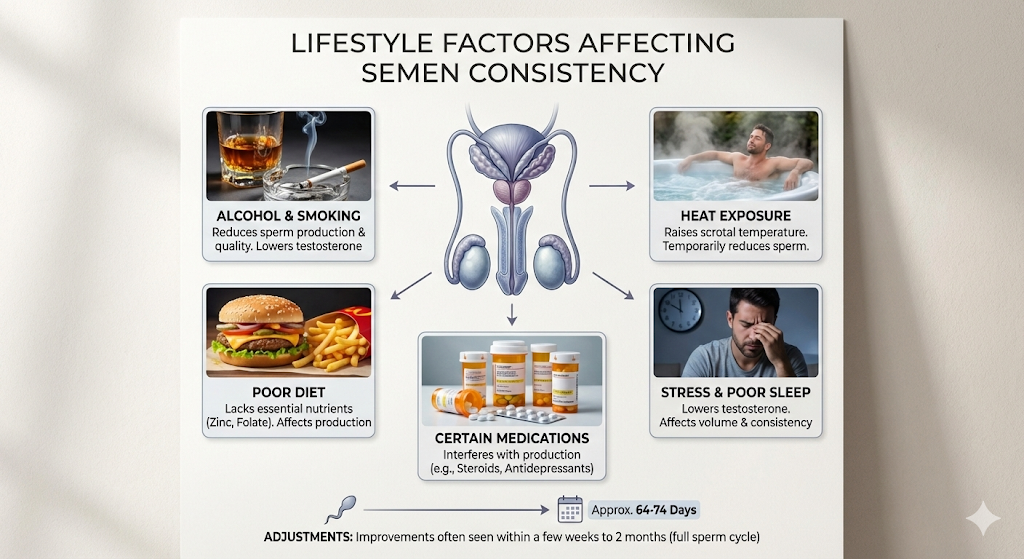
Does Lifestyle Affect Semen Consistency?
It does, more than most people realize. Several lifestyle factors can influence how your semen looks and how well your reproductive system functions:
- Alcohol and smoking. Both can reduce sperm production and affect semen quality over time. Heavy alcohol use in particular has been linked to lower testosterone levels, which can thin semen.
- Heat exposure. Spending long periods in hot tubs, saunas, or wearing very tight clothing can raise scrotal temperature and temporarily reduce sperm production.
- Poor diet. A diet low in essential nutrients like zinc, folate, and antioxidants can affect how your body produces semen and sperm.
- Stress and poor sleep. Chronic stress and sleep deprivation can lower testosterone levels, which may affect both semen volume and consistency.
- Certain medications. Some drugs, including testosterone replacement therapy, anabolic steroids, and certain antidepressants, can interfere with sperm production and change semen quality.
Making small adjustments in these areas can often improve semen consistency within a few weeks to a couple of months, since full cycle of sperm production takes roughly 64 to 74 days.
When Should You See a Doctor?
Most cases of watery semen are harmless and temporary. But there are some situations where a medical checkup a good idea:
- Your semen has been consistently watery for several weeks despite staying hydrated and spacing out ejaculation.
- You and your partner have been trying to conceive for 12 months or more without success.
- You notice a change in semen color, such as yellow, green, pink, or brown tinges, which could suggest infection or blood in semen.
- You experience pain, swelling, or lumps in your testicles.
- You have other symptoms like fatigue, reduced sex drive, or difficulty maintaining erections, which could point to a hormonal issue.
Your doctor can start with a physical exam and a semen analysis. If needed, they may also check your hormone levels, including testosterone, or run tests for infections.
additional reasons semen may look different than expected: What Is Reason Behind Watery Sperm?
Bottom Line
Watery semen is usually nothing to worry about. Frequent ejaculation, dehydration, and minor dietary gaps are most common explanations. Your semen consistency can fluctuate naturally, and a single instance of thinner fluid does not indicate a problem.
If change is persistent, comes with other symptoms, or is affecting your ability to conceive, a simple semen analysis can give you clear answers. Taking care of basics, like staying hydrated, eating well, managing stress, and getting enough sleep, goes a long way toward supporting your reproductive health.
Health Companion
trusted by 6M people
Get clear medical guidance
on symptoms, medications, and lab reports.
Your health journey starts with a single question
Download August today. No appointments. Just answers you can trust.
