
Health Library
why does my baby sound congested after feeding?
January 22, 2025
Question on this topic? Get an instant answer from August.
Babies often sound stuffy after eating, which can worry many parents. This is a common problem that many caregivers face. When I first noticed my newborn sounding stuffy, I felt worried and confused. It's important for anyone new to parenting to understand this issue.
Stuffy sounds in babies can show up in different ways, especially after feeding. It's not unusual for parents to hear their little ones making noises that sound like nasal congestion. These sounds can happen for a few reasons, including how babies are growing and the way they eat.
This topic is important not just for new parents but for anyone looking after infants. Knowing why a baby sounds stuffy can help ease some of this worry. In many cases, it is a temporary issue that usually goes away on its own.
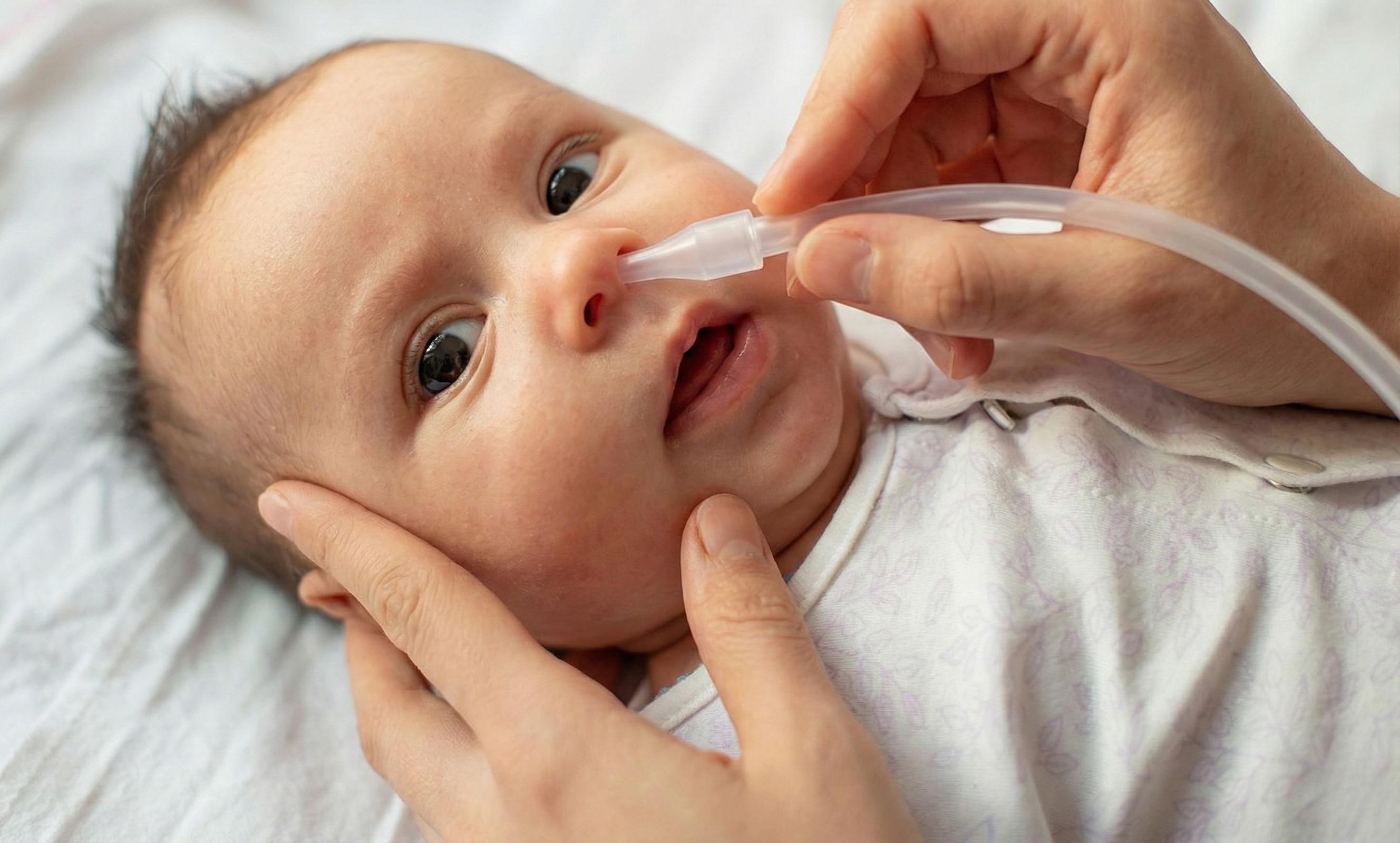
Understanding Congestion in Babies
-
What is Congestion?
Congestion in babies refers to a blockage or narrowing of the nasal passages, making it difficult for them to breathe through their nose. It is common in infants, as their nasal passages are smaller and more sensitive than those of adults. -
Causes of Congestion in Babies
-
Common Cold: Viral infections like the common cold are the most frequent cause of congestion. Babies have developing immune systems, making them more susceptible to these infections.
-
Allergies: Environmental allergens such as dust, pollen, or pet dander can trigger nasal congestion in some babies.
-
Dry Air: Dry air, particularly in colder months or in air-conditioned rooms, can dry out a baby’s nasal passages, leading to congestion.
-
Teething: Some babies may experience mild congestion as a result of teething, which can cause swelling in the nasal passages.
-
Sinus Infections: Although less common in very young infants, sinus infections can also contribute to nasal congestion.
-
People also ask
Not necessarily, as newborn nasal passages are extremely narrow and prone to sounds that mimic congestion. Often, these noises are simply a result of the baby's developing anatomy rather than an infection.
Yes, dry indoor air or common household allergens like dust can irritate delicate nasal passages. Maintaining appropriate humidity levels can often reduce these minor irritations.
Reasons Why Babies Sound Congested After Eating
|
Reason |
Description |
|---|---|
|
Milk and Mucus Accumulation |
After feeding, milk can mix with mucus in the baby’s nasal passages, making them sound congested. This is common in newborns with smaller, more sensitive airways. |
|
Nasal Congestion |
If a baby is already congested due to a cold, allergies, or dry air, they may sound more congested after eating because of increased mucus production during feeding. |
|
Reflux or GERD (Gastroesophageal Reflux Disease) |
Babies with reflux may have stomach acid rising into the throat, which can irritate the airways and cause congestion-like sounds after eating. |
|
Teething |
Teething can cause mild nasal congestion, which can be more noticeable after feeding due to increased saliva production and swallowing. |
|
Positioning During Feeding |
Feeding the baby while lying flat can cause milk to pool in the back of the throat or nasal passages, leading to congestion sounds when they start to breathe. |
|
Overfeeding |
Sometimes, overfeeding can cause excess mucus production or a feeling of fullness, leading to a congested sound. |
|
Sensitivity to Formula or Breast Milk |
Certain ingredients in formula or breast milk (such as lactose intolerance) can cause digestive issues, leading to congestion after feeding. |
People also ask
Feeding can cause small amounts of milk or saliva to pool in the back of the throat or nasal passages. This temporary accumulation creates the rattling or stuffy sound as the baby breathes.
Reflux can indeed irritate the throat and mimic congestion, especially if the baby seems uncomfortable after meals. The upward movement of stomach acid can cause local swelling that affects breathing sounds.
When to Seek Medical Advice
-
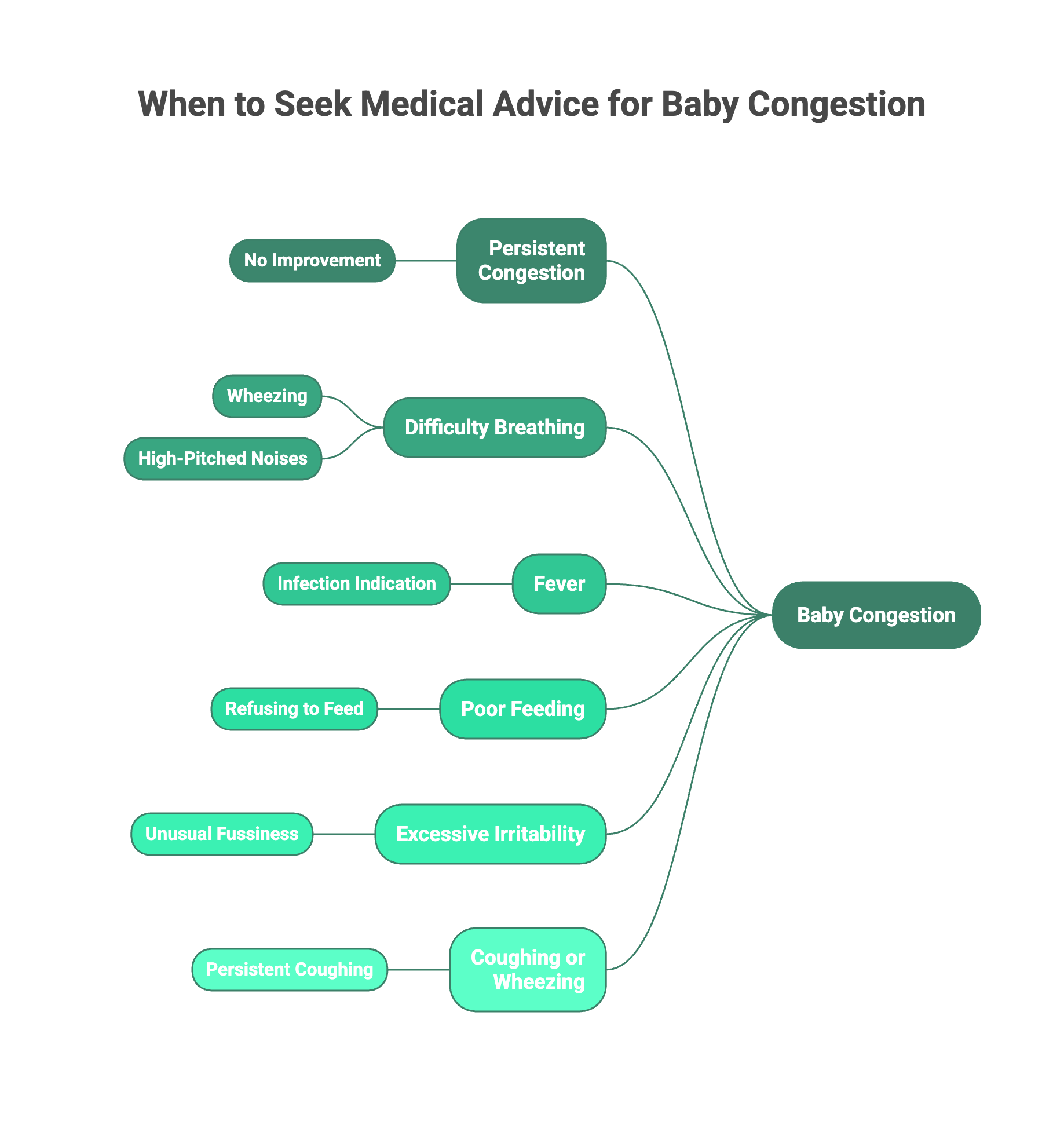
Persistent Congestion: If your baby’s congestion lasts more than a few days without improvement.
-
Difficulty Breathing: If your baby seems to struggle to breathe, is wheezing, or makes high-pitched noises while breathing.
-
Fever: If your baby has a fever along with congestion, it could indicate an infection.
-
Poor Feeding: If your baby has difficulty feeding or is refusing to feed due to congestion.
-
Excessive Irritability: If the baby seems unusually fussy, restless, or uncomfortable despite efforts to alleviate congestion.
-
Coughing or Wheezing: If the baby is coughing persistently or wheezing along with congestion.
-
Dehydration Signs: If your baby shows signs of dehydration, such as fewer wet diapers, dry mouth, or lethargy.
-
Green or Yellow Mucus: If your baby’s nasal discharge is thick, green, or yellow, which could indicate a bacterial infection.
-
Changes in Skin Color: If your baby’s skin turns pale, bluish, or grayish during feeding or breathing, seek immediate medical attention.
People also ask
You should seek care if the baby shows signs of respiratory distress, such as retractions or rapid, high-pitched breathing. Any visible change in skin color or refusal to feed also warrants immediate attention.
A fever indicates your baby's immune system is fighting something, which is a common signal to monitor closely. If the temperature is high or the baby is under three months old, it requires medical evaluation.
Summary
Congestion in babies is common and typically resolves on its own, but there are situations where medical attention is needed. If the congestion persists for more than a few days, is accompanied by fever, or causes difficulty breathing, feeding, or sleeping, it's important to seek advice from a pediatrician.
Additional concerns such as persistent coughing, excessive irritability, or signs of dehydration, like fewer wet diapers, may also indicate a need for medical consultation. In cases where the baby’s nasal discharge is thick, green, or yellow, or if the baby experiences any changes in skin color, immediate medical attention should be sought. Always monitor your baby's overall condition and consult a doctor if you're concerned about their health.
FAQs
-
What causes congestion in babies?
Congestion in babies is often caused by colds, allergies, dry air, or teething. -
Is it normal for babies to sound congested after eating?
Yes, this can happen due to mucus accumulation, reflux, or nasal congestion. -
How can I relieve my baby’s congestion?
Use saline drops, a nasal aspirator, a humidifier, or elevate the baby’s head during sleep. -
When should I call a doctor for my baby's congestion?
Call a doctor if the congestion persists for days, causes difficulty breathing, or is accompanied by a fever. -
Can baby congestion affect feeding?
Yes, congestion can make it harder for babies to feed properly due to blocked nasal passages.
Health Companion
trusted by 6M people
Get clear medical guidance
on symptoms, medications, and lab reports.
Your health journey starts with a single question
Download August today. No appointments. Just answers you can trust.
