
Pain when you cough can catch you off guard. One moment you are clearing your throat, and next, something in your chest, ribs, or stomach flares up. In most cases, this happens because coughing puts sudden force on muscles, joints, and tissues that are already strained or irritated.
Is It Just Muscle Strain?
This is most likely explanation, especially if you have been coughing for several days.
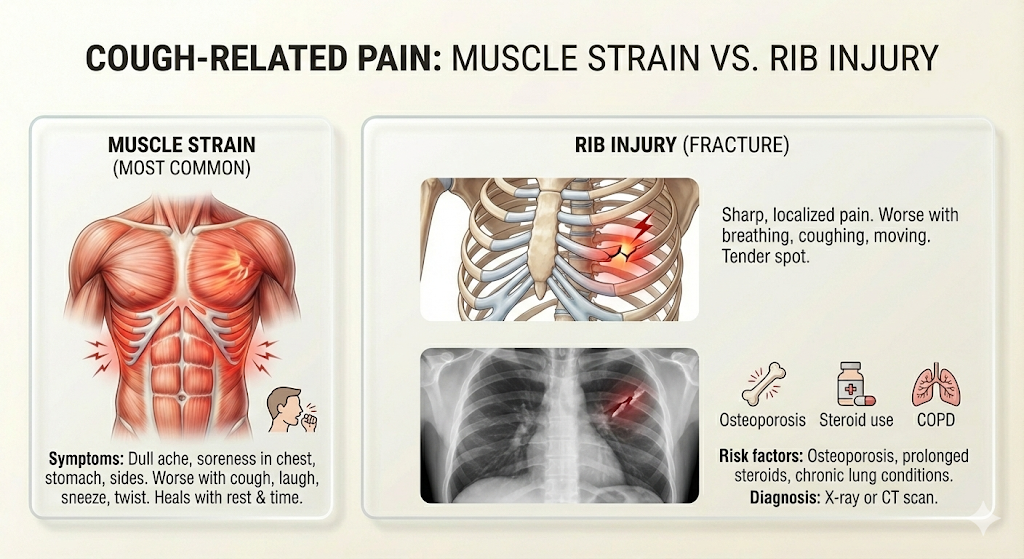
When you cough, your abdominal muscles, chest muscles, diaphragm, and intercostal muscles (small muscles between your ribs) all contract at once. That sudden, forceful motion repeats with every cough. After hours or days of this, those muscles can become sore, strained, or even mildly torn.
The pain usually feels like a dull ache or soreness in chest, stomach, or sides. It tends to get worse with each cough and may also flare up when you laugh, sneeze, or twist your body. This type of muscle strain heals on its own with rest and time.
If you are experiencing discomfort specifically in rib area, this guide on rib pain from coughing covers what to expect and how to manage it.
Could It Be a Rib Injury?
Prolonged or intense coughing can actually fracture a rib. This is more common than most people realize.
Research published in journal Clinical Case Reports through PubMed Central documents cases of cough induced rib fractures, even in young adults without underlying bone conditions. The middle ribs (fifth through ninth) along side of rib cage are most vulnerable because opposing muscles pull them in different directions during a cough.
A cough induced rib fracture typically causes sharp, localized pain that gets worse with breathing, coughing, or moving. You may feel a specific tender spot on your rib cage. If you have been coughing hard for more than a week and develop a new, sharp pain, it is worth getting an x-ray or CT scan.
Risk factors include osteoporosis, prolonged steroid use, chronic lung conditions like COPD, and coughs lasting more than three weeks.
What About Chest Pain From Lung Issues?
Sometimes pain comes from deeper inside chest, pointing to lungs or surrounding tissue.
Bronchitis causes inflammation in airways. Every cough scrapes against that swollen lining, creating a raw, burning sensation behind breastbone.
Pneumonia fills air sacs with fluid or pus. It often causes sharp chest pain when you cough or breathe deeply, along with fever, chills, and difficulty breathing.
Pleurisy is inflammation of pleura, thin tissue lining your lungs and chest wall. pain is sharp and gets worse with coughing or deep breaths. It can feel like a knife in your side. Pleurisy is usually caused by infections or autoimmune conditions.
If coughing with chest pain comes alongside fever, shortness of breath, or colored mucus, see a doctor promptly.
Can Coughing Cause Stomach Pain?
Yes, and this is more common than people think. abdominal muscles work hard during a cough, and pressure it creates inside abdomen can trigger pain from several sources.
Strained abdominal muscles are the simplest explanation. After days of coughing, your stomach muscles can feel as sore as they would after an intense workout.
GERD (gastroesophageal reflux disease) can create a cycle where acid reflux triggers a cough, and cough then worsens reflux. increased abdominal pressure from coughing can push stomach acid back up into the esophagus, causing a burning sensation in chest or upper abdomen.
A hernia, particularly an inguinal or hiatal hernia, can cause pain during coughing because increased abdominal pressure pushes tissue through a weak spot in muscle wall. If you feel a bulge or sharp pain in your groin or upper abdomen when you cough, mention it to your doctor.
If your stomach pain during coughing feels unusual or persistent, understanding specific causes of abdominal pain while coughing can help you figure out what to discuss with your doctor.
Are There Rare but Serious Causes?
In uncommon cases, coughing can lead to complications that need urgent attention.
A rectus sheath hematoma happens when a blood vessel inside abdominal wall tears during a violent cough. This causes bleeding into muscle and results in sudden, severe abdominal pain, sometimes with visible bruising. It is more common in people taking blood thinners.
Costochondritis is inflammation where your ribs connect to breastbone. It causes tenderness and a sharp pain in front of chest that mimics heart related symptoms. It often develops after repeated coughing and improves with anti-inflammatory medication and rest.
A pneumothorax, or collapsed lung, is a rare complication of severe coughing where air leaks into space around lung. Symptoms include sudden chest pain and difficulty breathing. This is a medical emergency.
When Should You See a Doctor?
Most cough related pain resolves within a few days to a couple of weeks. But some situations call for medical attention sooner.
See your doctor if you have sharp pain that does not improve after a week, chest pain with shortness of breath, blood when you cough, persistent fever, a visible bulge in your abdomen or groin, or sudden severe pain after a hard cough. These can signal rib fractures, pneumonia, hernias, or other conditions that benefit from proper evaluation.
Bottom Line
Pain when you cough usually comes from muscle strain in chest, ribs, or abdomen. The harder and longer you cough, more stress it puts on your body. In some cases, underlying conditions like bronchitis, pleurisy, GERD, or even a rib fracture may be involved. Most causes improve with rest and time, but persistent or severe pain deserves a closer look from your doctor.
