Health Library
Why Does My Stomach Hurt When I Cough? Common Causes Explained
February 23, 2026
Question on this topic? Get an instant answer from August.
If your stomach hurts every time you cough, you are not imagining it. Coughing puts real physical pressure on your belly. Each cough forces your abdominal muscles to contract quickly and sharply. That sudden squeeze can trigger pain for several reasons, from simple muscle strain to something that needs a closer look.

Why Does Coughing Put Pressure on Your Stomach?
When you cough, your diaphragm, chest muscles, and abdominal muscles all tighten at same time. This creates a burst of pressure inside your belly, known as intra-abdominal pressure.
For most people, this passes without trouble. But if something is already irritated, inflamed, or weakened in your abdomen, that sudden squeeze can cause noticeable pain. Think of it like pressing on a bruise you didn't know you had.
Could It Just Be Sore Abdominal Muscles?
This is most common reason. If you have been coughing a lot from a cold, flu, or allergies, your abdominal muscles get a real workout. Each cough is like a mini crunch. After dozens of coughs in a day, those muscles feel strained and tender.
You might notice pain more on one side or across front of your belly. It usually feels like a dull ache that sharpens with each cough. The good news is this soreness tends to resolve once coughing slows down. Rest, gentle stretching, and a warm compress can help. For a deeper look at how coughing strains your core and rib area, this covers it well: Rib Pain From Coughing Explained
People also ask
Abdominal soreness typically improves as your coughing decreases, often fading within a few days to a week. Gentle movement and rest are usually all that is needed for recovery. Try applying a warm compress to help soothe the tightness between coughing fits.
Using a pillow to splint your abdomen provides external support that minimizes the force of muscle contractions during a cough. This simple technique effectively reduces the sharp pain associated with sudden abdominal pressure. Hold the pillow firmly against your stomach whenever you feel a cough coming on.
Can Acid Reflux Make Your Stomach Hurt When You Cough?
Yes, and this connection works both ways. Acid reflux (GERD) happens when stomach acid flows back up into your food pipe. This can irritate your throat and trigger a chronic cough. At same time, repeated coughing pushes more acid upward, making irritation worse.
You might feel burning in your upper belly or behind your breastbone. Some people notice it gets worse after eating or lying down. Smaller meals, staying upright after eating, and avoiding acidic foods can help calm things down.
A hiatal hernia, where part of stomach slides up through diaphragm, can make reflux worse. According to National Institutes of Health, people often discover a hiatal hernia while being tested for heartburn or chest pain.
Is a Hernia Causing Pain?
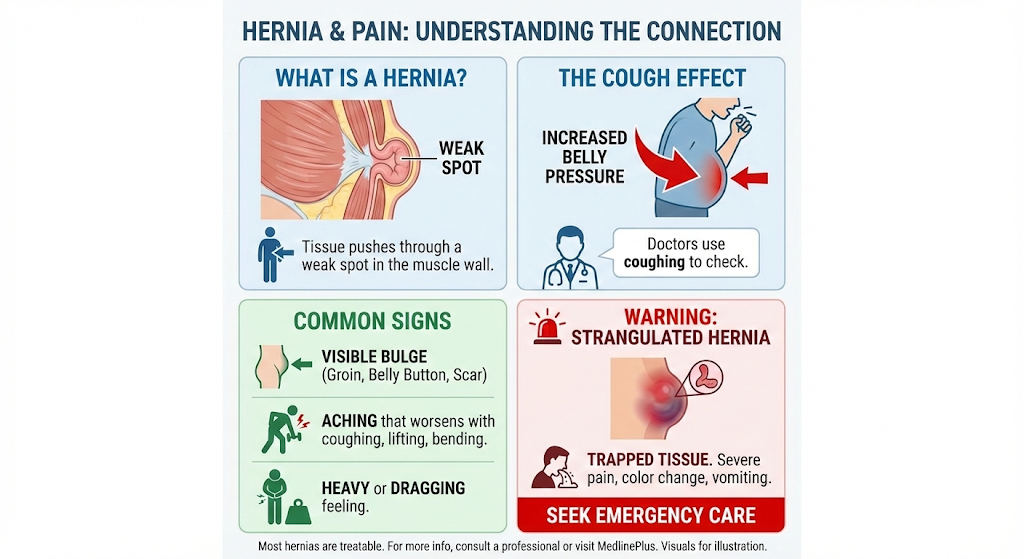
A hernia happens when tissue pushes through a weak spot in muscle wall. Coughing increases belly pressure, which can push hernia outward. This is why pain often flares when you cough, sneeze, or strain.
doctors may ask you to cough during an exam specifically to check for a hernia. You can read more about hernia types and warning signs here: Hernia Here are some signs that a hernia might be involved:
- A visible bulge in your groin, belly button, or near an old surgical scar
- Aching at bulge that gets worse with coughing, lifting, or bending
- A heavy or dragging feeling in your lower belly
- The bulge may flatten when you lie down and return when you stand
Most hernias are treatable. But if bulge becomes very painful, changes color, or you start vomiting, that could mean tissue is trapped. This is called a strangulated hernia and needs emergency care.
People also ask
A hernia often presents as a visible or palpable bulge that may disappear when you lie down, whereas muscle soreness feels like a generalized ache across the belly. If you notice a distinct lump that becomes more prominent with physical effort, that is a strong indicator of a hernia. Check for any protrusions near your groin or navel after a period of coughing.
Seek emergency medical attention if the bulge becomes intensely painful, changes color, or is accompanied by vomiting. These signs suggest the tissue may be trapped or strangulated, which requires urgent surgical assessment. Never attempt to force a painful or firm bulge back into place on your own.
What About Appendicitis or Gallbladder Issues?
If your pain sharp and focused in one specific area, it worth considering deeper causes. Appendicitis pain usually starts near belly button and shifts to lower right side. Coughing or pressing area makes it much worse.
Gallbladder problems tend to cause upper right belly pain, especially after fatty meals. Both conditions need medical attention. If you have focused, worsening pain with fever or vomiting, see a doctor soon.
Could It Be Something Rare, Like a Muscle Hematoma?
In uncommon cases, forceful coughing can tear a small blood vessel in abdominal wall. This creates a hematoma, a pocket of blood inside muscle. Research published by National Institutes of Health describes cases where severe coughing caused hematomas in rectus sheath or oblique muscles. You can explore one such case study here: Cough-Induced Abdominal Pain – NIH
This more likely in older adults, people on blood thinners, or those coughing intensely for weeks. Symptoms include sudden sharp pain in one spot, tenderness, and sometimes bruising that appears a day or two later. A simple ultrasound or CT scan can confirm it, and most cases heal with rest. For more detail on stomach pain connected to coughing, this resource covers additional causes: Stomach Pain While Coughing
When Should You See a Doctor?
Most cough-related stomach pain is muscular and temporary. But certain signs mean you should reach out to your healthcare provider.
Consider getting checked if you notice:
- Pain getting worse instead of better over a few days
- A new bulge or lump in your abdomen or groin
- Fever along with belly pain
- Blood in your stool or vomit
- Pain severe enough to limit your movement or sleep
- You are on blood thinners and pain appeared suddenly
Your doctor can use a physical exam, blood tests, or imaging to sort things out. In most cases, answer straightforward.
People also ask
You should reach out to a professional if your pain progressively worsens over several days or is accompanied by systemic symptoms like a fever. Blood in your stool or vomiting alongside persistent abdominal pain also warrants a prompt medical evaluation. Do not ignore signs that suggest something beyond simple muscle soreness.
In rare instances, extreme coughing can tear a small blood vessel in the abdominal wall, potentially creating a localized hematoma. This often feels like a sudden, sharp pain that may later develop into visible bruising on the skin. Keep an eye out for any bruising that appears in the area of your pain.
How Can You Ease Pain at Home?
While you treat underlying cough, a few simple steps can help your belly feel better:
- Press a pillow against your abdomen when a cough coming. This reduces strain on your muscles.
- Stay hydrated to thin mucus and reduce coughing intensity.
- Rest in a slightly reclined position, especially if reflux involved.
- Apply a warm compress to sore muscles after long coughing episodes.
These small steps make a real difference while your body heals.
Bottom Line
Stomach pain when you cough is usually your abdominal muscles telling you they are overworked. It makes sense when you think about how much force each cough puts on your core. In most cases, it gets better as cough itself improves.
Still, if pain sticks around, feels different from simple soreness, or comes with warning signs, check in with your doctor. You deserve a clear answer, and most of time, it turns out to be something very manageable.
Health Companion
trusted by 6M people
Get clear medical guidance
on symptoms, medications, and lab reports.
Your health journey starts with a single question
Download August today. No appointments. Just answers you can trust.
