
Health Library
ADOS Test: Is It Accurate for Autism Diagnosis?
January 12, 2026
Question on this topic? Get an instant answer from August.
What Exactly Is the ADOS 2 Test?
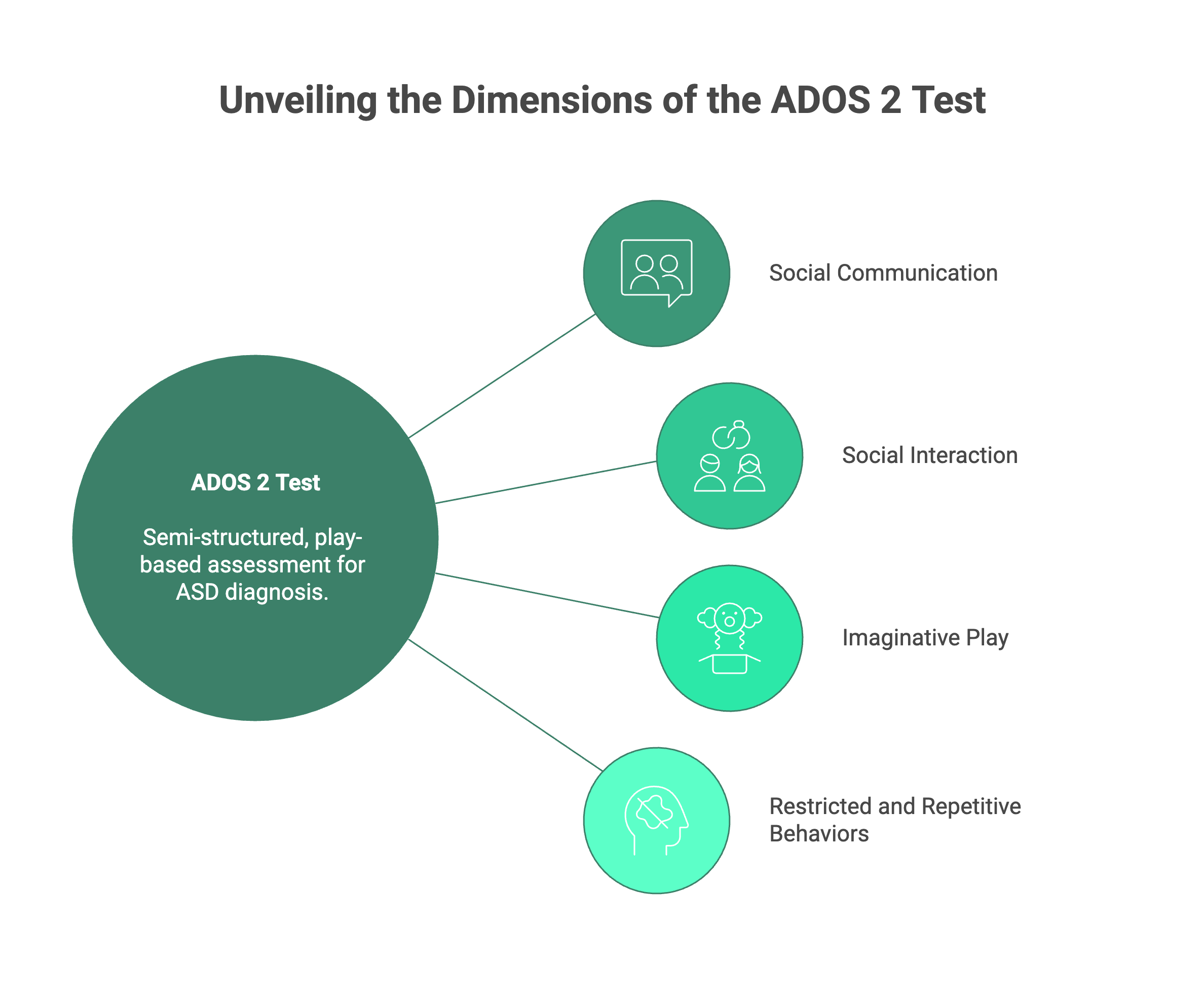
So, what is the ADOS 2? At its core, the ADOS 2 is a semi structured, play based assessment. Think of it less like a traditional test with right or wrong answers, and more like a carefully designed series of activities that give a clinician a window into your child’s social world.
Its primary purpose is to observe and evaluate behaviors that are relevant to a diagnosis of Autism Spectrum Disorder (ASD). It creates standardized social situations where a trained examiner can observe:
- Social Communication: How a person uses and understands verbal and non verbal communication, like gestures, facial expressions, and eye contact.
- Social Interaction: How they engage in back and forth exchanges, share enjoyment, and respond to social cues from others.
- Imaginative Play: The way they use toys and imagination in a symbolic way.
- Restricted and Repetitive Behaviors: The presence of specific interests, repetitive movements, or sensory sensitivities.
Developed by Dr. Catherine Lord and her colleagues, this assessment provides objective, observable data rather than relying solely on parent reports source. It’s a way to see a child’s unique social and communication style in action, within a consistent framework.
Who Administers the Test and Who Is It For?
One of the most common questions is “who can administer the ADOS 2?” It’s not something just anyone can perform. The assessment requires extensive training to ensure it is administered and scored reliably.
Who Administers the Test: The ADOS 2 test must be conducted by a clinician who has undergone specific training and has experience in diagnosing ASD. This often includes professionals such as:
- Clinical Psychologists
- Developmental Pediatricians
- Speech Language Pathologists
- Occupational Therapists
- Board Certified Behavior Analysts (BCBAs)
Who It’s For: The ADOS 2 is remarkably versatile. It’s designed for a wide range of individuals, which is one of the reasons it’s so widely used. The assessment can be used with individuals from as young as 12 months all the way through adulthood. This includes the ADOS test for toddlers and the ADOS test for adults, with different versions tailored to each developmental stage.
It is important to note, however, that the test may not be suitable for individuals with significant sensory impairments (like blindness or deafness) or motor impairments that would prevent them from physically participating in the activities.
What to Expect During the Evaluation: A Step by Step Look
The idea of ADOS 2 testing can be nerve wracking, but knowing what the session looks like can ease much of that stress. Here’s a breakdown of the experience.
Duration and Setting
First, let’s answer a practical question: how long does the ADOS 2 take? The direct assessment portion typically lasts between 30 and 60 minutes. The entire appointment may be longer to allow for introductions and a brief chat before and after. The test takes place in a quiet room, usually with just the clinician and the person being assessed to minimize distractions.
The Parent’s Role
If you have a young child, you will likely be in the room. However, your role is to be a quiet, supportive presence—a “fly on the wall.” The clinician needs to see how your child interacts directly with them. They will give you clear instructions, such as when to respond if your child approaches you. For older children, adolescents, and adults, the assessment is typically conducted one on one with the clinician.
The Activities: It’s All About Play and Conversation
The heart of the ados test is a series of planned social activities, often called “presses,” which are designed to gently encourage social interaction. These activities are fun and engaging. The clinician isn’t looking for a “correct” performance; they are observing the process of interaction.
Examples of activities might include:
- For Toddlers and Young Children: Playing with bubbles, having a pretend birthday party, “reading” a picture book, or playing with cause and effect toys. The clinician might see if the child tries to share their excitement or make requests.
- For Older Children and Adolescents: Building something together, creating a story from pictures, or talking about emotions and friendships.
- For Adults: Engaging in more complex conversations about work, relationships, and daily life challenges.
What Do Clinicians Observe?
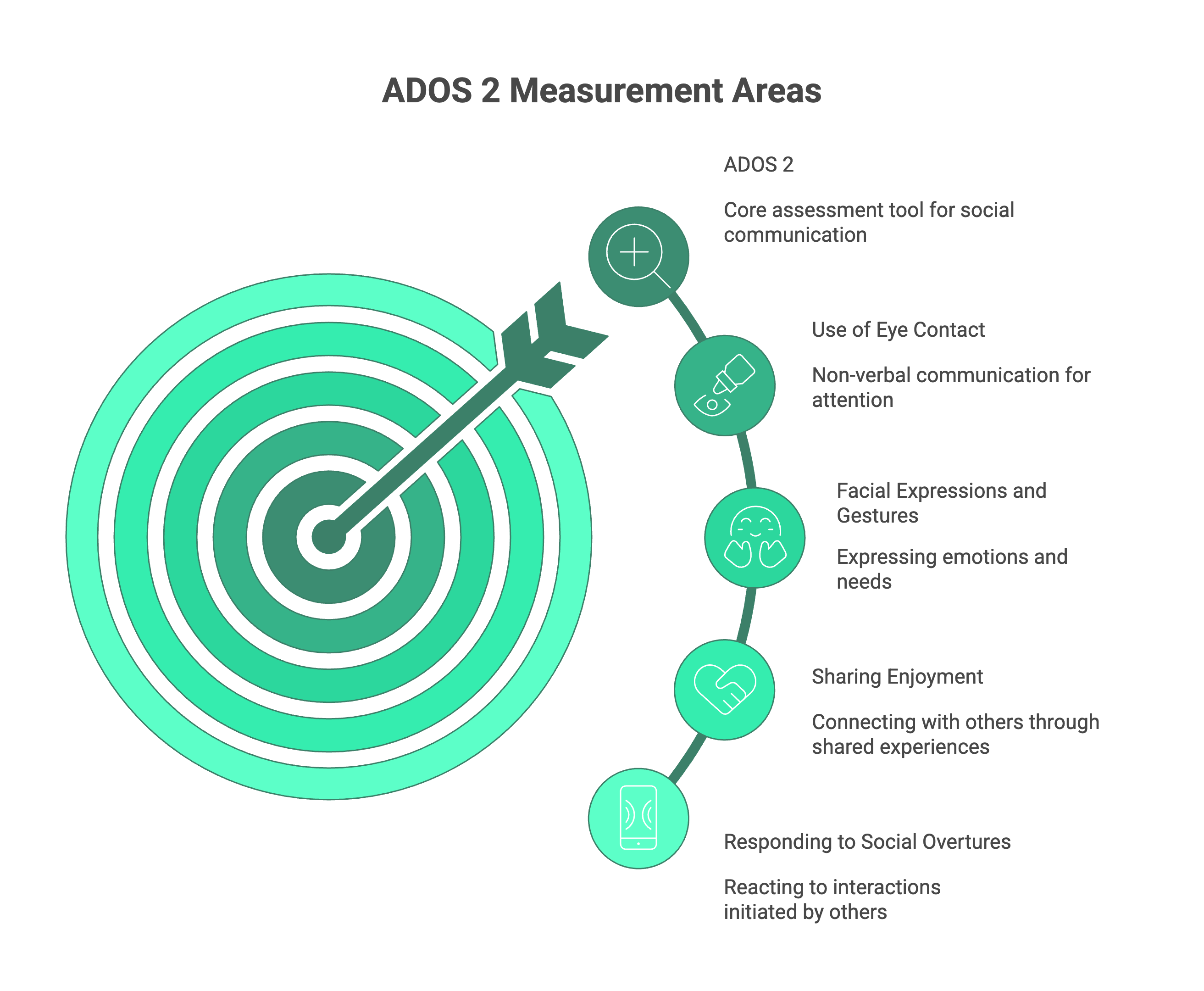
While your child is playing or talking, the clinician is skillfully observing dozens of specific behaviors. They aren’t judging your child; they are simply gathering information. What does the ADOS 2 measure specifically? They are looking at:
- Use of Eye Contact: Does the individual use eye contact to get someone’s attention or check in during an activity?
- Facial Expressions and Gestures: How are they used to communicate needs and feelings?
- Sharing Enjoyment: Does the person smile at the clinician or try to show them something they find interesting?
- Responding to Social Overtures: How do they react when the clinician initiates an interaction?
- Language and Communication: Is their language used for social purposes, like commenting or asking questions? Or is it more functional, like just making requests?
- Coping Skills: How do they handle minor frustrations, like a toy not working as expected?
Remember, preparing for the ADOS test isn’t like studying for an exam. The goal is to see your child’s natural behavior. The best preparation is to ensure your child is well rested and has had a snack, just as you would for any other important appointment.
A Breakdown of the ADOS 2 Modules
To accurately assess individuals across such a vast age and ability range, the ADOS 2 is divided into five different modules. The clinician chooses the appropriate module based on the person’s expressive language level. Understanding the ADOS 2 modules can help you know what to expect.
- Toddler Module: Specifically for children between 12 and 30 months of age. This module is heavily play based and focuses on observing the building blocks of social communication. It’s the go to ADOS test for toddlers.
- Module 1: For individuals 31 months and older who are non verbal or use single words. Activities are designed to elicit interaction without relying on speech.
- Module 2: For individuals who use phrase speech (e.g., “want juice,” “big car”) but are not yet verbally fluent. The activities are still play based but include more opportunities for simple conversation.
- Module 3: For verbally fluent children and young adolescents. The activities involve more conversation and imaginative play scenarios.
- Module 4: For verbally fluent older adolescents and adults. This is the primary ADOS test for adults and involves more in depth conversations about friendships, relationships, and social understanding.
The use of these different ADOS 2 modules ensures that the assessment is developmentally appropriate and provides the most accurate picture of an individual’s skills.
Understanding the Results: What Happens After the Test?
After the last activity is complete, you might be wondering what comes next. It’s crucial to understand that the ADOS-2 itself does not provide a diagnosis.
The ADOS 2 results are a critical piece of a much larger puzzle. A comprehensive autism evaluation, which is necessary for a formal diagnosis, will also include:
- A Detailed Developmental History: The clinician will conduct an in depth interview with you about your child’s milestones, behaviors, strengths, and challenges from birth to the present day.
- Parent/Caregiver Questionnaires: You will likely fill out standardized forms about your child’s behavior in different settings.
- Observations: The clinician may observe the individual in other settings, like a classroom or waiting room, or review reports from teachers.
The clinician scores the ADOS 2 based on the behaviors observed during the session. These scores are then compared to a cutoff range that indicates the level of autism related characteristics observed. The scores fall into categories such as “autism,” “autism spectrum,” or “non spectrum.”
You will have a follow up appointment where the clinician integrates all this information—the ADOS-2 scores, your interview, the questionnaires—to arrive at a conclusion. They will provide you with a comprehensive written report explaining the findings and, most importantly, providing tailored recommendations to support your child. The ADOS-2 results are a guidepost, not the final destination.
Important Considerations and Limitations of ADOS 2 Testing
While the ADOS 2 is considered a “gold standard for autism testing,” no single tool is perfect. It’s important for parents to be aware of the limitations of ADOS 2 testing.
- It’s a Snapshot in Time: The test captures behavior in a 30-60 minute window. A child who is tired, anxious, or feeling unwell might not behave as they typically would. A skilled clinician will take these factors into account.
- It Requires an In Person Setting: The ADOS 2 cannot be administered online or remotely, as it relies on direct, physical interaction. This can create accessibility challenges for families in remote areas.
- It May Not Always Be Necessary: Recent research and expert opinion suggest that experienced developmental pediatricians can often accurately diagnose autism without the ADOS 2, based on a thorough clinical history and observation source. For some, the long waitlists and high cost associated with ADOS 2 testing can be a barrier to a timely diagnosis, which is the most critical factor for starting support services.
- Complexity in Co occurring Conditions: For some older adolescents and adults, differentiating ASD from other complex psychiatric conditions can be challenging. For example, some studies have noted that the limitations of ADOS 2 testing become more apparent when assessing adults with potential psychosis, as social communication difficulties can overlap source.
A comprehensive evaluation by an experienced professional will always consider these limitations and use the ADOS 2 as one powerful tool among many in the overall autism diagnosis test process.
Your Path Forward
The Autism Diagnostic Observation Schedule (ADOS 2) is a valuable, standardized tool that offers objective insights into a person’s social communication and interaction. It provides a common language for clinicians and a structured way to observe behaviors that can be subtle and complex.
However, it is vital to remember that your child is not a score or a label. This assessment is simply a step on the journey to understanding their unique neurotype and getting them the support they need to thrive. Whether it’s the ADOS test for toddlers or for adults, the goal is the same: to gain clarity.
If you have concerns, the most important step you can take is to speak with your pediatrician or a developmental specialist. View the evaluation process not as a hurdle, but as a proactive, positive step toward unlocking answers and building a brighter future for your child.
Health Companion
trusted by
6Mpeople
Get clear medical guidance
on symptoms, medications, and lab reports.

Download august