
The standard amoxicillin dose for most adult infections is 250 to 500 mg taken every 8 hours, or 500 to 875 mg taken every 12 hours. The exact dose depends on the type of infection, how severe it is, and your overall health. Your doctor will choose right amount based on what you are being treated for, so dose can look a little different from one infection to next.
Amoxicillin is one of most commonly prescribed antibiotics.
- It belongs to penicillin family and works by stopping bacteria from building their cell walls, which kills them.
- It is used for a wide range of infections, including ear infections, sinus infections, strep throat, urinary tract infections, skin infections, chest infections, and certain dental infections.
- It does not work against viruses, so it will not help with a cold or flu.
How Does Dose Change by Infection?
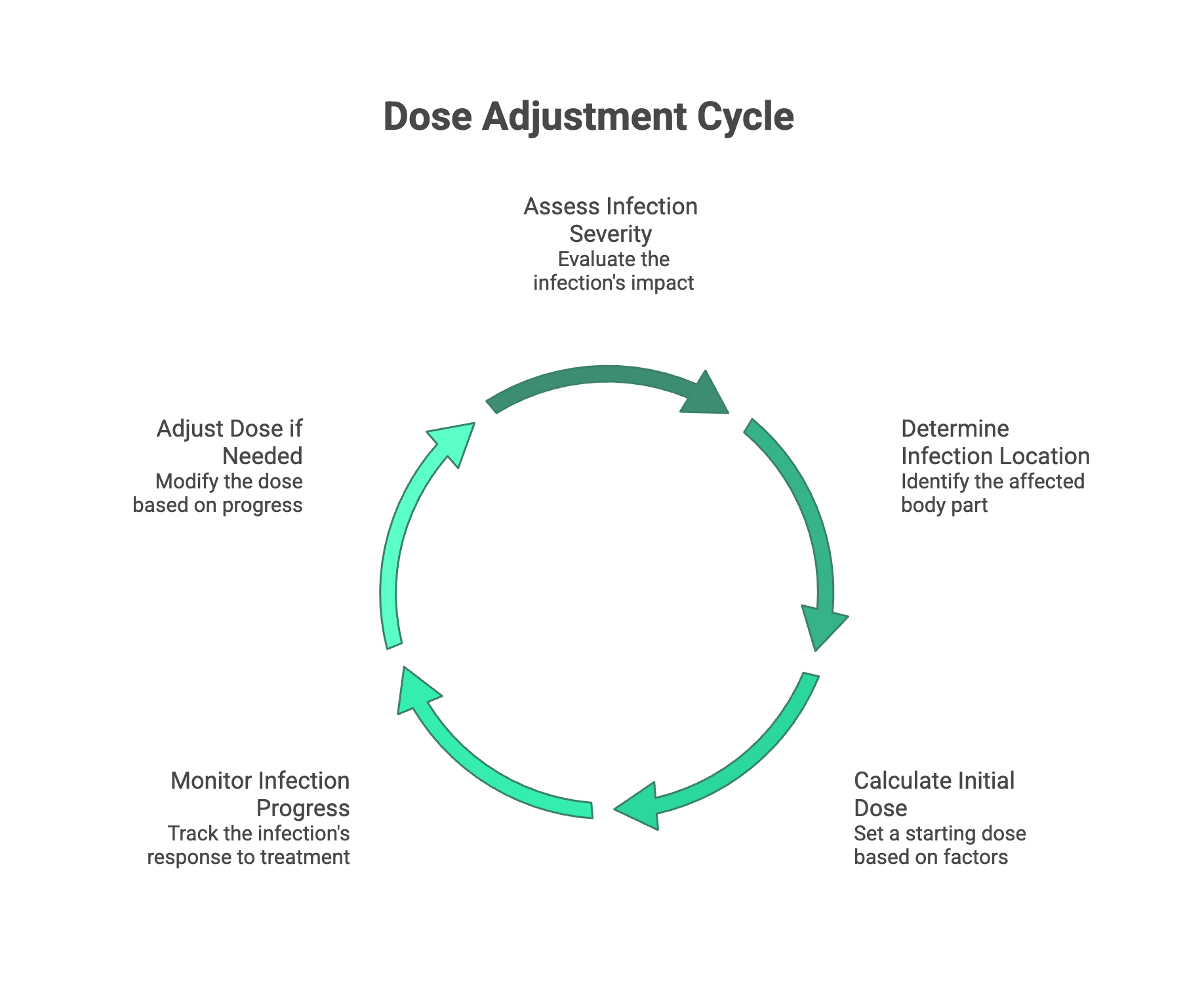
The severity and location of infection are biggest factors in determining your dose. For mild to moderate infections, like a simple ear infection, sinus infection, or urinary tract infection, the typical dose 250 mg every 8 hours or 500 mg every 12 hours. This adds up to about 750 to 1,000 mg per day.
For more severe infections or infections in areas where higher antibiotic levels are needed, dose goes up. A common option is 500 mg every 8 hours or 875 mg every 12 hours. That puts the daily total closer to 1,500 to 1,750 mg.
Lower respiratory tract infections, like bronchitis or pneumonia, generally call for higher end of dosing range. The recommended adult dose for a moderate chest infection typically 500 mg every 8 hours or 875 mg every 12 hours. For community acquired pneumonia, some guidelines recommend even higher doses of up to 1,000 mg three times a day when used alongside other antibiotics.
Strep throat is usually treated with 500 mg every 12 hours or 250 mg every 8 hours for at least 10 days. That 10 day minimum is important because shorter courses increase the risk of infection coming back or leading to complications like rheumatic fever.
For dental infections, dose is often 500 mg every 8 hours for 5 to 7 days, though your dentist may adjust this based on severity of infection and whether there is swelling or abscess formation.
How Long Should You Take It?
Most courses of amoxicillin for adults last between 5 and 10 days. Some infections require longer treatment. Strep throat, for example, needs at least 10 days to fully clear bacteria and prevent complications. Lyme disease treated with amoxicillin may require 14 to 28 days depending on stage and severity.
One of the most important things to remember to finish the full course even if you start feeling better after a few days. Stopping early can leave behind bacteria that are harder to treat. This contributes to antibiotic resistance, where medication becomes less effective over time. Your doctor chose length of treatment for a reason, so it best to stick with it.
Does Kidney Function Affect the Dose?
Yes. Amoxicillin is primarily cleared from your body through the kidneys. If your kidneys are not working as well as they should, drugs can build up in your system and increase risk of side effects. People with severe kidney impairment may need a lower dose or a longer gap between doses.
For example, someone with a glomerular filtration rate below 10 mL per minute may be prescribed 250 to 500 mg only once every 24 hours, instead of every 8 or 12 hours. If you are on dialysis, your doctor may add an extra dose during or after each session. For mild to moderate kidney issues, a dose adjustment is usually not needed, but your doctor will evaluate this based on your blood work.
Older adults are more likely to have some degree of reduced kidney function, even if it has not been formally diagnosed. This one of reasons your doctor may order lab work before or during treatment.
Can You Take Amoxicillin With or Without Food?
You can take amoxicillin either way. It is absorbed well regardless of whether your stomach is full or empty. That said, taking it with a small meal or snack may help reduce chance of nausea or stomach upset, which are among more common side effects.
Try to space your doses evenly. If you are taking it three times a day, aim for roughly every 8 hours. If you are on a twice a day schedule, take doses about 12 hours apart. Keeping consistent timing helps maintain steady levels of antibiotic in your bloodstream, which is how it works most effectively.
What Are Common Side Effects?
Amoxicillin is generally well tolerated. The most frequently reported side effects include diarrhea, nausea, stomach pain, and skin rash. These are usually mild and go away on their own. Taking medication with food can help with stomach related side effects.
A rash can sometimes develop, especially in people who have mononucleosis (mono). This not necessarily a true allergy, but amoxicillin should not be used if mono is suspected because of this reaction.
If you develop hives, swelling of face, lips, or tongue, or difficulty breathing, stop taking medication and seek emergency medical care. These could be signs of a serious allergic reaction, especially if you have a known allergy to penicillin or cephalosporin antibiotics.
When Should You Check With Your Doctor?
Your doctor should always determine right amoxicillin dose for your specific situation. Reach out if your symptoms are not improving after two to three days of treatment, if they are getting worse, or if you develop new symptoms like a high fever, severe diarrhea, or a widespread rash. These could mean infection not responding to treatment or that a dose adjustment needed. Your doctor can reassess and guide you from there.
