
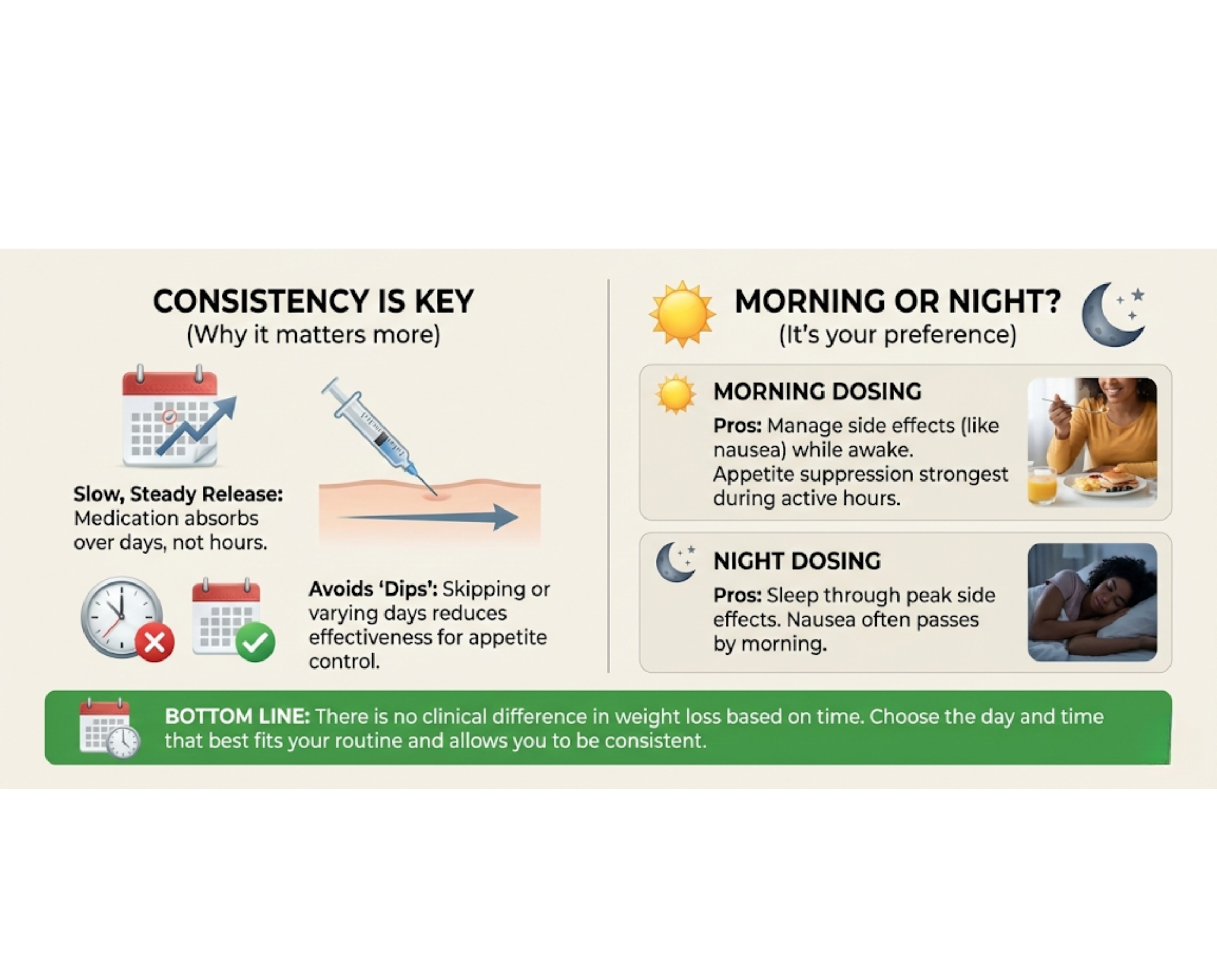
There is no single best time of day to take Zepbound. According to the official prescribing information, you can inject Zepbound once a week at any time of day, with or without food. The time you choose does not change how well medication works. What matters most is picking a day and sticking with it each week so medication stays at steady levels in your body.
Zepbound (tirzepatide) is a once weekly injectable medication that works on two hormone pathways, GIP and GLP-1, to reduce appetite, slow stomach emptying, and support weight loss. Because it has a long half-life of about five days, the drug stays active in your system throughout the entire week regardless of whether you inject it in morning, afternoon, or evening.
Why Does Consistency Matter More Than the Clock?
Zepbound is not like a pill that gets absorbed within a couple of hours. When you inject it under skin, medication absorbs slowly and steadily into your bloodstream over days. That slow release is why it only needs to be taken once per week.
Because of this long-acting design, whether you inject at 7 a.m. or 9 p.m. makes very little difference to how drug performs. What can make a difference is inconsistency. Skipping weeks, varying days by too much, or forgetting doses can lead to dips in the medication's levels, which can reduce its effectiveness for appetite control and weight loss.
The simplest approach is to pick a day that you will reliably remember. Some people choose a weekend morning when they have more time and a calmer routine. Others prefer a weekday evening that aligns with their schedule. Setting a phone reminder or calendar alert each week can help make it a habit.
Should You Take It in the Morning or at Night?
This comes down to personal preference and how your body handles side effects. Both options work equally well for medication's effectiveness. But there are practical reasons some people lean one way or other.
Taking Zepbound in morning means you are awake and alert if any side effects show up. Nausea, which is the most common side effect, often appears within first few hours after injection. Some people prefer to be up and moving when that happens so they can manage it with bland food, sipping water, or adjusting their activity level. Morning dosing also means medication's appetite-suppressing effects are strongest during your active, waking hours when you are making food choices.
Taking it at night has its own advantages. If nausea is a concern, injecting in evening allows you to sleep through the window when side effects are most likely to peak. Many people find that by time they wake up next morning, initial wave of nausea has passed. This can be especially helpful in the first few weeks of treatment or after a dose increase, when side effects tend to be strongest.
There is no clinical evidence showing that one time produces better weight loss results than other. It really about what feels most manageable for your body and your daily life.
Does It Need to Be Taken With Food?
No. Zepbound can be taken with or without food. Meals do not affect how medication absorbed because it injected under skin, not swallowed. The drug bypasses digestive tract entirely.
That said, some people notice that having a small, bland meal around the time of their injection helps reduce nausea. Foods like crackers, toast, or plain rice can settle the stomach. Avoiding greasy, heavy, or spicy foods around injection time is a practical tip that many users find helpful, especially during first few weeks.
Can You Change Your Injection Day?
Yes. The key rule is to make sure there are at least three days between two doses. So if you normally inject on a Saturday but need to shift to a Monday one week, that is fine. Just resume your regular schedule following week.
If you miss a dose entirely, take it as soon as you remember, as long as it is within four days of missed dose. If more than four days have passed, skip that dose and wait for your next scheduled one. Do not take two doses close together to make up for a missed one.
[IMG:https://assets.getbeyondhealth.com/health-lib/blogs/manual_upload_20260213180752_zepbound-side-effect.png]
How Can You Manage Side Effects Around Injection Time?
The most commonly reported side effects of Zepbound are nausea, diarrhea, vomiting, constipation, and stomach discomfort. These are most noticeable when starting medication or after a dose increase and usually improve over time as your body adjusts.
A few things can help. Eating smaller, more frequent meals throughout day puts less strain on your digestive system. Staying well hydrated is important, especially if you are experiencing diarrhea or vomiting, since these can lead to dehydration. Avoiding carbonated drinks, alcohol, and high-fat foods around injection day can also reduce stomach upset.
If you find that side effects are consistently disrupting your day, try shifting your injection time. If morning injections leave you nauseous during work, try evening dosing. If nighttime injections disrupt your sleep, move to morning. It is completely fine to experiment until you find what works best for your routine.
When Should You Talk to Your Doctor About Timing?
If side effects are severe or persistent despite adjusting your injection time and eating habits, let your doctor know. They may recommend slowing down your dose increases or adjusting your overall treatment plan. Also reach out if you are having trouble remembering your weekly dose or if your schedule makes consistency difficult. Your doctor can help you find a routine that fits your life and keeps your treatment on track.
The bottom line is that Zepbound gives you a lot of flexibility. Any time of day works. Any day of week works. The best time is simply time you will remember and feel most comfortable with, week after week.
