
Health Library
Why Is There Blood in My Snot When I'm Sick?
February 16, 2026
Question on this topic? Get an instant answer from August.
Blood in your snot when you are sick is usually caused by irritated, inflamed nasal tissue. When you have a cold, flu, or sinus infection, the delicate lining inside your nose becomes swollen and fragile. Frequent nose blowing, dryness, and congestion all put stress on the tiny blood vessels in your nasal passages, and they can break easily.
In most cases, a small amount of blood mixed with mucus is not something to worry about. It looks alarming, but it is a very common part of being sick. Let's break down exactly why it happens and when it might need attention.
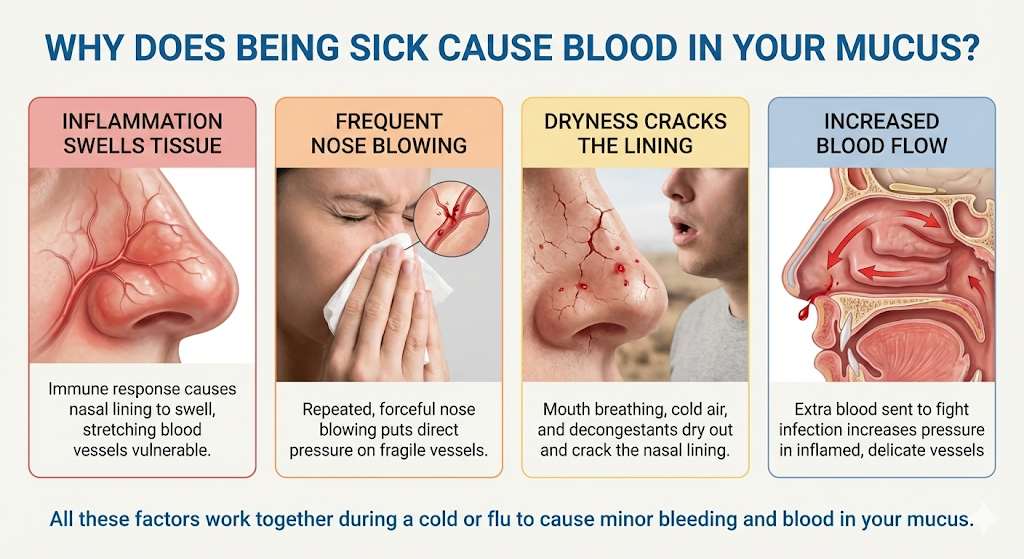
Why Does Being Sick Cause Blood in Your Mucus?
Your nasal passages are lined with a thin, moist membrane packed with tiny blood vessels. When you are healthy, this lining stays moist and protected. But when you are sick, several things change at once that make those blood vessels vulnerable.
Inflammation swells the tissue. A cold or flu triggers your immune system, which causes nasal lining to swell. That swelling stretches blood vessels closer to the surface, making them easier to rupture.
Frequent nose blowing creates pressure. When you blow your nose repeatedly to clear thick mucus, the force puts direct pressure on those already fragile vessels. The harder and more often you blow, more likely a small vessel will burst.
Dryness cracks the lining. Congestion often forces you to breathe through your mouth, which dries out your nasal passages. Cold weather, indoor heating, and decongestant medications can dry them out further. When lining gets too dry, it cracks, and those cracks bleed.
Increased blood flow to the area. Your body sends extra blood to the nasal tissue to fight infection. More blood flowing through already inflamed, delicate vessels means a higher chance of minor bleeding.
All of these factors working together explain why you might see streaks of red or pink in your tissue when you blow your nose during a cold or flu.
What Does Color Tell You?
The color of blood in your snot can give you a sense of when bleeding happened.
Bright red streaks mean bleeding is fresh and recent. This usually happens right after blowing your nose or sneezing forcefully.
Pink-tinged mucus means a small amount of blood has mixed with your nasal discharge. This is most common type people notice when they are sick and is almost always harmless.
Brown or rust-colored mucus means blood is older and has had time to dry. This often shows up in morning after your nasal passages have been dry overnight. It is essentially dried blood that mixed with mucus hours earlier.
None of these colors on their own are a reason to panic. They all point to minor irritation rather than anything serious.
Does a Sinus Infection Make It Worse?
It can. A sinus infection (sinusitis) involves deeper inflammation in sinus cavities behind your nose, cheeks, and forehead. This prolonged inflammation puts even more stress on nasal blood vessels.
Sinus infections also produce thicker, stickier mucus that is harder to clear. That means more forceful blowing, more irritation, and more chances for vessels to break.
If your bloody mucus comes with facial pain, persistent headache, thick yellow or green discharge, and symptoms lasting more than 10 days, a bacterial sinus infection might be involved. This may need antibiotics, so check in with your doctor.
Can Medications Play a Role?
Yes. Some common medications can make nasal bleeding more likely when you are already sick.
Decongestant nasal sprays like oxymetazoline work by shrinking swollen blood vessels in nose. They are effective short term, but using them for more than three days can cause rebound congestion. The cycle of swelling and shrinking weakens nasal lining and increases bleeding risk.
Blood thinners like aspirin, warfarin, or daily anti-inflammatory medications reduce your blood's ability to clot. If you take any of these and notice frequent blood in your mucus, let your doctor know.
Antihistamines and oral decongestants can dry out your nasal passages as a side effect. That dryness makes lining more prone to cracking and bleeding.
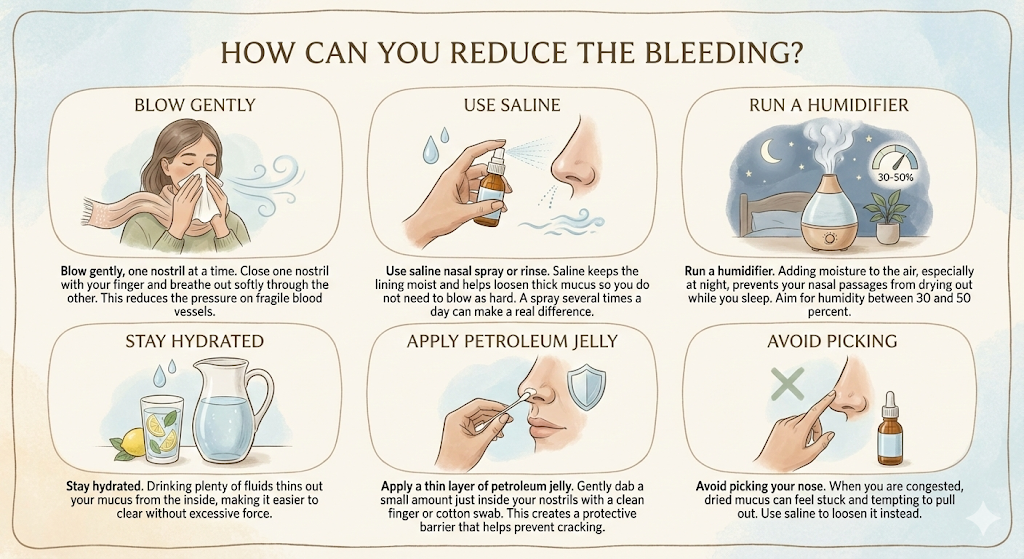
How Can You Reduce Bleeding?
A few simple steps can protect your nasal lining and cut down on amount of blood you see in your mucus while you are sick.
- Blow gently, one nostril at a time. Close one nostril with your finger and breathe out softly through other. This reduces pressure on fragile blood vessels.
- Use saline nasal spray or rinse. Saline keeps lining moist and helps loosen thick mucus so you do not need to blow as hard. A spray several times a day can make a real difference.
- Run a humidifier. Adding moisture to air, especially at night, prevents your nasal passages from drying outwhile you sleep. Aim for humidity between 30 and 50 percent.
- Stay hydrated. Drinking plenty of fluids thins out your mucus from inside, making it easier to clear without excessive force.
- Apply a thin layer of petroleum jelly. Gently dab a small amount just inside your nostrils with a clean finger or cotton swab. This creates a protective barrier that helps prevent cracking.
- Avoid picking your nose. When you are congested, dried mucus can feel stuck and tempting to pull out. Use saline to loosen it instead.
When Should You See a Doctor?
Most blood in snot during a cold or flu resolves on its own as you get better. But certain signs deserve medical attention.
See your doctor if bleeding is heavy and does not stop after 20 minutes of applied pressure, you are losing a noticeable amount of blood (not just streaks), the bloody mucus continues for more than a week after your other symptoms have cleared, you experience difficulty breathing alongside bleeding, or you notice blood in your mucus frequently even when you are not sick.
Recurring bloody mucus without an obvious cause like a cold could sometimes point to uncontrolled high blood pressure, a blood clotting disorder, or chronic sinus issues that need evaluation.
It Looks Worse Than It Is
Seeing blood in your snot when you are sick is understandably unsettling. But in vast majority of cases, it is simply your body's response to inflammation, dryness, and repeated mechanical stress of blowing your nose. Keep things moist, blow gently, stay hydrated, and give your body time to heal. The blood will clear up as illness does.
Health Companion
trusted by
6Mpeople
Get clear medical guidance
on symptoms, medications, and lab reports.

download august