
Health Library
Low BUN/Creatinine Ratio: Is It Serious?
February 10, 2026
Question on this topic? Get an instant answer from August.
If your doctor mentioned that your BUN to creatinine ratio came back low, you might be wondering what that actually means for your health. This blood test ratio helps your healthcare team understand how well your kidneys are working and what might be going on inside your body. In most cases, a low ratio is not a cause for alarm, and it often points to things that can be managed or explained quite easily.
What Is BUN/Creatinine Ratio?
The BUN to creatinine ratio compares two waste products your kidneys filter from your blood. BUN stands for blood urea nitrogen, which forms when your body breaks down protein. Creatinine comes from normal breakdown of muscle tissue. Your kidneys are responsible for removing both of these substances from your bloodstream.
Doctors calculate this ratio by dividing your BUN level by your creatinine level. The normal range typically falls between 10:1 and 20:1, though this can vary slightly depending on lab. When ratio drops below 10:1, it's considered low.
Why Would My BUN/Creatinine Ratio Be Low?
A low ratio happens when your BUN is lower than expected compared to your creatinine, or when your creatinine is higher than expected compared to your BUN. Several everyday factors can cause this shift, and many of them are temporary or easily addressed.
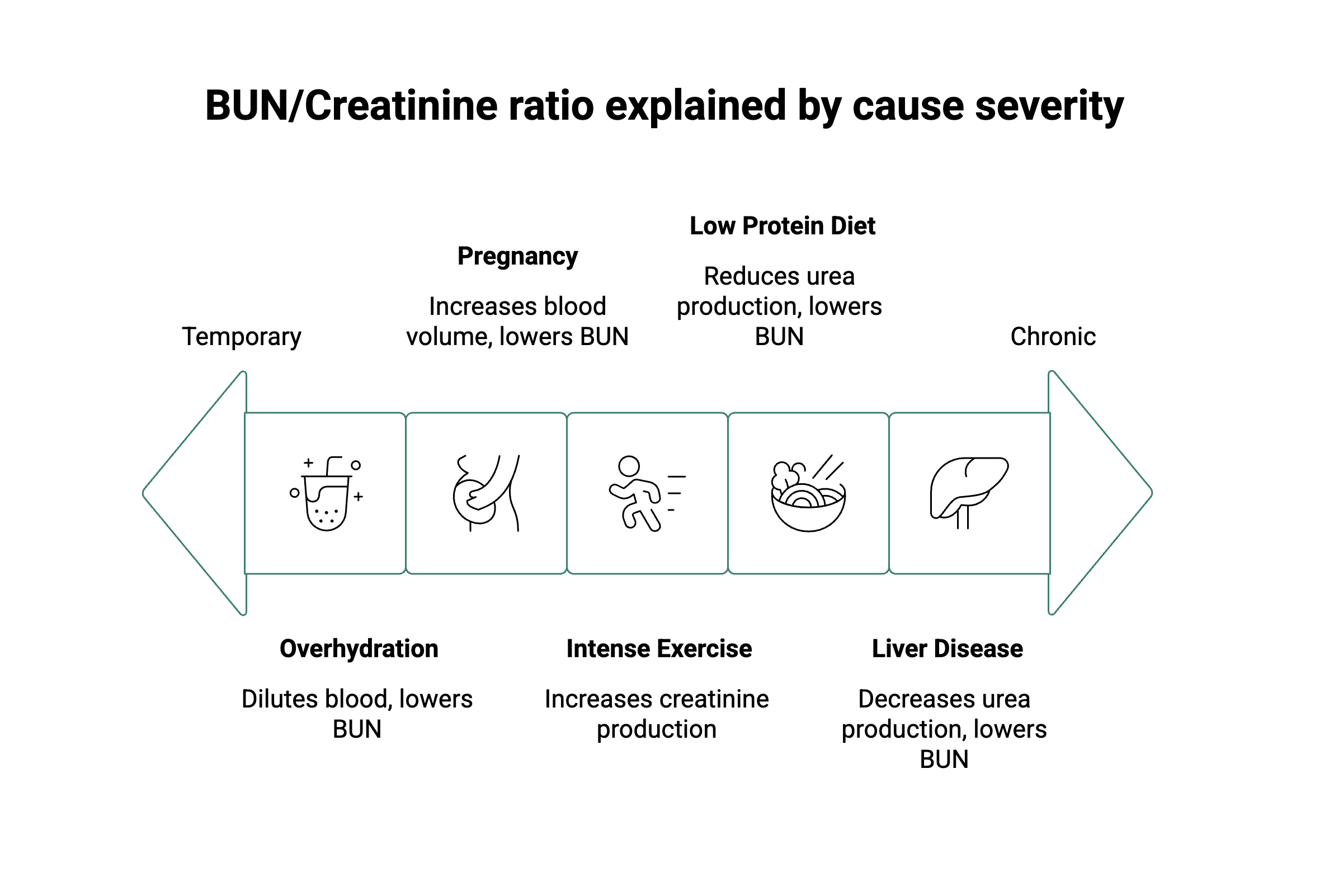
Diet and Protein Intake
Your eating habits directly affect your BUN levels. If you follow low protein diet, whether by choice or circumstance, your body produces less urea. This naturally brings your BUN down, which can lower ratio.
Vegetarian and vegan diets often result in lower BUN levels because plant proteins break down differently than animal proteins. This completely normal and not sign of anything wrong. Your body simply reflecting what you're putting into it.
Similarly, if you've been sick and not eating much, or if you've been on a restricted diet for medical reasons, your BUN can drop. Malnutrition or severe calorie restriction also reduces protein breakdown. These situations might need attention, but they're about nutrition rather than kidney damage.
Liver Function and Health
Your liver plays crucial role in creating urea from protein breakdown. When liver function decreases, urea production drops too. This leads to a lower BUN level, even if your kidneys are working perfectly fine.
Liver conditions can range from mild to serious. Fatty liver disease, which is increasingly common, might contribute to a slightly low ratio. Hepatitis, cirrhosis, or other chronic liver diseases can have more significant impact on urea production.
The important thing to know that your kidneys and liver work as a team. Sometimes low ratio is pointing toward liver health rather than kidney health. Your doctor will look at other liver function tests to get full picture.
Increased Muscle Breakdown
When your creatinine level is higher than expected, it can also lower ratio. This happens when muscle tissue breaks down more than usual. Intense exercise, especially weightlifting or endurance training, increases creatinine production temporarily.
If you had tough workout day before your blood test, this might explain a slightly elevated creatinine. Muscle injuries, trauma, or conditions that affect muscle tissue can also raise creatinine levels. Your body simply processing more muscle breakdown products than normal.
Certain medications and supplements, particularly creatine supplements used by athletes, can increase creatinine levels. If you take these, it's worth mentioning to your doctor when interpreting your results.
Pregnancy
Pregnancy changes your body in remarkable ways, including how your kidneys function. During pregnancy, your blood volume increases significantly. This dilution effect can lower your BUN levels, resulting in lower ratio.
Your kidneys also filter blood more efficiently during pregnancy. This increased filtration rate can further reduce BUN concentrations. These changes are completely normal and protect both you and your developing baby.
Most pregnant women will see variations in their kidney function tests. Your healthcare provider knows to expect these shifts and will interpret your results in context of pregnancy.
Overhydration
Drinking large amounts of water or receiving intravenous fluids can dilute your blood. This dilution lowers concentration of BUN more than creatinine, which can drop your ratio temporarily.
If you drank a lot of water before your blood test, or if you're on IV fluids in hospital setting, this might explain result. It's a mechanical effect rather than a true change in kidney or liver function.
This cause is usually temporary and resolves once your hydration status returns to normal. Your doctor might suggest repeating test if overhydration seems likely.
What Symptoms Might I Notice With Low BUN/Creatinine Ratio?
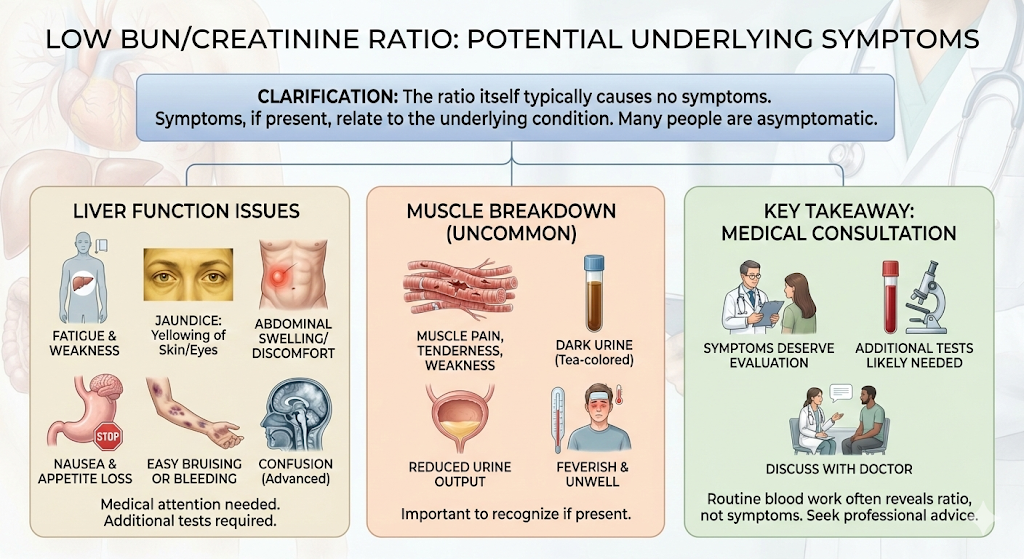
Here's something reassuring to know upfront: a low BUN to creatinine ratio itself usually doesn't cause symptoms. What you might notice are symptoms related to underlying cause, if there is one.
Many people discover their low ratio through routine blood work and feel completely fine. This actually quite common. The ratio is a clue for your doctor, not necessarily problem that makes you feel sick.
Having said that, if there an underlying issue affecting your liver, muscles, or overall nutrition, you might experience some signs. Let's look at what those might be, organized by body system involved.
If your low ratio relates to liver function, you might notice these changes in your body:
• Fatigue or feeling unusually tired without clear reason
• Yellowing of your skin or whites of your eyes, called jaundice
• Abdominal swelling or discomfort, especially in upper right side
• Nausea or loss of appetite that persists
• Easy bruising or bleeding more easily than usual
• Confusion or difficulty concentrating in more advanced cases
These symptoms deserve medical attention, though they don't always mean something serious. Your doctor can run additional tests to understand what's happening.
If muscle breakdown is playing role, you might experience:
• Muscle pain, tenderness, or weakness beyond normal soreness
• Dark colored urine, which might look tea-colored or cola colored
• Reduced urine output or changes in urination patterns
• Feeling generally unwell or feverish
Again, these symptoms are uncommon with a simple low ratio, but they're important to recognize if they occur.
Does a Low Ratio Mean My Kidneys Are Damaged?
This is often first worry people have, and here's reassuring truth: a low BUN to creatinine ratio usually does not indicate kidney damage. In fact, it more commonly points away from kidney problems than toward them.
When kidneys are damaged, ratio typically goes up rather than down. Kidney disease usually causes both BUN and creatinine to rise, but BUN tends to increase more. This creates a high ratio, not a low one.
A low ratio more often reflects what's happening before your blood reaches your kidneys or how your muscles and liver are functioning. Your kidneys might be working just fine. They're simply filtering blood that has different concentrations of these waste products.
Having said that, some kidney conditions can contribute to a low ratio. Acute tubular necrosis, a specific type of kidney injury, can sometimes lower ratio. But this condition comes with other clear signs like decreased urine output and other abnormal blood tests.
Your doctor will look at your complete kidney function, including your glomerular filtration rate or GFR, to truly assess kidney health. The ratio just one piece of information among many.
What Should I Do About My Low BUN/Creatinine Ratio?
The first and most important step not to panic. A single low ratio, especially if you feel well, rarely indicates something urgent. Many healthy people have low ratios at some point without any lasting consequences.
Follow up with your doctor as they recommend. They might want to repeat test, especially if you were dehydrated or had recently exercised. Sometimes waiting a few weeks and retesting provides much more useful information.
Take a moment to think about your recent diet and lifestyle. Have you been eating less protein than usual? Did you change to a plant-based diet? Have you been drinking more water? These insights help your doctor interpret your results accurately.
If you take any supplements, particularly protein powders or creatine, mention this to your healthcare provider. These can influence your test results in ways that are harmless but important to understand.
Let's break down what steps might come next, depending on what your doctor finds:
• If diet is cause, you might discuss whether your current protein intake meets your nutritional needs
• If liver function is involved, your doctor might order imaging or additional liver tests
• If overhydration is suspected, you might simply repeat test under different conditions
• If muscle breakdown is playing role, you might adjust your exercise routine or investigate medications
• If an underlying condition is found, your doctor will create specific treatment plan tailored to that situation
Treatment focuses on addressing underlying cause rather than ratio itself. The ratio is a signpost, not a disease. Once you and your doctor understand what's causing it, you can take appropriate action.
Can I Improve My BUN/Creatinine Ratio Through Lifestyle Changes?
In many cases, yes, simple lifestyle adjustments can help normalize your ratio. The right changes depend entirely on what's causing your low result in first place.
If low protein intake is the culprit, gradually increasing your protein consumption can help. You don't need to make dramatic changes. Adding modest amounts of lean protein, beans, nuts, or dairy can make difference over time.
Working with nutritionist can be incredibly helpful here. They can assess your current diet and suggest realistic ways to meet your body's protein needs. This especially valuable if you follow vegetarian or vegan diet and want to ensure you're getting complete nutrition.
If overhydration played a role, you don't need to restrict water drastically. Simply avoid drinking excessive amounts right before blood tests. Staying normally hydrated always best for your overall health.
For those whose ratio relates to intense exercise, you might time your blood tests for rest days. You don't need to stop exercising, which is important for your health. Just be aware that heavy workouts temporarily affect these markers.
If liver health is involved, lifestyle changes become more significant. These might include:
• Reducing or eliminating alcohol, which stresses your liver
• Maintaining healthy weight through balanced eating and regular movement
• Managing conditions like diabetes that can affect liver function
• Avoiding unnecessary medications or supplements that burden your liver
• Getting vaccinated against hepatitis A and B for liver protection
These changes support your liver's remarkable ability to heal and regenerate.
Conclusion
A low BUN to creatinine ratio usually more of a clue than a crisis. It gives your doctor information about how your body is processing protein, how your liver is functioning, and how your muscles are working.
If you're feeling well and your low ratio was discovered on routine testing, take deep breath. Follow up as your doctor recommends, but know that many people live healthy lives with slightly low ratios that never cause problems. Your body complex and resilient, and most variations in test results reflect that beautiful complexity rather than serious disease.
Health Companion
trusted by 6M people
Get clear medical guidance
on symptoms, medications, and lab reports.
Your health journey starts with a single question
Download August today. No appointments. Just answers you can trust.
