
Yes, the flu can cause diarrhea. It is more common in children, but adults can experience it too. The flu is mainly a respiratory illness, so most people expect a cough, sore throat, and body aches. Diarrhea is not first symptom that comes to mind. But it does happen, and it catches a lot of people off guard.
Why Does Flu Cause Stomach Problems?
The flu virus primarily targets your nose, throat, and lungs. But your body's immune response to virus can affect other systems too, including your digestive tract.
When your immune system fights flu, it releases chemicals called cytokines. These cytokines help your body attack virus, but they can also cause inflammation in your gut. That inflammation can speed up digestion, pull more fluid into intestines, and lead to loose or watery stools.
There is also some research suggesting that flu virus itself may reach gastrointestinal tract. Studies published through National Institutes of Health have found influenza viral RNA in stool samples of infected patients, especially children. This means virus may directly interact with lining of gut in some cases.
Is Diarrhea a Common Flu Symptom?
Diarrhea is not one of most common flu symptoms, but it is recognized as a real possibility. The CDC lists vomiting and diarrhea as flu symptoms, noting they are more common in children than adults.
Here is what you can typically expect with flu. The most frequent symptoms include fever or chills, cough, sore throat, runny or stuffy nose, body aches, headaches, and fatigue. Vomiting and diarrhea can show up alongside these, but they are less predictable.
In children, gastrointestinal symptoms show up more often. Research suggests that up to one third of children with influenza may experience diarrhea or vomiting. In adults, numbers are lower, but it still happens. During 2009 H1N1 pandemic, about 25% of hospitalized adults reported some form of gastrointestinal symptoms.
So while diarrhea may not be hallmark of flu, it is far from rare.
Is It Flu or Stomach Flu?
This is where things get confusing. Many people use the term "stomach flu" to describe an illness that causes vomiting and diarrhea. Bu stomach flu is actually a completely different condition called viral gastroenteritis.
Viral gastroenteritis is caused by viruses like norovirus or rotavirus. These viruses infect your digestive system directly. The real flu, caused by influenza viruses, targets your respiratory system. They are different infections caused by different viruses.
Here is a simple way to tell them apart. If your main symptoms are diarrhea and vomiting without much cough, congestion, or sore throat, you likely have gastroenteritis. If you have a cough, body aches, fever, and fatigue along with some diarrhea, it is more likely the actual flu.
That said, the flu can sometimes present with diarrhea as the most noticeable symptom, especially early on. In rare cases, adults with influenza B have been initially misdiagnosed with gastroenteritis because diarrhea came before respiratory symptoms appeared.
Who Is More Likely to Get Diarrhea With the Flu?
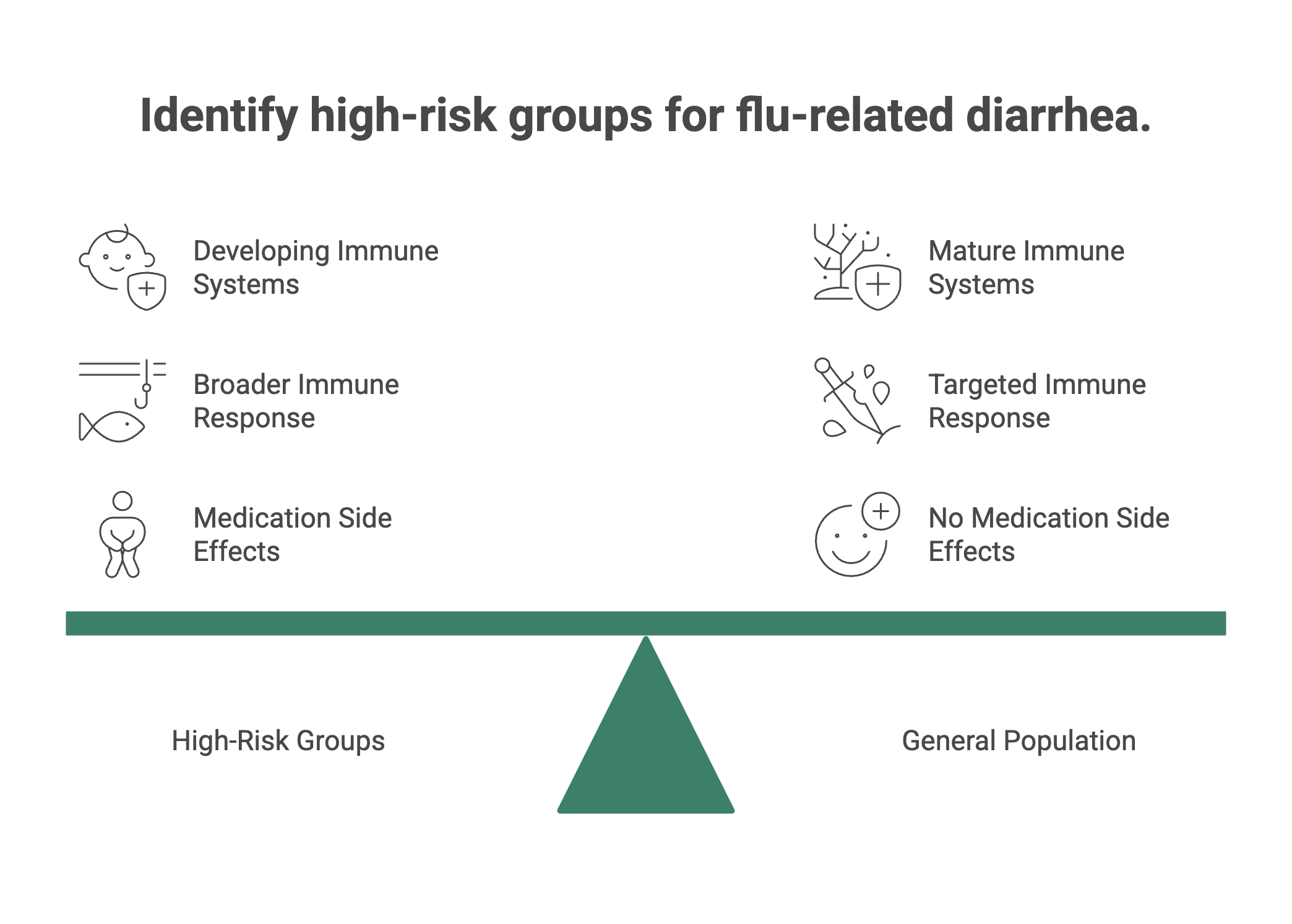
Some people are more prone to developing digestive symptoms during a flu infection. Understanding who is at higher risk can help you be better prepared.
- Children. Young kids are most likely group to develop diarrhea and vomiting with flu. Their immune systems are still developing, and their bodies tend to respond more broadly to viral infections.
- Older adults. People over 65 may experience a wider range of flu symptoms, including gastrointestinal ones. Their immune responses can be less targeted, leading to more systemic effects.
- People with weakened immune systems. If your immune system is compromised by a chronic condition, medication, or another illness, your body may struggle to contain flu to just respiratory system.
- People taking certain medications. Antiviral medications like oseltamivir (Tamiflu), while helpful in fighting flu, can cause nausea, vomiting, and diarrhea as side effects. So sometimes treatment itself adds to digestive discomfort.
If you fall into one of these groups and you notice stomach symptoms during flu season, it is worth paying extra attention to hydration and overall comfort.
What Should You Do If You Have Diarrhea With Flu?
Managing diarrhea during flu is mostly about supporting your body while it fights off virus. Here are some steps that can help.
Stay hydrated. This is the most important thing. Diarrhea and vomiting cause you to lose fluids and electrolytes quickly. Drink small, frequent sips of water, clear broth, or an oral rehydration solution. Avoid sugary drinks, caffeine, and alcohol, as they can make dehydration worse.
Eat bland foods when you can. Once you feel ready to eat, start with gentle options like crackers, plain rice, bananas, or toast. These are easy on stomach and can help firm up your stool.
Rest as much as possible. Your body needs energy to fight flu. Sleep and rest help your immune system do its job more effectively.
Avoid anti diarrheal medications without guidance. Otc anti diarrheal drugs can sometimes be helpful for adults, but they are generally not recommended for children. Talk to your healthcare provider before using them, especially if you also have a fever or blood in your stool.
Talk to your doctor about antivirals. If you are within 48 hours of your first symptoms, your doctor may prescribe an antiviral medication. Starting treatment early can shorten illness and reduce severity of all symptoms, including digestive ones.
When Should You See a Doctor?
Most people recover from flu on their own within one to two weeks. But there are situations where you should seek medical attention, especially when diarrhea is involved.
- Diarrhea lasts more than three days or gets worse instead of better.
- You see blood or dark, tarry stools.
- You cannot keep any fluids down for more than 12 hours.
- You notice signs of dehydration like dizziness, very dark urine, dry mouth, or no tears when crying (in children).
- Your fever goes above 103 degrees Fahrenheit or returns after it seemed to improve.
- You have a chronic health condition that puts you at higher risk for complications.
Children, older adults, pregnant women, and people with weakened immune systems should be monitored especially closely. Dehydration can progress quickly in these groups and may need medical intervention.
The Bottom Line
The flu can cause diarrhea, especially in children. It happens because your immune system's response to virus can affect your gut, and in some cases, virus itself may reach your digestive tract. While diarrhea is not most common flu symptom, it is a real one that deserves attention.
Staying hydrated, resting, and eating gently are best ways to manage it at home. If symptoms become severe or you cannot keep fluids down, reach out to a healthcare provider.
For more detail on flu symptoms, complications, and when to seek care, this resource covers it clearly: Flu Signs and Symptoms. You can also learn more about gastroenteritis and how it differs from the flu here: Gastroenteritis Overview. For a closer look at how serious the flu can be and why early treatment matters How Serious Is the Flu. And if you are dealing with stomach discomfort alongside the flu Settling an Upset Stomach.
