
Health Library
Why Do Diarrhea and Sweating Happen at Same Time?
February 15, 2026
Question on this topic? Get an instant answer from August.
Diarrhea and sweating happening together usually means your body's autonomic nervous system is reacting to some kind of internal stress. That stress could be an infection, a sudden blood sugar drop, anxiety, or something affecting your gut. The autonomic nervous system controls things you do not consciously manage, like digestion, heart rate, and sweating. When it detects a threat, it can activate both your gut and your sweat glands at same time.
Most of time, this combination is uncomfortable but not dangerous. A stomach bug or a bout of food poisoning is most common reason these two symptoms show up together. But in some cases, especially if pattern keeps repeating or comes with other unusual symptoms, it can point to something that needs medical attention.
What Are Most Common Causes?
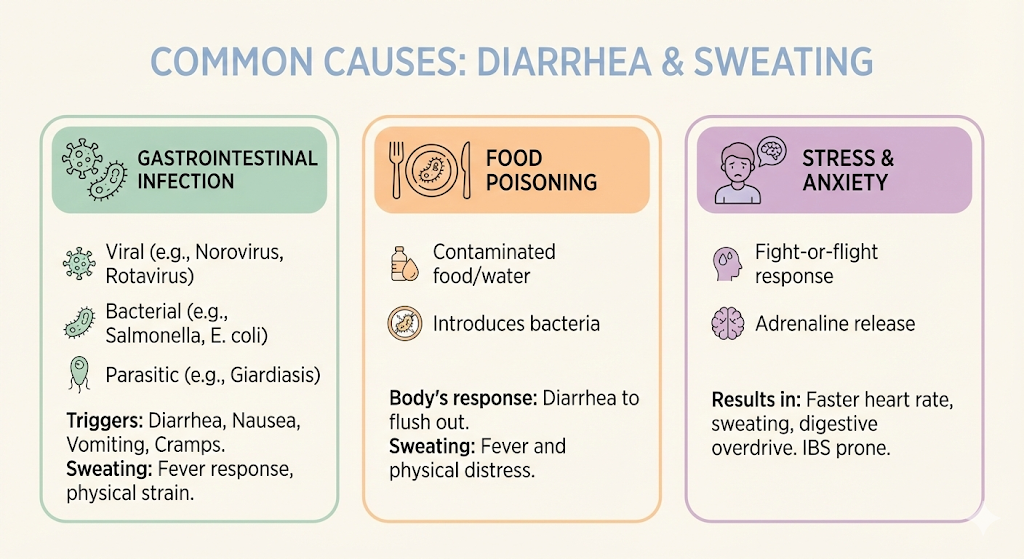
The most frequent cause is a gastrointestinal infection. Viral gastroenteritis, often called the stomach flu,caused by viruses like norovirus or rotavirus. It triggers diarrhea, nausea, vomiting, and stomach cramps. The sweating usually comes from fever your body produces to fight virus, or from physical strain of vomiting and cramping. Most cases resolve on their own within 48 to 72 hours.
Bacterial food poisoning works in a similar way. Contaminated food or water introduces bacteria like Salmonella, Campylobacter, or E. coli into your digestive tract. Your body responds with diarrhea to flush out bacteria, and accompanying fever and physical distress can trigger heavy sweating. Parasitic infections like giardiasis can also cause prolonged diarrhea and sweating, sometimes lasting weeks if untreated.
Stress and anxiety are another very common trigger. When you feel anxious or stressed, your body activates fight or flight response. This floods your system with adrenaline, which speeds up your heart rate, triggers sweating, and pushes your digestive system into overdrive. The result can be sudden diarrhea alongside clammy, sweaty skin. People with irritable bowel syndrome (IBS) are especially prone to this. IBS involves a heightened connection between gut and brain, so emotional stress can directly affect bowel function and bring on sweating at same time.
Can a Vasovagal Response Cause Both Symptoms?
Yes. A vasovagal response happens when vagus nerve, which runs from your brain to your abdomen, overreacts to a trigger. That trigger could be severe abdominal cramping, straining during a bowel movement, intense pain, or even standing up too quickly. When this nerve fires too strongly, it causes your blood pressure and heart rate to drop. That sudden drop can make you feel dizzy, sweaty, nauseous, and faint, all while your gut is already dealing with diarrhea.
Vasovagal episodes are usually short lived and resolve on their own. Sitting or lying down, sipping water, and breathing slowly can help you recover. But if fainting or near fainting keeps happening alongside diarrhea, it is worth discussing with your doctor.
Could Low Blood Sugar Be the Cause?
It could. Hypoglycemia, or low blood sugar, can cause sweating, shakiness, weakness, confusion, and sometimes diarrhea. This is more common in people with diabetes who are on insulin or certain blood sugar lowering medications. When blood sugar drops too low, body releases adrenaline to try to raise it back up, which triggers sweating and can also speed up digestion.
Reactive hypoglycemia is related condition where blood sugar drops quickly after eating, particularly after meals high in simple sugars. This can cause a combination of sweating, cramping, and diarrhea within one to three hours of a meal.
What About Dumping Syndrome?
Dumping syndrome is a condition where the stomach empties food into small intestine too quickly. It most common in people who have had stomach surgery, but it can occasionally happen without a surgical history. There are two phases. Early dumping happens within 30 minutes of eating and causes cramping, diarrhea, bloating, nausea, and sweating. Late dumping happens one to three hours after eating and related to a rapid blood sugar rise followed by a sharp drop, which brings on sweating, weakness, and dizziness.
If your diarrhea and sweating consistently happen shortly after meals, dumping syndrome is something your doctor may want to explore.
Are There Rarer Causes to Be Aware Of?
There are a few less common conditions worth knowing about.
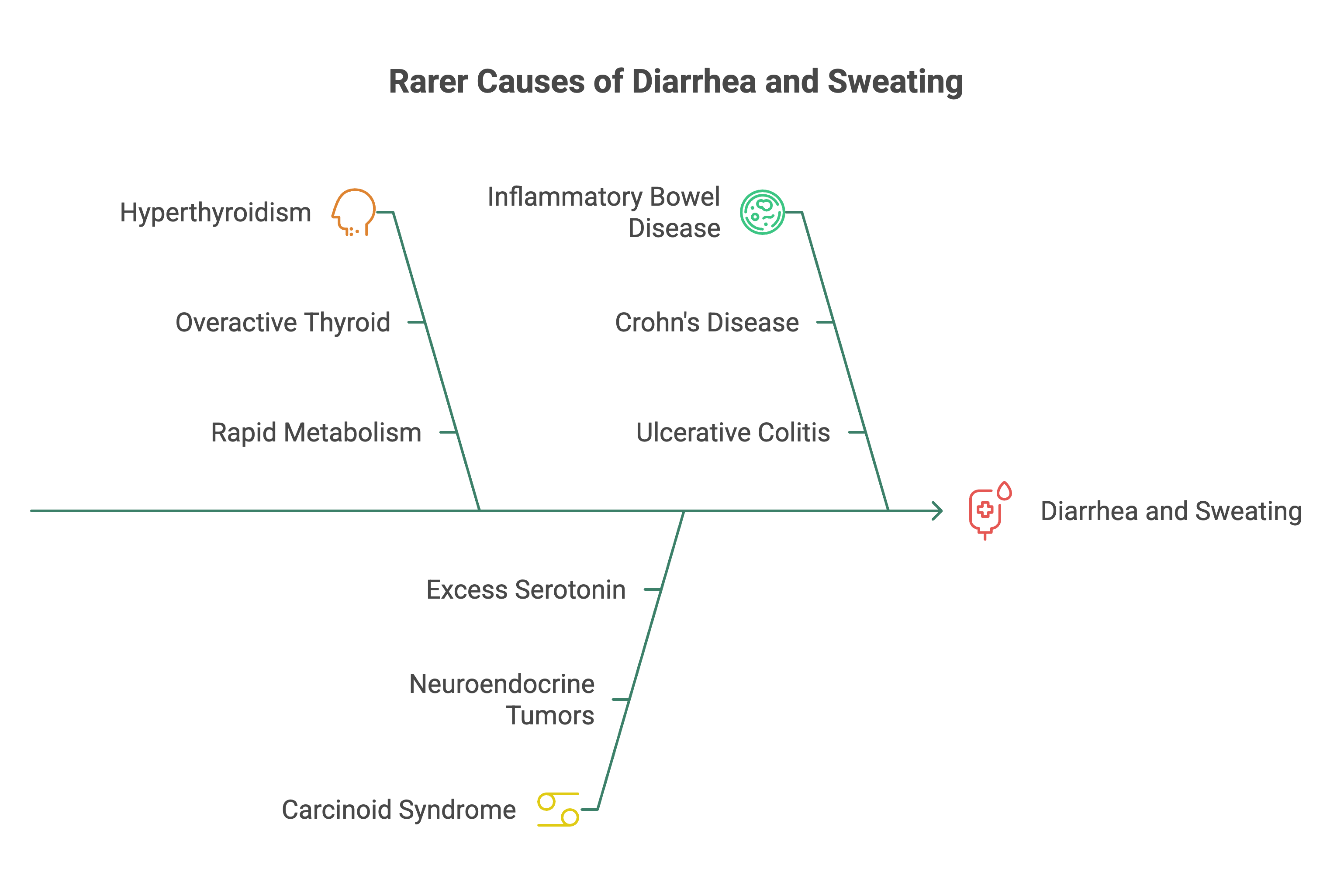
Hyperthyroidism is an overactive thyroid gland that speeds up your metabolism. It can cause frequent loose stools, excessive sweating, weight loss, a rapid heartbeat, and heat intolerance. If you are experiencing these symptoms together on an ongoing basis, a simple blood test can check your thyroid levels.
Carcinoid syndrome is a rare condition caused by certain neuroendocrine tumors that release excess serotonin and other chemicals into bloodstream. Main symptoms are facial flushing, diarrhea, and wheezing. Flushing and sweating can feel very similar. This syndrome typically develops only in people with advanced tumors that have spread to liver, so it uncommon, but it is important to know about if diarrhea and flushing are persistent and unexplained.
Inflammatory bowel disease (IBD), which includes Crohn's disease and ulcerative colitis, can also cause diarrhea alongside night sweats. inflammation in gut releases chemicals that can change your body temperature and trigger sweating, especially during flare ups.
What Can You Do at Home?
If your symptoms are mild and you suspect a stomach bug or stress, a few simple steps can help. Stay hydrated. Diarrhea and sweating both cause fluid loss, so drink water, clear broths, or an oral rehydration solution. Avoid caffeine, alcohol, and sugary drinks, as these can make diarrhea worse. Eat bland, easy to digest foods like rice, bananas, toast, and plain crackers. Rest as much as you can.
If stress or anxiety is triggered, slow breathing exercises, taking a short walk, or lying down in a cool room can help calm nervous system and ease both symptoms.
When Should You See a Doctor?
See a doctor if your diarrhea and sweating last more than two to three days, keep coming back, or come with warning signs like blood in your stool, a fever above 101°F, severe abdominal pain, signs of dehydration (dark urine, dizziness, dry mouth), unexplained weight loss, or fainting. These symptoms may mean something beyond a simple infection needs attention, and your doctor can run right tests to find out what going on.
Health Companion
trusted by
6Mpeople
Get clear medical guidance
on symptoms, medications, and lab reports.

download august