
Sudden dizziness and sweating together usually mean your body is reacting to some kind of internal stress. It could be something simple like low blood sugar or dehydration. Or it could signal something that needs closer attention, like a blood pressure drop or a heart issue.
Either way, your body is trying to tell you something. Most causes are manageable once you understand what is going on.
What Is Your Body Actually Doing?
When dizziness and sweating hit at the same time, your nervous system is activating a stress response. Something is off, whether it is a drop in blood sugar, a change in blood pressure, or a surge of adrenaline.
Dizziness happens when your brain is not getting enough blood flow or oxygen. Sweating kicks in when your body tries to cool down or when your "fight or flight" system fires up. When both happen together out of nowhere, your body is telling you something needs attention.
What Are Most Common Causes?
Several everyday conditions can trigger sudden dizziness and sweating. These are the ones that doctors see most often, and they are usually not dangerous.
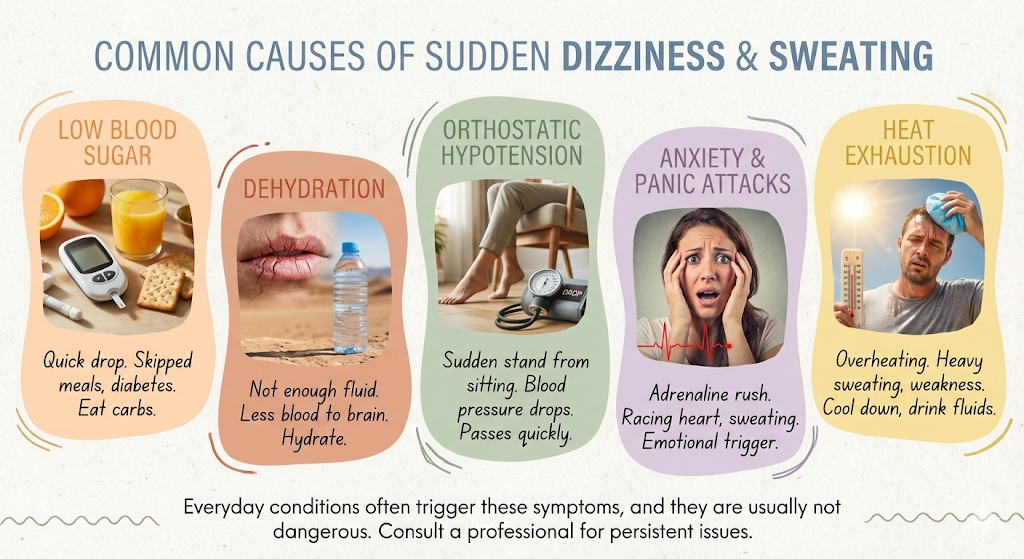
Low blood sugar is one of the most frequent culprits. If you skipped a meal, have not eaten enough, or have diabetes, your blood sugar can drop quickly. When it does, your body responds with dizziness, sweating, shakiness, and sometimes confusion. Eating something with carbohydrates, like fruit juice or crackers, usually helps within minutes.
Dehydration is another common trigger. When your body does not have enough fluid, your blood volume drops. That means less blood reaching your brain, which causes lightheadedness and sweating. This is especially common in hot weather, after exercise, or if you have been sick with vomiting or diarrhea.
A sudden drop in blood pressure can happen when you stand up too quickly from sitting or lying down. Doctors call this orthostatic hypotension. It can make you feel dizzy, sweaty, and like you might faint. It usually passes within a few seconds, but it can be unsettling when it catches you off guard.
Anxiety and panic attacks can also cause these symptoms. During a panic attack, your body releases a rush of adrenaline. Your heart races, your palms sweat, and you may feel dizzy or like the room is spinning. These episodes can feel very physical, even though the trigger is emotional. Working with a mental health professional can help you manage them.
Heat exhaustion happens when your body overheats and cannot cool down properly. You may feel dizzy, sweat heavily, and experience nausea or weakness. Moving to a cool area and drinking fluids can help, but if symptoms get worse, you need medical attention.
People also ask
Low blood sugar usually presents with shakiness and confusion alongside hunger, often occurring several hours after your last meal. If these symptoms improve quickly after you eat a small carbohydrate snack, low blood sugar is a likely cause. Track your eating patterns to see if your dizzy spells consistently align with gaps in your diet.
Panic attacks often cause intense, frightening physical symptoms like racing heartbeats and sweating because they trigger your body's fight or flight response. Even if there is no immediate external danger, your nervous system acts as if there is one. Many people describe these episodes as feeling like a health crisis despite the origin being emotional.
What About Less Common Causes?
Sometimes sudden dizziness and sweating point to something that needs a closer look. These causes are less frequent, but it is important to know about them.
Inner ear problems like benign paroxysmal positional vertigo (BPPV) can cause intense spinning dizziness when you move your head certain ways. The episode is usually brief, but it can trigger sweating and nausea. BPPV happens when tiny crystals in your inner ear shift out of place. A doctor or physical therapist can often treat it with simple head repositioning exercises.
Hormonal changes during menopause or perimenopause can cause hot flashes. These are sudden waves of heat, flushing, and sweating. Your heart rate may increase during a hot flash, which can bring on dizziness. Thyroid problems, particularly an overactive thyroid, can also cause episodes of sweating, rapid heartbeat, and lightheadedness.
Medication side effects are worth considering too. Some prescription drugs list dizziness or sweating as possible side effects. If your episodes started around the time you began a new medication or changed your dose, mention it to your doctor.
Heart-related issues are the most serious possibility. During a heart attack, some people experience dizziness, cold sweats, chest tightness, and nausea. Irregular heart rhythms can also reduce blood flow to the brain and trigger these symptoms. This is especially important to be aware of if you are older, have a history of heart disease, or have risk factors like high blood pressure or diabetes.
People also ask
Yes, many prescription and over-the-counter drugs list dizziness as a potential side effect. If your symptoms began after starting a new medication or adjusting your dosage, it is a strong signal to investigate further. Contact your prescriber to see if an alternative or a dosage change is appropriate.
Most inner ear issues like BPPV involve a distinct feeling that the room is spinning around you. This sensation is often triggered by specific head movements, such as rolling over in bed or looking up. These episodes are generally brief but can leave you feeling nauseated or unsteady for a while after.
What Should You Do When It Happens?
If a sudden wave of dizziness and sweating hits, sit or lie down right away. This prevents a fall and helps blood flow back to your brain.
From there, these steps can help:
- Drink water or an electrolyte drink slowly.
- If you have not eaten recently, have a small snack with sugar or carbohydrates.
- Take slow, deep breaths to calm your nervous system.
- Loosen any tight clothing to help your body regulate temperature.
- Stay still until the episode passes. Avoid standing up quickly.
Most episodes caused by common triggers like low blood sugar or dehydration resolve within a few minutes with these steps.
[IMG:https://assets.getbeyondhealth.com/health-lib/blogs/manual_upload_20260216164704_dizziness-actions.png
People also ask
Lying down is generally the safest choice because it minimizes the risk of falling if you lose consciousness. It also helps blood circulate more easily back to your brain, which can quickly alleviate feelings of lightheadedness. Stay in that position until you feel completely steady before attempting to stand.
When Should You Get Emergency Help?
Most of the time, sudden dizziness and sweating are not emergencies. But there are specific warning signs that mean you should call for help right away.
Get emergency medical care if your dizziness and sweating come with:
- Chest pain, pressure, or tightness
- Difficulty breathing or shortness of breath
- Sudden severe headache
- Slurred speech or trouble speaking
- Weakness or numbness on one side of your body
- Fainting or loss of consciousness
- Confusion that does not clear quickly
These combinations could point to a heart attack, stroke, or another serious condition that needs immediate treatment. When in doubt, it is always safer to get checked.
People also ask
A heart attack usually involves more than just dizziness, such as crushing chest pressure, shortness of breath, or pain radiating to your arms or jaw. If you have a history of heart disease or risk factors, even mild symptoms require a cautious approach. When in doubt, seek emergency care to be safe.
You Know Your Body Best
If sudden dizziness and sweating happen once and resolve quickly, it may be nothing more than a skipped meal or a hot room. But if these episodes keep happening or feel more intense over time, talk your doctor.
Keeping a simple log of when episodes happen and what other symptoms you notice can be really helpful. Your doctor can use those details to figure out what is going on and help you feel steady again.
