
Yes, gabapentin can make you sleepy. Drowsiness is one of the most common side effects of this medication. Studies show that roughly 19 to 21 percent of people taking gabapentin for its approved uses report feeling sleepy, and broader estimates suggest anywhere from 10 to 30 percent experience some degree of sedation.
The good news is that this sleepiness usually gets better as your body adjusts.
Why Does Gabapentin Cause Drowsiness?
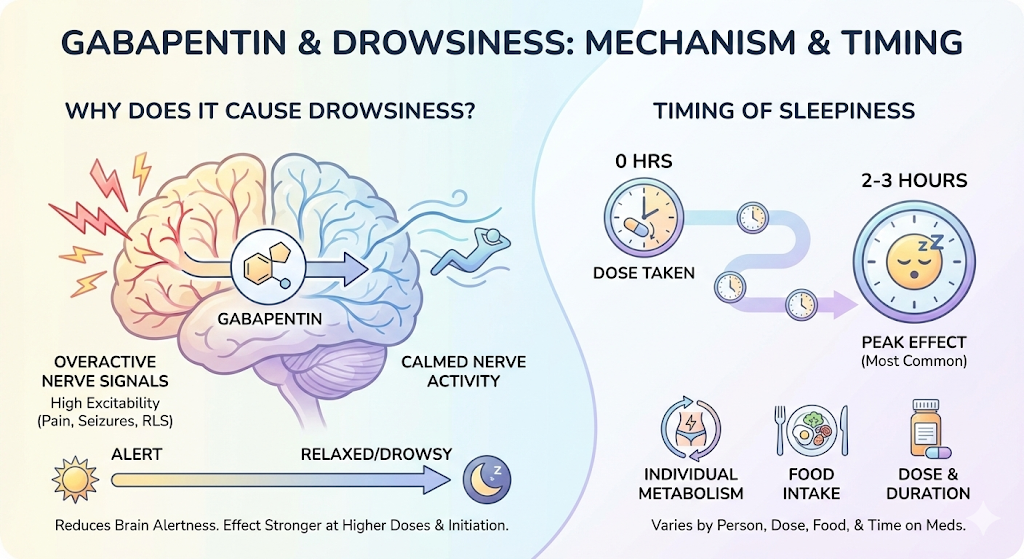
Gabapentin works by calming overactive nerve signals in your brain and spinal cord. It reduces the excitability of nerve cells, which is how it helps with conditions like nerve pain, seizures, and restless legs syndrome.
That same calming effect is what causes drowsiness. When gabapentin quiets nerve activity to reduce pain or prevent seizures, it also makes your brain feel more relaxed than you want during the day. The pain signal gets quieter, but so does your alertness.
This sedative effect is stronger at higher doses. It also tends to be more noticeable when you first start taking gabapentin or right after your doctor increases the dose.
How Quickly Does the Sleepiness Kick In?
Gabapentin does not make you drowsy the moment you swallow it. It takes time to absorb and reach its peak level in your bloodstream.
Most people start to feel the sedative effect within 2 to 3 hours after taking a dose. That is when the medication reaches its highest concentration in your blood. However, the exact timing varies from person to person based on your metabolism, your dose, whether you took it with food, and how long you have been on the medication.
Some people feel drowsy fairly quickly. Others barely notice it. Your individual response depends on your body chemistry, dose, and what other medications you take.
People also ask
Most people do not feel drowsy the moment they take the medication, as it takes time to absorb into your system. You can generally expect to feel the sedative effects within two to three hours. Plan to be at home after your first dose until you know how your body reacts.
Does the Sleepiness Go Away Over Time?
For most people, yes. Your body gradually adjusts to gabapentin over the first few weeks. The drowsiness that feels heavy at the start often fades or disappears completely.
This is why doctors start you on a low dose and increase slowly. Gradual titration gives your nervous system time to adapt without overwhelming you with sedation.
If sleepiness is still affecting your daily life after a few weeks, let your doctor know. They may adjust your dose, shift more of the dose to bedtime, or explore other options.
People also ask
For most people, the intense sleepiness is a temporary phase that fades as your nervous system adapts. It is very common for these feelings to improve or disappear entirely within the first few weeks. Be patient during this initial adjustment period as your body builds tolerance.
Does the Dose Matter?
It does. Drowsiness is dose dependent with gabapentin. The higher the dose, the more likely you are to feel sleepy.
Gabapentin is prescribed across a wide range. Some people take as little as 100 to 300 mg per day, while others take 1,800 mg or more daily, split across multiple doses. At lower doses, many people experience little to no drowsiness. At higher doses, sedation becomes much more common.
Your doctor will aim to find the lowest dose that effectively manages your symptoms. That balance between relief and side effects is the goal.
People also ask
There is a strong connection between the amount of medication you take and the level of sedation you experience. Higher doses are more likely to cause significant drowsiness compared to smaller, conservative amounts. Doctors try to find the lowest possible dose to keep you alert while still managing your symptoms.
What Makes the Sleepiness Worse?
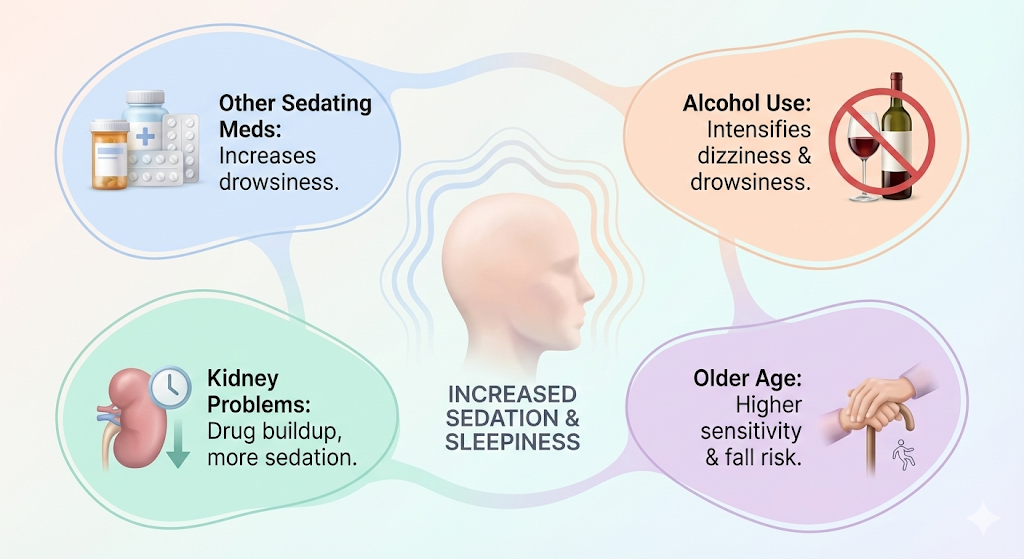
Several things can amplify gabapentin's sedative effect.
Other sedating medications. Combining gabapentin with opioids, benzodiazepines, muscle relaxants, sleep aids, or certain antidepressants increases the risk of excessive drowsiness. In serious cases, this combination can slow breathing to dangerous levels, especially in older adults or people with lung conditions.
Alcohol. Drinking while taking gabapentin intensifies both the drowsiness and the dizziness. It also raises the risk of impaired coordination and slowed breathing. Avoiding alcohol while on gabapentin is strongly recommended.
Kidney problems. Gabapentin is cleared from your body through the kidneys. If your kidneys are not working at full capacity, the drug stays in your system longer and builds to higher levels. That means more sedation, even at standard doses. People with kidney issues usually need lower doses.
Age. Older adults tend to be more sensitive to gabapentin's sedative effects. They are also at higher risk for falls related to the drowsiness and dizziness the medication can cause.
People also ask
Combining gabapentin with alcohol or other sedating drugs can significantly intensify drowsiness and slow your breathing. Even common over the counter items or prescribed muscle relaxants can have an additive effect. Always review your full list of medications with your doctor to identify hidden risks.
Can You Use the Sleepiness to Your Advantage?
Some doctors actually use gabapentin's sedative effect intentionally. While it is not FDA approved as a sleep aid, it is sometimes prescribed off-label for insomnia, especially when sleep problems are connected to nerve pain, anxiety, or restless legs syndrome.
One study found that adults who took 250 mg or 500 mg of gabapentin 30 minutes before bedtime had improved sleep time and quality. Research also shows gabapentin increases slow wave sleep, which is the deep, restorative stage your body needs most.
If gabapentin makes you drowsy, your doctor might suggest taking a larger portion of your dose at bedtime. The sedation works in your favor while you sleep rather than dragging you down during the day.
People also ask
If your doctor agrees, shifting your dose to bedtime can help you benefit from the sedating effects while you sleep. This approach often allows you to get the relief you need without dealing with daytime fog. Ask your provider if your specific dosing schedule is flexible enough for this change.
Tips for Managing Daytime Drowsiness
If gabapentin sleepiness is affecting your day, a few practical steps can help.
- Talk to your doctor about dose timing. Shifting more of your daily dose to bedtime can reduce daytime sedation while still managing your condition.
- Avoid driving or operating machinery until you know how gabapentin affects you, especially during the first few weeks or after a dose increase.
- Skip alcohol. Even small amounts can make the drowsiness significantly worse.
- Give it time. The first one to two weeks are usually the worst. Many people find the sleepiness eases as their body adjusts.
- Do not stop suddenly. Quitting gabapentin abruptly can cause withdrawal symptoms like anxiety, insomnia, nausea, and sweating. If you want to stop, your doctor will taper the dose gradually.
People also ask
It is safest to avoid driving or operating heavy machinery during your first few weeks of treatment. Only start these activities once you are certain the medication is not affecting your alertness or coordination. Trust your instincts and start with short, low-risk trips first.
The Bottom Line
Gabapentin does make many people sleepy, especially early in treatment and at higher doses. This effect usually improves as your body adjusts. If it does not, your doctor can adjust the timing or dose to help you feel more alert during the day. The key is working with your prescriber to find the right balance between symptom relief and side effects.
