
Gabapentin and tizanidine can be taken together, but only under medical supervision. Both medications affect your central nervous system, so combining them increases risk of side effects like drowsiness, dizziness, and low blood pressure. Your doctor may still prescribe them together if benefits outweigh the risks, usually starting at low doses and adjusting carefully.
Let's go through how each medication works, what happens when you combine them, and what you should watch for.
What Does Each Medication Do?
These two drugs treat different problems, but they overlap in how they affect your body.
Gabapentin is an anticonvulsant (anti-seizure medication) that also treats nerve pain. Doctors prescribe it for conditions like postherpetic neuralgia (nerve pain after shingles), diabetic neuropathy, and as an add-on treatment for partial seizures. It works by calming overactive nerve signals in your brain and spinal cord. Common side effects on its own include dizziness, drowsiness, and poor muscle coordination.
Tizanidine is a muscle relaxant. It is used to treat muscle spasticity, which is stiffness and tightness that comes with conditions like multiple sclerosis, spinal cord injuries, or certain neurological disorders. It works as an alpha-2 adrenergic agonist, meaning it blocks nerve signals that cause muscles to contract. Common side effects include dry mouth, drowsiness, and dizziness.
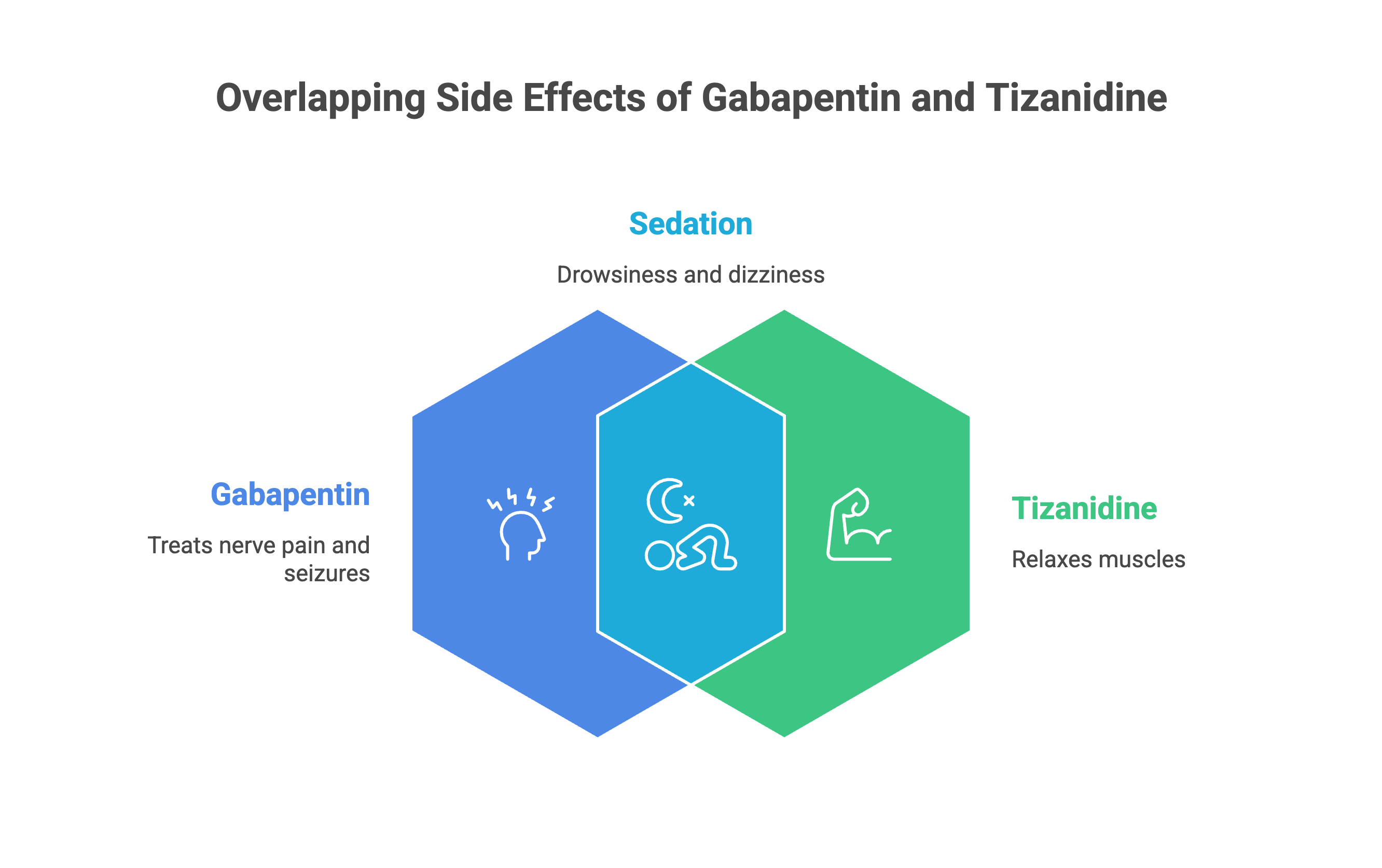
Both drugs cause sedation on their own. That shared effect is main reason combining them requires caution.
How Do Gabapentin and Tizanidine Interact?
The interaction between these two medications is classified as moderate. That means it is not considered dangerous enough to be completely avoided, but it does need careful management.
When you take gabapentin and tizanidine together, their sedative effects add up. Your brain receives a stronger calming signal than it would from either drug alone. This can lead to increased drowsiness and fatigue, difficulty concentrating and thinking clearly, impaired coordination and slower reaction times, dizziness or lightheadedness, and confusion, especially in older adults.
There is also an additive effect on blood pressure. Tizanidine can lower blood pressure significantly on its own. Studies show that a single 8 mg dose caused a 20 percent drop in blood pressure in about two-thirds of patients. Gabapentin can also contribute to blood pressure changes. Together, you may experience more noticeable drops in blood pressure, especially when standing up from a sitting or lying position. This is called orthostatic hypotension, and it can cause lightheadedness or fainting.
These effects tend to be strongest when you first start combination, after a dose increase, or when treatment restarts after a break.
Why Would a Doctor Prescribe Both?
Despite interaction, there are clinical reasons to use both medications together. Some patients have conditions that involve both nerve pain and muscle spasticity. For example, someone with a spinal cord injury may have burning nerve pain that responds to gabapentin and muscle tightness that responds to tizanidine.
In these cases, using both drugs allows each one to target a different part of the problem. The combination can provide better overall symptom relief than either drug alone, sometimes at lower individual doses.
Doctors who prescribe this combination typically start both drugs at the lowest effective dose. They then increase doses slowly and separately so they can track how your body responds to each change. This careful titration process helps reduce risk of excessive sedation or blood pressure drops.
Who Should Be Extra Careful?
Certain groups face higher risks when combining these medications.
Older adults are more sensitive to central nervous system depression. The combination can significantly increase fall risk in this group, which can lead to serious injuries like hip fractures.
People with kidney problems need extra attention because gabapentin is eliminated through kidneys. If your kidneys are not filtering efficiently, gabapentin can build up in your system and intensify sedative interaction.
People with liver conditions need monitoring because tizanidine is processed through liver. Tizanidine has been linked to liver enzyme elevations in some patients, and in rare cases, serious liver injury. Your doctor will likely order liver function tests at start of treatment and at regular intervals.
Anyone taking other sedating medications should be especially cautious. Adding opioids, benzodiazepines, sleep aids, or alcohol to gabapentin tizanidine combination can push sedation to dangerous levels, including risk of slowed breathing.
What Should You Avoid While Taking Both?
A few precautions can help keep you safe while using this combination.
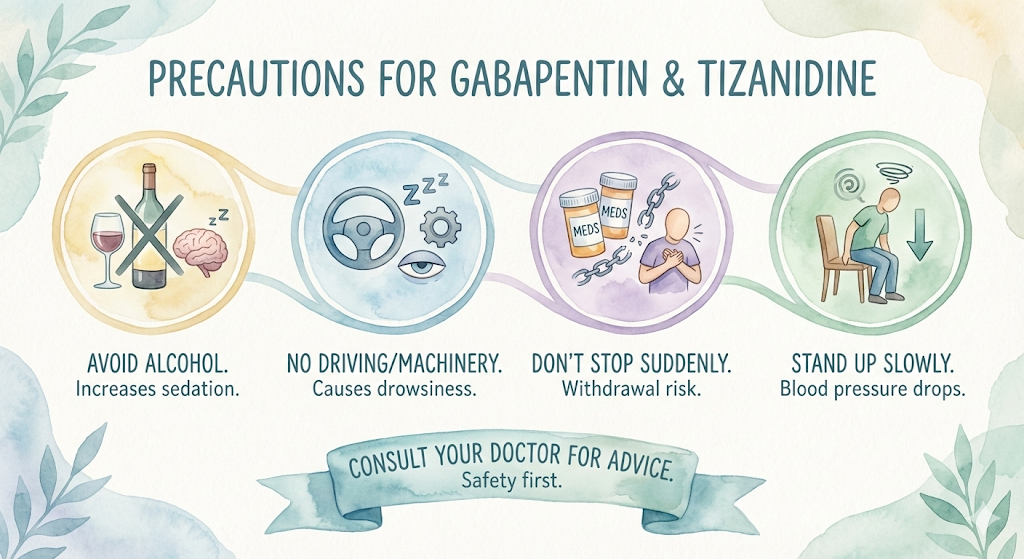
Avoid alcohol. Alcohol is another central nervous system depressant. Adding it to gabapentin and tizanidine creates a triple sedation effect that can impair your judgment, coordination, and breathing.
Do not drive or operate machinery until you know how the combination affects you. The first few days and any dose adjustment periods are when you are most likely to feel excessively drowsy or uncoordinated.
Do not stop either medication suddenly. Both gabapentin and tizanidine can cause withdrawal symptoms if discontinued abruptly. Gabapentin withdrawal may include anxiety, insomnia, and nausea. Tizanidine withdrawal can cause rebound high blood pressure and increased heart rate. Always taper under your doctor's guidance.
Stand up slowly. The blood pressure lowering effects of this combination can make you dizzy when you change positions. Take a moment to sit on edge of bed before standing, and hold onto something stable until you feel steady.
When Should You Call Your Doctor?
Contact your doctor if you experience excessive drowsiness that makes it hard to function during the day, confusion or difficulty thinking clearly, fainting or near-fainting episodes, a heart rate that feels unusually slow, or any signs of liver problems like yellowing skin, dark urine, or persistent nausea.
These symptoms may mean your dose needs adjusting or that combination is not right for you.
The Bottom Line
Gabapentin and tizanidine can work well together for people dealing with both nerve pain and muscle spasticity. But combination needs medical oversight. Start low, increase slowly, avoid alcohol and other sedatives, and stay in regular contact with your doctor. With right monitoring, many people use both medications safely and effectively.
