
Health Library
Why Do I Have a Headache and Diarrhea at the Same Time?
February 7, 2026
Question on this topic? Get an instant answer from August.
Having both a headache and diarrhea at the same time can feel unsettling and uncomfortable. These two symptoms often appear together because many conditions affect multiple body systems at once. Your digestive system and nervous system are more connected than you might think, and when something disrupts your body's balance, both can react simultaneously.
What Does It Mean When You Have Both Headache and Diarrhea?
When headache and diarrhea happen together, your body is usually responding to a shared trigger or stressor. This combination most commonly signals an infection, dehydration, or a systemic reaction to something you ate or encountered. The connection makes sense when you consider that many illnesses affect your entire body, not just one isolated part.
Your gut and brain communicate constantly through what doctors call the gut-brain axis. This network of nerves and chemical messengers means that distress in your digestive system can trigger head pain, and vice versa. When inflammation or infection occurs, your body releases chemicals that can cause both intestinal upset and head discomfort at the same time.
What Are the Most Common Causes of Headache and Diarrhea Together?
Several everyday conditions can bring on both symptoms at once. Most of these causes are temporary and resolve with basic care and rest. Let me walk you through what you might be dealing with, starting with the most frequent culprits.
Viral Gastroenteritis
Viral gastroenteritis, often called stomach flu, is probably the most common reason for experiencing headache and diarrhea together. This infection inflames your stomach and intestines, causing watery bowel movements, nausea, and often a throbbing head. The headache happens partly because of dehydration from fluid loss and partly because your immune system releases inflammatory chemicals while fighting the virus.
You might also feel tired, have a low fever, and experience muscle aches. These viruses spread easily through contaminated food, water, or close contact with someone who is sick. Most people start feeling better within a few days with rest and careful rehydration.
Food Poisoning
Food poisoning occurs when you eat something contaminated with bacteria, viruses, or toxins. Your body reacts quickly, often within hours of eating the problematic food. Diarrhea is your digestive system's way of flushing out the harmful substance as fast as possible.
The headache that comes with food poisoning often stems from dehydration and the toxic effects of bacterial byproducts in your system. You might also experience stomach cramps, vomiting, and weakness. The intensity can vary dramatically depending on what contaminated your food and how much you consumed.
Dehydration
Dehydration itself can cause both headache and diarrhea, and it also makes both symptoms worse when they stem from other causes. When your body lacks enough fluid, your brain can temporarily contract or shrink slightly from fluid loss, pulling on pain-sensitive membranes and causing head pain. Meanwhile, dehydration can disrupt normal bowel function and lead to loose stools.
You might notice dark urine, dry mouth, dizziness, and fatigue alongside these symptoms. Dehydration can sneak up on you during hot weather, intense exercise, or illness. Rehydrating gradually with water or electrolyte solutions usually brings relief within several hours.
Stress and Anxiety
Your emotional state has real, physical effects on your body. Stress and anxiety activate your nervous system in ways that can trigger both tension headaches and digestive upset. When you feel anxious, your body releases stress hormones like cortisol and adrenaline that can speed up bowel movements and cause loose stools.
At the same time, tension builds in your neck and scalp muscles, creating pressure-type headaches. Many people experience these symptoms before important events, during difficult life circumstances, or when dealing with ongoing worry. Your gut has its own nervous system with millions of nerve cells, which is why it reacts so strongly to emotional stress.
Migraine with Digestive Symptoms
Migraines are more than just severe headaches. They involve your entire nervous system and can trigger digestive symptoms including diarrhea, nausea, and vomiting. Some people experience stomach upset before the head pain even begins, as an early warning sign of an approaching migraine.
This happens because migraines affect the part of your nervous system that controls automatic body functions like digestion. The pain typically throbs on one side of your head and may come with sensitivity to light, sound, or smells. If you have recurring episodes with this pattern, tracking your symptoms can help identify triggers and guide treatment.
Medication Side Effects
Certain medications can cause both headache and diarrhea as side effects. Antibiotics frequently disrupt the balance of bacteria in your gut, leading to loose stools, while also occasionally causing head discomfort. Pain relievers, especially when taken frequently or on an empty stomach, can irritate your digestive system and paradoxically trigger rebound headaches.
Blood pressure medications, antidepressants, and supplements like magnesium can also produce this combination of symptoms. If you recently started a new medication and these symptoms appeared, the timing might not be coincidental. Never stop prescribed medications without consulting your healthcare provider, but do mention these symptoms at your next appointment.

What Are Some Less Common But Important Causes to Know About?
While most cases of headache and diarrhea together come from the common causes above, some less frequent conditions can produce these symptoms too. Being aware of these possibilities helps you recognize when something needs closer medical attention.
Inflammatory Bowel Disease
Inflammatory bowel disease, which includes Crohn's disease and ulcerative colitis, causes chronic inflammation in your digestive tract. People with these conditions often experience frequent diarrhea, sometimes with blood or mucus. Headaches can occur due to inflammation, nutritional deficiencies from poor absorption, or as a side effect of treatments.
These are long-term conditions that typically involve other symptoms like weight loss, fatigue, and abdominal pain. They require ongoing medical management and usually develop patterns that help distinguish them from temporary illnesses.
Celiac Disease
Celiac disease is an immune reaction to eating gluten, a protein found in wheat, barley, and rye. When someone with celiac disease consumes gluten, their immune system attacks the small intestine lining. This damage leads to diarrhea and poor nutrient absorption, which can trigger headaches through multiple mechanisms.
The inflammation itself can cause head pain, and the resulting nutritional deficiencies, particularly in B vitamins and iron, contribute to chronic headaches. Many people go years without knowing they have celiac disease because symptoms can be subtle or attributed to other causes.
Chronic Fatigue Syndrome
Chronic fatigue syndrome involves profound, lasting tiredness that does not improve with rest. People with this condition often experience both frequent headaches and digestive problems including diarrhea. The exact cause remains unclear, but it seems to involve immune system dysfunction and problems with how the body produces and uses energy.
This condition develops over time rather than suddenly. The headaches are often tension-type or migraine-like, and digestive symptoms may resemble irritable bowel syndrome.
When Should These Symptoms Concern You?
Most episodes of headache and diarrhea resolve on their own within a few days. However, certain warning signs suggest you need medical evaluation sooner rather than later. Knowing what to watch for can help you make confident decisions about your care.
Here are situations that warrant reaching out to a healthcare provider without delay:
• Severe headache that feels different from any you have experienced before, especially if it comes on suddenly and intensely
• Diarrhea lasting more than three days without improvement
• Blood or black, tarry stools in your bowel movements
• Signs of significant dehydration like extreme thirst, very dark urine, dizziness when standing, or decreased urination
• High fever over 102 degrees Fahrenheit or 39 degrees Celsius
• Severe abdominal pain that keeps getting worse
• Persistent vomiting that prevents you from keeping down fluids
• Confusion, neck stiffness, or difficulty speaking
• Symptoms following recent travel to developing countries
• Weakness or numbness in your arms or legs
These warning signs might indicate complications like severe dehydration, a serious infection, or a condition that needs specific treatment. Trust your instincts about your body. If something feels seriously wrong, seeking medical attention is always the right choice.
What Can You Do at Home to Feel Better?
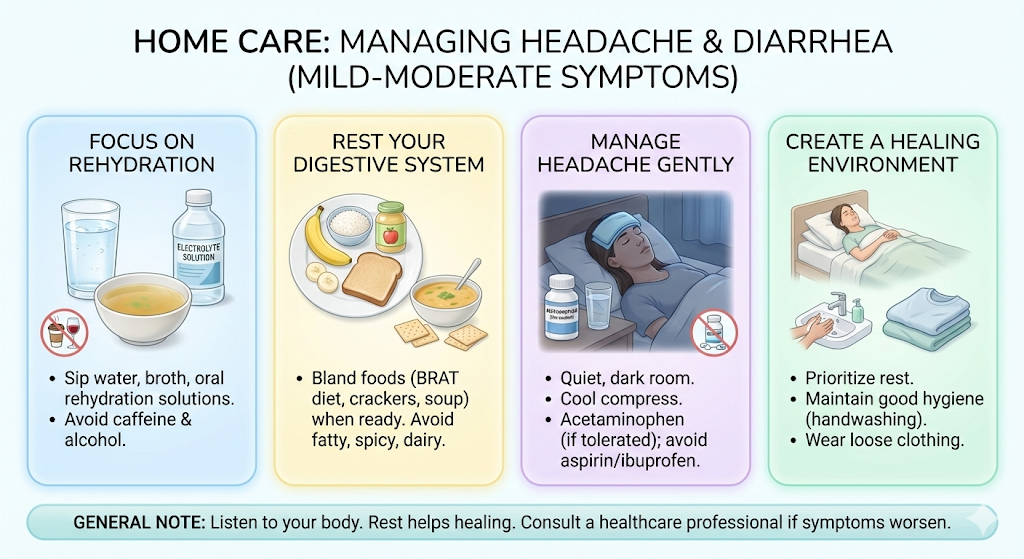
When your symptoms are mild to moderate and you do not have any warning signs, you can often manage headache and diarrhea at home with supportive care. The goal is to help your body heal while staying comfortable and preventing complications.
Focus on Rehydration
Replacing lost fluids is your most important task when dealing with diarrhea. Sip water, clear broths, or oral rehydration solutions throughout the day. These special solutions contain the right balance of salt and sugar to help your body absorb water more effectively than plain water alone.
Avoid caffeine and alcohol, as both can worsen dehydration. If plain water upsets your stomach, try sucking on ice chips or taking very small sips every few minutes. As you start feeling better, you can gradually increase the amount you drink.
Rest Your Digestive System
Your gut needs a chance to recover and calm down. Start with bland, easy-to-digest foods once you feel ready to eat. The BRAT diet, which includes bananas, rice, applesauce, and toast, provides gentle nutrition without irritating your system. You can also try plain crackers, boiled potatoes, or clear soups.
Avoid fatty, spicy, or heavily seasoned foods until your diarrhea resolves completely. Dairy products can be harder to digest temporarily after a stomach illness, so you might want to limit these for a few days. Listen to your body and only eat when you feel hungry.
Manage Your Headache Gently
Rest in a quiet, dark room if possible, as this helps reduce headache intensity. A cool compress on your forehead or the back of your neck can provide soothing relief. If your stomach can tolerate it, acetaminophen may help with head pain, but be cautious with medications when you have digestive upset.
Avoid aspirin and ibuprofen if your stomach feels sensitive, as these can irritate your digestive lining. Sometimes the headache improves significantly once you address dehydration, so focus on fluids first.
Create a Healing Environment
Give yourself permission to rest completely. Your body is working hard to fight off whatever is causing these symptoms, and rest supports that healing process. Keep your bathroom easily accessible and maintain good hygiene by washing your hands thoroughly after each bathroom visit to prevent spreading any infection.
Wear comfortable, loose clothing and keep your room at a comfortable temperature. If you feel cold, use light blankets, but avoid overheating, which can make headaches and nausea worse.
How Do Doctors Figure Out What Is Causing Your Symptoms?
If you need to see a healthcare provider, they will ask detailed questions about your symptoms to understand what might be happening. The pattern, timing, and severity of your headache and diarrhea all provide important clues. Your doctor will want to know when symptoms started, what makes them better or worse, and whether you have any other health conditions.
They will ask about recent food intake, travel history, medication use, and exposure to sick people. This information often points toward the likely cause without needing extensive testing. A physical examination helps assess your hydration status and look for signs of serious illness.
In many cases, no tests are needed if your symptoms are mild and fit the pattern of a common viral illness. However, if your symptoms are severe, unusual, or persistent, your doctor might recommend some investigations. These could include blood tests to check for infection, electrolyte imbalances, or inflammation markers.
Stool samples can identify specific bacteria, parasites, or viruses causing digestive symptoms. If your doctor suspects a chronic condition like inflammatory bowel disease or celiac disease, they might order additional specialized tests. Imaging studies like CT scans are rarely needed but can help rule out serious complications if your symptoms are concerning.
Can You Prevent Headache and Diarrhea from Happening Together?
While you cannot prevent every illness, some practical steps can reduce your risk of developing these symptoms together. Good hygiene practices form your first line of defense against many infections that cause both headache and diarrhea.
If you have identified specific triggers for migraines or digestive upset, avoiding those triggers can prevent symptom episodes. Keep a symptom diary if patterns are not yet clear, noting what you ate, your stress levels, sleep quality, and other factors around the times symptoms occur.
Moving Forward with Confidence
Experiencing headache and diarrhea together can be uncomfortable and disruptive, but in most cases, these symptoms resolve quickly with basic self-care. Understanding the possible causes helps you respond appropriately and know when to seek medical guidance. Your body has remarkable healing abilities, and supporting that process with rest, hydration, and gentle nutrition allows most people to recover fully.
Pay attention to warning signs that suggest you need professional evaluation, but also trust that common illnesses usually run their course without complications. If symptoms persist or recur frequently, medical investigation can identify any underlying conditions that need specific treatment. You deserve to feel well, and seeking answers when something does not feel right is an important part of caring for yourself.
Health Companion
trusted by
6Mpeople
Get clear medical guidance
on symptoms, medications, and lab reports.

download august