
Hourglass syndrome is a condition where your abdominal muscles stay constantly tight, creating a visible indentation across your belly that looks like the narrow middle of an hourglass. This happens when you habitually hold your stomach in, often without even realizing it, until those muscles forget how to relax naturally. It might sound unusual, but it is more common than you think, especially among people who have spent years trying to maintain a flat stomach appearance. The condition can cause real discomfort and digestive troubles, but the good news is that it is reversible with the right approach and awareness.
What Exactly Happens in Your Body With Hourglass Syndrome?
Your abdominal muscles are meant to relax and contract naturally throughout the day. When you develop hourglass syndrome, a specific band of muscles around your midsection stays contracted almost all the time. This creates a horizontal groove or indentation that divides your belly into an upper and lower section, much like the narrow waist of an hourglass shape.
The muscles involved are usually your transverse abdominis and your internal obliques. These deep core muscles wrap around your torso like a natural corset. When they stay chronically tight, they compress everything underneath them, including your internal organs and digestive system.
This constant tension is not the same as having strong core muscles. Strong muscles can engage when needed and relax when the work is done. With hourglass syndrome, the muscles have lost their ability to release fully. They stay in a state of chronic contraction, which your nervous system eventually accepts as normal.
Over time, this pattern becomes so automatic that you might not even notice you are doing it. Your body adapts to this new baseline, and the muscles become stuck in this shortened, tight position. This is why simply telling yourself to relax often does not work.
People also ask
Many people describe a sensation of restriction or a tightness that prevents them from taking a full breath. You may be able to feel the horizontal line or groove across your abdomen if you gently press or observe your midsection while standing. Try to notice if your stomach feels hard even when you are intentionally trying to relax.
Strong core muscles are beneficial, but the issue arises when you lose the ability to consciously relax them. Having strong muscles is only problematic if you keep them engaged and contracted twenty four hours a day. Focus on balancing your strengthening exercises with intentional relaxation techniques.
What Does Hourglass Syndrome Feel Like?
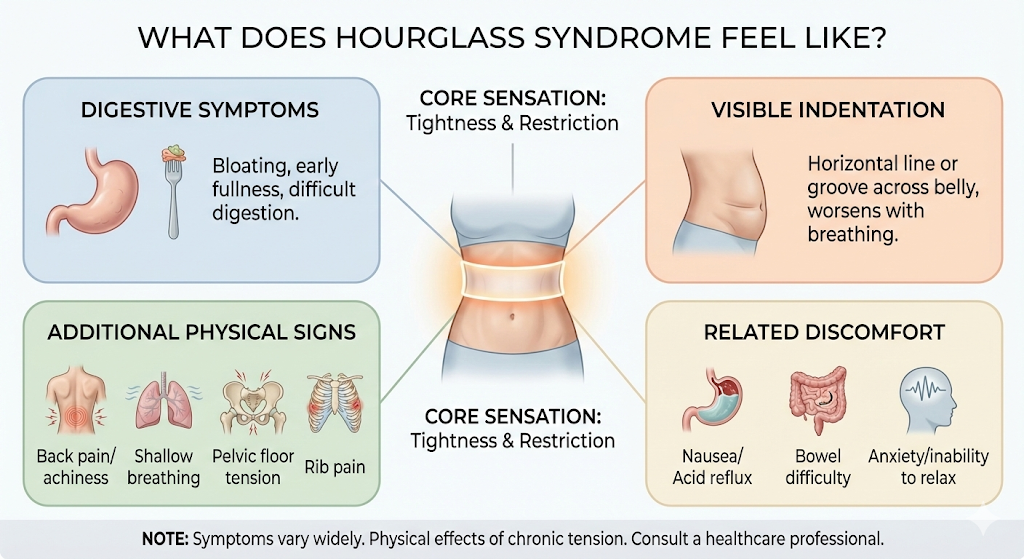
Many people with this condition describe a feeling of tightness or restriction around their midsection. You might feel like you cannot take a full, deep breath, as if something is squeezing around your ribcage or upper belly. This sensation can be subtle or quite uncomfortable, depending on how severe the muscle tension has become.
Digestive symptoms are extremely common and often the most bothersome part. You might experience bloating, especially after eating, because your compressed digestive organs have less room to expand and process food normally. Some people feel uncomfortably full even after small meals, or notice that certain foods suddenly seem harder to digest.
The visible indentation is usually what brings people to seek help. You might notice a horizontal line or groove across your belly, most obvious when you are standing or sitting upright. This line may deepen when you breathe in or move certain ways. Some people only see it in certain positions or lighting.
Let me walk you through some other symptoms that often accompany this condition, because recognizing the full picture can help you understand what your body is experiencing:
- Pain or achiness in your upper or lower back, since your spine loses some of its natural muscular support when core muscles stay locked
- Difficulty with bowel movements or a feeling of incomplete emptying, because the compression affects how your intestines can move
- Nausea or acid reflux, particularly after meals, as stomach contents have less space and may press upward
- Shortness of breath or shallow breathing patterns, since your diaphragm cannot descend fully into a compressed abdomen
- Pelvic floor tension or discomfort, as the tightness often extends downward to these connected muscles
- Rib pain or tenderness, especially along the lower ribs where muscles attach
- Anxiety or a feeling of being unable to fully relax, which makes sense given the physical state of constant tension
These symptoms can vary widely from person to person. You might experience just one or two, or you might recognize several from this list. The important thing to know is that these are real physical effects of chronic muscle tension, not something you are imagining or exaggerating.
People also ask
Yes, chronic abdominal contraction can physically compress your digestive organs and interfere with normal motility. This pressure often leads to common complaints like bloating, indigestion, and the feeling of incomplete bowel movements. Addressing the muscle tension can often provide relief for these persistent digestive symptoms.
Your diaphragm needs to move downward into your abdominal space to fully expand your lungs during a deep breath. When your core muscles are locked in a tight, contracted state, they act like a wall that prevents your diaphragm from descending. This leads to the shallow breathing pattern that many people with this condition experience.
Why Does This Condition Develop?
Hourglass syndrome almost always develops from habitually holding your stomach in. This behavior often starts innocuously, perhaps from wanting to look slimmer in fitted clothing or trying to maintain good posture as you understand it. Over months and years, this conscious effort becomes unconscious habit.
Cultural pressures around body image play a significant role here. Many people, particularly women, grow up hearing messages about keeping their stomachs flat and tucking their bellies in. What starts as an aesthetic choice can gradually turn into a neuromuscular pattern that your body maintains automatically.
Certain exercise approaches can contribute to this pattern as well. If you have done extensive abdominal training that emphasizes constant core engagement without equal attention to relaxation and breath work, you might have trained your muscles to stay perpetually tight. Some fitness trends encourage holding your core tight throughout the day, which can backfire over time.
Here are some specific situations and factors that might set the stage for developing this condition:
- Wearing restrictive clothing regularly, like very tight jeans, shapewear, or belts cinched tightly, which gives your body external feedback to stay compressed
- Breathing patterns that favor chest breathing over belly breathing, which prevents your abdomen from expanding naturally with each breath
- Chronic stress or anxiety, which often manifests as physical tension that you might unconsciously hold in your core
- Previous abdominal surgery or injury, which can change how you use and perceive your abdominal muscles
- Dance, gymnastics, or performance training that emphasized a specific aesthetic body shape
- Postpartum changes where you actively tried to regain a flat stomach quickly after pregnancy
- Digestive issues that made you unconsciously brace or guard your abdomen against discomfort
Understanding your personal pathway to this condition can help you address it more effectively. Most people recognize themselves in at least one of these scenarios. The development is gradual and usually unintentional, which is why it can feel surprising when someone points out what your body has been doing.
People also ask
Habitually wearing tight shapewear or restrictive clothing can train your muscles to remain in a constant state of contraction. This external pressure gives your body constant feedback to keep your core braced, which eventually turns into an unconscious habit. Over time, your muscles can lose their natural ability to release and relax.
Chronic stress often causes us to hold tension in our bodies, and for many people, that tension settles directly in the core. If you are naturally anxious, you may be unknowingly bracing your abdominal muscles as a way to hold yourself together physically. This reaction is a common, though often overlooked, contributor to hourglass syndrome.
Can This Condition Cause Serious Health Problems?
Hourglass syndrome itself is not life threatening, which should offer some immediate reassurance. However, the chronic compression and muscle tension can lead to uncomfortable and disruptive symptoms that affect your quality of life. The condition deserves attention and treatment, even though it is not an emergency.
The digestive system takes the biggest hit from ongoing compression. Your stomach, intestines, and other digestive organs need space to expand, contract, and move food through properly. When that space is restricted, you might develop functional digestive problems like constipation, bloating, or indigestion that persist despite dietary changes.
Your breathing can become genuinely compromised over time. The diaphragm, your primary breathing muscle, needs to move down into your abdominal cavity when you inhale. If that space is constantly tight and compressed, your diaphragm cannot descend fully. You end up taking shallower breaths, which can leave you feeling anxious, tired, or short of breath without obvious cause.
Chronic pain is another real concern. When your core muscles stay tight, other muscles must compensate. Your back muscles might overwork to support your spine. Your hip flexors might tighten. Your pelvic floor might become tense and dysfunctional. This cascade of compensatory tension can lead to widespread discomfort.
Let me outline some complications that can develop if the condition continues without intervention, because being informed helps you take it seriously without becoming alarmed:
- Pelvic floor dysfunction, including urinary urgency, difficulty fully emptying your bladder, or pain with intimacy
- Chronic constipation that becomes increasingly difficult to manage with diet and hydration alone
- Gastroesophageal reflux disease that develops or worsens as stomach contents are pushed upward
- Thoracic outlet syndrome, where compressed nerves and blood vessels in your upper chest cause arm numbness or weakness
- Rib dysfunction or costochondritis, which is inflammation where your ribs connect to your breastbone
- Secondary breathing pattern disorders that can trigger panic attacks or chronic anxiety
- Reduced core stability despite tight muscles, leading to increased injury risk with physical activity
These complications sound concerning, and they can be genuinely problematic if they develop. Having said that, most people with hourglass syndrome experience manageable symptoms that improve significantly with appropriate treatment. Early recognition and intervention prevent most of these more serious complications from taking hold.
How Do Doctors Diagnose Hourglass Syndrome?
Diagnosis usually starts with a careful physical examination and detailed conversation about your symptoms and habits. Your doctor will look at your abdomen while you are standing, sitting, and lying down. They will watch for that characteristic horizontal indentation and assess how your belly moves when you breathe.
A skilled provider will often ask you to try to relax your abdomen completely. Many people with this condition find this surprisingly difficult or even impossible at first. This inability to consciously release the tension is itself a diagnostic clue. Your doctor might place their hands on your belly and ask you to breathe deeply to see if your abdomen can expand naturally.
There is no specific lab test or imaging study that diagnoses hourglass syndrome directly. However, your doctor might order tests to rule out other conditions that could cause similar symptoms. An ultrasound or CT scan can check for structural problems with your organs. These tests typically come back normal in hourglass syndrome, which actually helps confirm the diagnosis.
Sometimes specialized testing can provide additional information. Dynamic ultrasound, where images are taken while you breathe and move, can show the abnormal muscle contraction patterns. Manometry testing might be used if digestive symptoms are severe, measuring pressures within your digestive tract. These are not routine but can be helpful in complex cases.
What Are the Treatment Options?
Treatment centers on retraining your muscles and nervous system to allow normal relaxation. This is not about stretching tight muscles in the traditional sense. Instead, you need to rebuild the neurological pathways that tell those muscles when to let go. This process takes time and consistent practice but is very effective for most people.
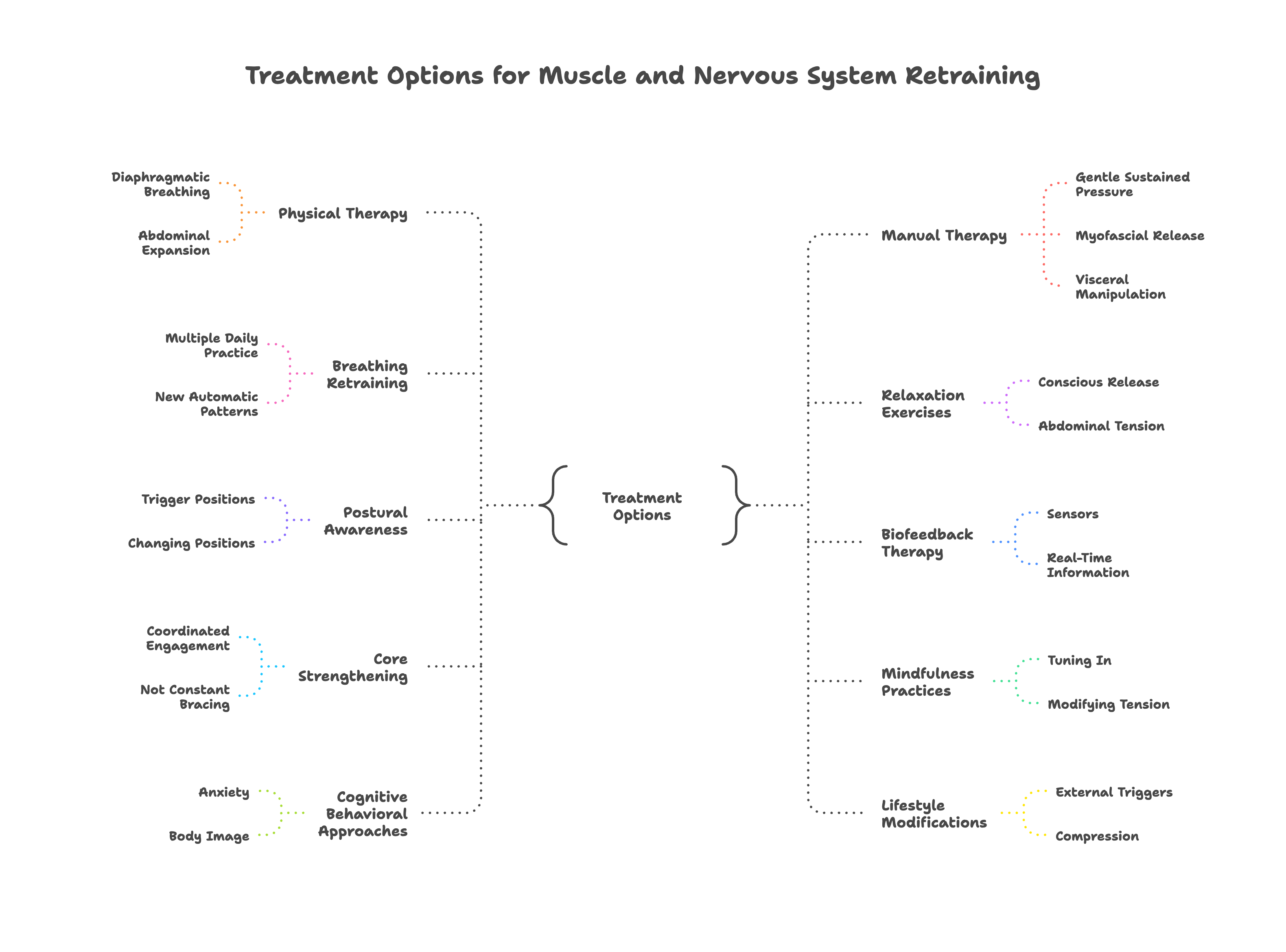
Physical therapy is usually the cornerstone of treatment. A physical therapist who understands this condition will teach you specific breathing exercises that encourage abdominal expansion. Diaphragmatic breathing, where you actively let your belly rise with each inhale, is fundamental. This might feel awkward or wrong at first if your body has learned to do the opposite.
Manual therapy techniques can help release the chronically tight tissues. Your therapist might use gentle sustained pressure, myofascial release, or visceral manipulation to help your abdominal wall soften. These hands-on techniques work best when combined with your active participation in breathing and relaxation.
Here are the main approaches your treatment plan might include, each serving a specific purpose in helping your body remember how to function normally:
- Diaphragmatic breathing retraining, practiced multiple times daily, to establish new automatic breathing patterns
- Progressive relaxation exercises that teach you to consciously release abdominal tension
- Postural awareness training to identify and change positions that trigger stomach holding
- Biofeedback therapy, which uses sensors to show you real-time information about your muscle activity
- Gentle core strengthening that emphasizes coordinated engagement and release, not constant bracing
- Mindfulness or somatic practices that help you tune into and modify unconscious tension patterns
- Cognitive behavioral approaches if anxiety or body image concerns are significant contributing factors
- Clothing and lifestyle modifications to remove external triggers for compression
This combination of techniques addresses both the physical habit and the psychological patterns that support it. Most people need several weeks to months of consistent practice before they notice significant lasting change. Your nervous system needs time to accept and integrate these new patterns as normal.
How Long Does Recovery Take?
Recovery timelines vary quite a bit depending on how long you have had the condition and how severe your symptoms are. Someone who has been unconsciously holding their stomach in for twenty years will typically need more time than someone who developed the pattern recently. This makes sense when you consider how deeply ingrained the habit has become.
Many people start noticing some improvement within a few weeks of beginning treatment. You might find breathing feels easier, or bloating decreases after meals. These early wins are encouraging and show that your body can change. However, full resolution of symptoms and complete restoration of normal muscle function usually takes several months.
The good news is that improvement tends to build progressively. Each week of practice makes the next week easier. Your body gradually remembers what normal feels like. You will likely notice that you can catch yourself holding tension and consciously release it, which was impossible at the start.
Patience is genuinely important here. Your body developed this pattern slowly over time, and it will release slowly over time as well. Rushing the process or becoming frustrated with plateaus can actually increase tension and slow your progress. Gentle, consistent effort works better than aggressive attempts to force change.
What Can You Do Right Now If You Think You Have This?
Start by simply noticing what your abdomen is doing throughout the day. Set gentle reminders on your phone to check in with your belly. Is it tight? Can you soften it even slightly? Just bringing awareness to the pattern is a meaningful first step, without any pressure to fix anything immediately.
Try lying on your back with your knees bent and feet flat. Place one hand on your chest and one on your belly. Breathe slowly and see if you can make the hand on your belly rise with each inhale. This basic diaphragmatic breathing exercise is safe and helpful for almost everyone. Even a few minutes daily can begin shifting your patterns.
Consider what you are wearing. Are your pants or belt uncomfortably tight? Does your shapewear restrict your breathing? Making small adjustments to allow your abdomen more freedom can remove triggers that reinforce the holding pattern. You deserve to be comfortable in your clothes.
Reach out to a healthcare provider who can evaluate your symptoms properly. A physical therapist with experience in pelvic health or breathing disorders is often an excellent starting point. You might also consult your primary care doctor, who can assess your overall health and refer you to appropriate specialists if needed.
Is It Possible to Prevent Hourglass Syndrome?
Prevention really comes down to maintaining healthy breathing patterns and avoiding chronic stomach holding. If you notice yourself constantly pulling your belly in, gently remind yourself that your abdomen is supposed to move and expand naturally. Your belly is not meant to stay flat and tight at all times.
Pay attention to how you breathe during exercise and daily activities. Your belly should expand gently when you inhale and soften when you exhale. If you are holding your breath or breathing only into your chest, make small adjustments. Proper breathing supports your core naturally without requiring constant conscious bracing.
Choose clothing that allows comfortable movement and breathing. This does not mean everything needs to be loose and baggy. Simply avoid items so tight that they restrict your ability to take a full breath or that you can only wear by holding your stomach in. Comfort and function matter more than appearance at any given moment.
Be thoughtful about the exercise guidance you follow. Core strengthening is valuable, but it should include both engagement and relaxation. If a fitness program encourages keeping your core tight all day long, that is a red flag. Balance and variability are healthier than constant tension.
What Should You Remember Most About This Condition?
Hourglass syndrome is a real, physical condition that develops from chronic muscle tension patterns. It is not something you are imagining, and your symptoms are legitimate responses to ongoing compression. You deserve to have your concerns taken seriously and to receive appropriate care.
The condition is reversible with proper treatment and consistent practice. Your body has the capacity to relearn normal patterns of tension and relaxation. This might take some time and patience, but improvement is genuinely possible for most people. You are not stuck with this forever.
Being kind to yourself throughout this process matters tremendously. You did not develop this condition on purpose or through any personal failing. It grew from understandable responses to cultural messages, aesthetic preferences, or well-intentioned efforts. Releasing self-judgment allows your body to relax more fully.
Finally, know that seeking help is a sign of self-awareness and self-care. Recognizing that something feels off in your body and taking steps to address it demonstrates real courage. You are taking an important step toward better physical comfort and overall wellbeing. Your body will thank you for listening.
