
Temporary erectile dysfunction can last anywhere from a few days to a few months, depending on what causing it. In most cases, if cause is something like stress, poor sleep, or alcohol, things tend to improve within days to a few weeks once you address the trigger. Some researchers consider ED "temporary" when symptoms resolve within six months, while chronic ED generally defined as symptoms lasting three months or longer.
The truth is, there is no single timeline that applies to everyone. How long it lasts really depends on what behind it.
What Causes Temporary ED in First Place?
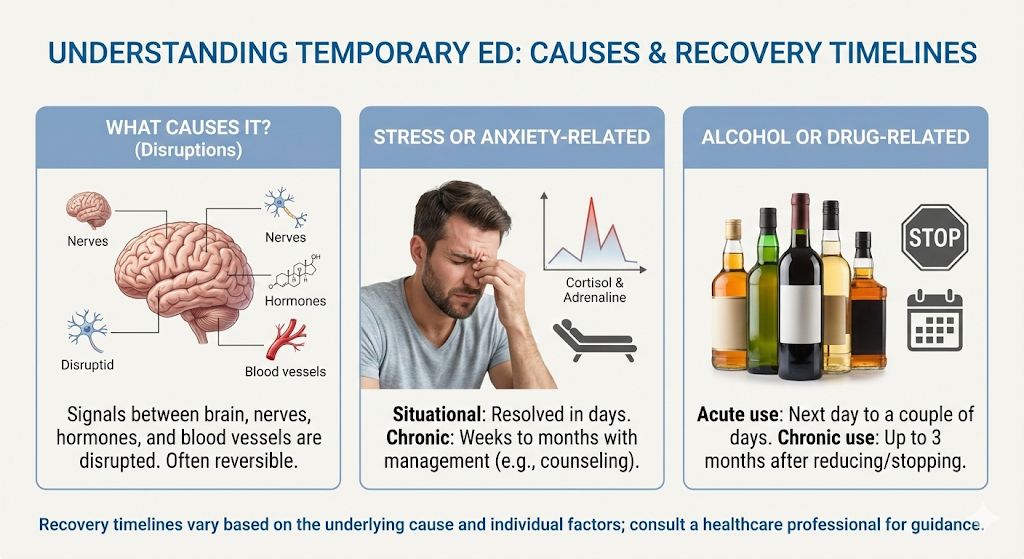
Erections depend on a chain of signals between your brain, nerves, hormones, and blood vessels. Even a small disruption in any part of that chain can cause temporary difficulty. The good news is that most of these disruptions are reversible.
The most common triggers for short term ED fall into a few categories. Some are physical, some are psychological, and some are a mix of both. Understanding which category yours falls into can give you a clearer picture of how long recovery might take.
How Long Does Stress or Anxiety Related ED Last?
Stress and anxiety are among most common causes of temporary ED, especially in younger men. When your body under stress, it shifts into a fight or flight response. That raises cortisol and adrenaline levels, which can reduce blood flow to genitals and lower sexual desire.
If stress is situational, like a rough week at work or a tense argument with a partner, ED may resolve within a few days once situation calms down. If you are dealing with ongoing anxiety or chronic stress, it can take longer. In those cases, working with a therapist or counselor can help, and many men see improvement within weeks to a couple of months once they start managing underlying stress.
Performance anxiety deserves a special mention here. This is when a single episode of ED creates fear about it happening again, which then causes it to happen again. It becomes a cycle. Counseling or sex therapy can be very effective for breaking that pattern, and this type of ED almost always reversible.
How Long Does ED Last After Drinking or Drug Use?
Alcohol is one of most common short term causes of ED. A night of heavy drinking can temporarily interfere with nerve signals and blood flow needed for an erection. This kind of ED typically resolves by next day or within a couple of days.
If alcohol use has been heavy and ongoing, recovery takes longer. One study found that nearly 88.5% of men with alcohol related ED saw improvement within three months of reducing or stopping their drinking. Recreational drugs can have similar effects, and timeline for recovery depends on substance and how long it was used.
What About ED Caused by Lack of Sleep or Fatigue?
Sleep plays a bigger role in sexual function than most people realize. Poor sleep lowers testosterone production and increases stress hormones. If fatigue or a disrupted sleep schedule is behind your ED, symptoms typically start improving within a week of getting better rest.
This is one of more straightforward causes to address. Prioritizing consistent sleep, ideally 7 to 9 hours a night, can make a noticeable difference fairly quickly.
How Long Does Medication Related ED Last?
Certain medications can cause ED as a side effect. Some of more common culprits include blood pressure medications, antidepressants (especially SSRIs), antihistamines, and some prostate medications. This type of ED typically lasts as long as you are taking medication.
If you suspect your medication is contributing to ED, do not stop taking it on your own. Talk to your doctor. In many cases, switching to a different medication or adjusting dose can improve things without compromising treatment for your other condition. For some medications like SSRIs, sexual side effects may linger for a few weeks after stoppingbefore fully resolving.
What If ED Follows a Surgery?
ED after surgery is a specific situation, and timeline can be longer. After prostate surgery in particular, almost all men experience some degree of ED in first few months. If surgeon was able to spare nerves that run alongside prostate, most men see significant improvement within 12 months, though full recovery can take up to 18 to 24 months.
Men younger than 50 tend to recover faster. If nerve sparing was not possible, recovery is less likely on its own, but treatment options like medications, injections, and devices can still help. This type of post surgical ED is a longer journey, but support and effective treatments are available throughout process.
Can Lifestyle Changes Speed Things Up?
For most types of temporary ED, lifestyle changes can make a real difference. Regular exercise improves blood flow and supports healthy testosterone levels. Maintaining a balanced diet, managing your weight, quitting smoking, and reducing alcohol all help your vascular and hormonal health, which directly supports erectile function.
Most men who commit to these kinds of changes start noticing improvements within two to four months. That may sound like a while, but these are changes that benefit your overall health too, not just your erections.
When Should You See a Doctor?
If your ED has lasted longer than three weeks and not clearly tied to a one time event like a stressful week or a night of drinking, it worth seeing a healthcare provider. Persistent ED can sometimes be an early sign of underlying conditionslike high blood pressure, diabetes, or cardiovascular disease.
This is not meant to scare you. It is actually a positive thing. Catching these conditions early gives you a better chance of managing them before they cause bigger problems. Your doctor can run some basic tests, rule out any medical causes, and talk through treatment options with you.
If your ED is causing you distress or affecting your relationship, that alone a good enough reason to bring it up. You do not have to wait for a certain number of months to pass. Effective treatments exist, including PDE5 inhibitors like Viagra and Cialis, therapy, and lifestyle adjustments. And most temporary ED, with right approach, does get better.
