
There is no proven way to speed up the removal of Mounjaro from your body. Tirzepatide (the active drug in Mounjaro) has a long half-life of about five days, and your body eliminates it on its own timeline. But if you are dealing with side effects and want to know how long they will last, or what you can do while waiting, this guide will help you understand the process.
How Long Does Mounjaro Stay in Your System?
Mounjaro's half-life is approximately five days. That means every five days, the amount of tirzepatide in your blood drops by roughly half. After one missed dose, you still have significant levels of the drug circulating. After about 25 days (five half-lives), the medication is considered essentially cleared from your system.
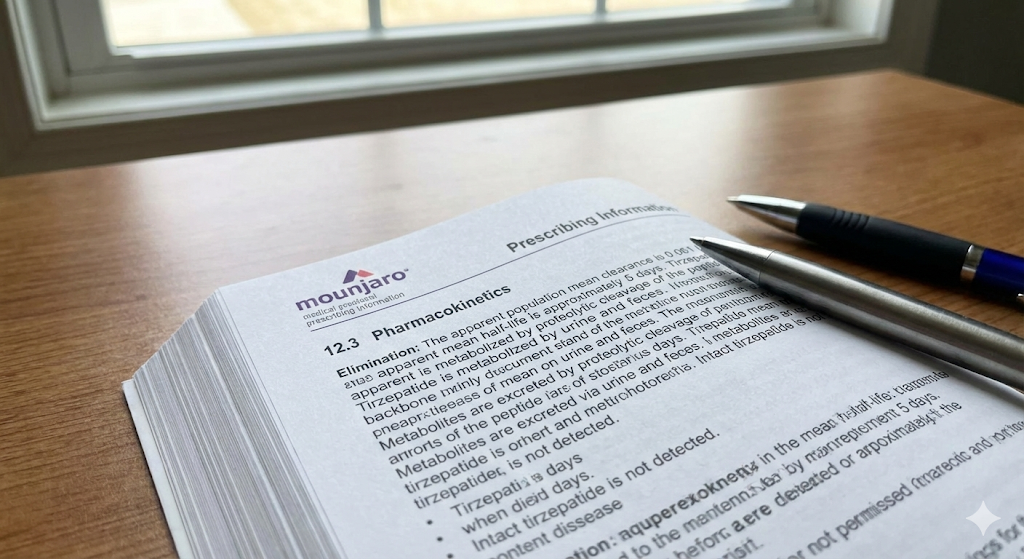
According to the FDA-approved prescribing information, the apparent population mean clearance of tirzepatide is 0.061 liters per hour. The drug is metabolized through the natural breakdown of its peptide structure and the oxidation of its fatty acid chain. Metabolites are excreted through both urine and feces. Intact tirzepatide is not found in either, meaning your body fully breaks it down before eliminating it: Mounjaro Prescribing Information
If you have been on Mounjaro for several weeks at steady state dosing, the total clearance time may be slightly longer. Steady state concentrations build up after about four weeks of weekly injections, so there is a higher starting level to clear.
Why Can't You Speed It Up?
Tirzepatide is designed to stay in your body for a long time. It contains a fatty acid chain that binds to albumin (a protein in your blood). This albumin binding is what gives it a five-day half-life and allows once weekly dosing. It also means the drug is not sitting freely in your digestive tract or bloodstream where it can be flushed out easily.
Because tirzepatide is bound to proteins in your blood and metabolized by your body's own enzymes, you cannot speed up its removal by drinking extra water, taking supplements, or doing a "detox." Those approaches might help you stay comfortable while the drug clears, but they will not change the pharmacokinetics.
There is no antidote, reversal agent, or accelerated elimination procedure for tirzepatide. Unlike some medications that can be removed through dialysis or activated charcoal, tirzepatide does not work that way. Even kidney and liver function do not significantly change how fast it leaves. The FDA label notes that renal impairment and hepatic impairment do not affect tirzepatide pharmacokinetics.
What Can You Do While Waiting for It to Clear?
If you are trying to get Mounjaro out of your system because of side effects, the most practical approach is managing those side effects while the drug works its way out naturally. Here are some strategies based on the most common issues people experience.
For nausea and stomach discomfort:
- Eat small, bland meals throughout the day instead of large ones
- Avoid high fat and greasy foods, which can worsen nausea when gastric emptying is already slowed
- Sip clear fluids like water, broth, or ginger tea
- Stay upright for at least 30 minutes after eating
- Ask your doctor about anti-nausea medication like ondansetron if the nausea is severe
For constipation or digestive slowdown:
- Increase fiber intake gradually (fruits, vegetables, whole grains)
- Drink plenty of water throughout the day
- Light physical activity like walking can help stimulate bowel movement
- Otc stool softeners or osmotic laxatives may help if needed
For body aches and fatigue:
Some people experience general achiness or low energy on Mounjaro, especially after dose increases. These symptoms usually improve as the drug clears. Rest, gentle movement, and adequate hydration can help. If you want a more detailed look at why body aches happen on this medication and what helps, this article covers it in depth: Can Mounjaro Cause Body Aches?
For sulfur burps and GI gas:
This is a particularly common complaint with tirzepatide-based medications. The delayed gastric emptying allows gut bacteria more time to ferment food, producing hydrogen sulfide gas. Avoiding high-sulfur foods (eggs, cruciferous vegetables, red meat, dairy) can reduce this symptom while the drug clears. If sulfur burps are your main concern, this guide covers the full range of what causes them and what helps: Why Does Zepbound Cause Sulfur Burps?
What Is the Timeline You Can Expect?
Here is a rough breakdown of what happens after your last Mounjaro injection, based on the five day half life.
- Day 1 to 5: Drug levels are still near their peak. Side effects are likely still present at full intensity.
- Day 5 to 10: Drug has dropped to about 25% to 50% of its peak level. Many people start to notice side effects easing during this window.
- Day 10 to 15: Drug is down to roughly 12% to 25% of peak. Most GI side effects like nausea and appetite suppression begin to fade noticeably.
- Day 15 to 25: Drug drops below 10% and continues declining. Most people feel significantly more normal. Appetite typically starts returning.
- Day 25 and beyond: Tirzepatide is considered essentially cleared after about five half-lives (roughly 25 days). However, some residual effects on appetite and gastric emptying may linger slightly longer as your body readjusts.
Keep in mind that individual variation matters. Your metabolism, body weight, kidney function, and how long you were on the medication all play a role. Someone who took a single 2.5 mg starting dose will clear the drug faster than someone who has been on 15 mg weekly for months.

Should You Talk to Your Doctor Before Stopping?
Yes. If side effects are driving you to stop Mounjaro, it is worth having that conversation before you simply skip your next injection. Your doctor may suggest lowering your dose rather than stopping entirely. Many side effects are dose-dependent, meaning they are worse at higher doses and may improve if you step back down.
If you started Mounjaro for type 2 diabetes, stopping abruptly can cause your blood sugar to rise. Your doctor may need to adjust your other diabetes medications to cover the gap while tirzepatide clears.
If you were taking Mounjaro for weight management, be aware that appetite and weight can return after stopping. This is not a rebound effect from the drug. It is your body returning to its previous hormonal baseline once the GLP-1 and GIP receptor stimulation stops.
Bottom Line
You cannot force Mounjaro out of your system faster. The drug has a five-day half-life and takes roughly 25 days to fully clear after your last dose. No supplement, detox, or lifestyle hack can change that timeline. What you can do is manage your symptoms while waiting, stay hydrated, eat gently, and work with your doctor on next steps. If side effects are the reason you want the drug out of your system, your doctor may be able to adjust your dose or switch you to a different medication rather than waiting for a full clearance.
