
TL;DR:
• Ibuprofen causes stomach pain because it blocks a chemical that protects your stomach lining from acid.
• Taking it with food, using lowest dose possible, and limiting how long you use it are best ways to prevent stomach irritation.
• If stomach pain is severe, persistent, or comes with blood in your stool, stop taking ibuprofen and see a doctor right away.
You took ibuprofen for a headache or sore muscles and now your stomach hurts. This is frustrating, but it is also very common. Ibuprofen is one of most widely used pain relievers in world, and stomach irritation is its most well-known side effect.
Why Does Ibuprofen Hurt Your Stomach?
Ibuprofen belongs to a group of drugs called NSAIDs (nonsteroidal anti-inflammatory drugs). It works by blocking enzymes called COX-1 and COX-2. These enzymes produce chemicals called prostaglandins, which trigger pain and inflammation. That is why ibuprofen is good at reducing both.
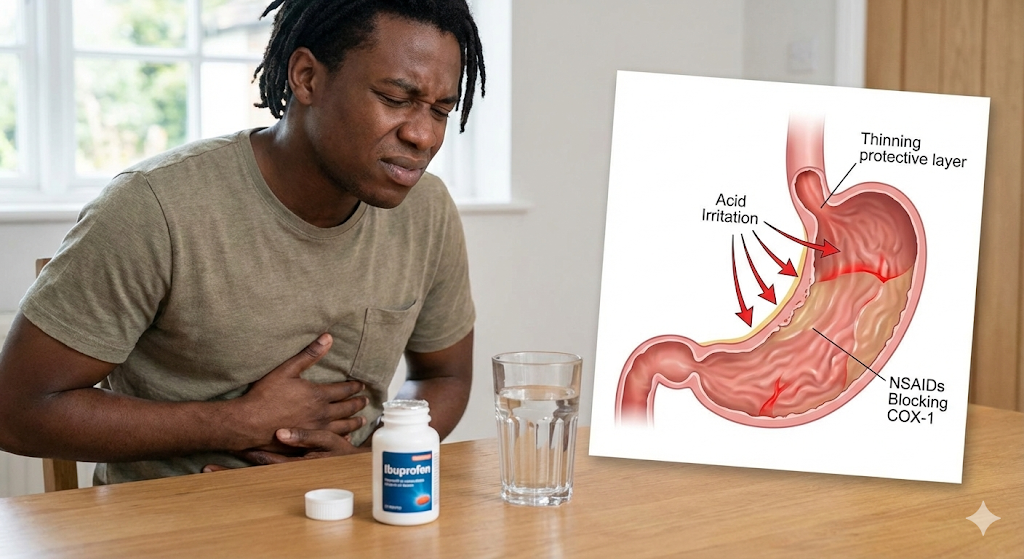
The problem is that COX-1 also produces prostaglandins that protect your stomach lining. These protective prostaglandins help your stomach make mucus and bicarbonate, which act as a barrier between your stomach wall and acid inside it. When ibuprofen blocks COX-1, that protective layer thins out. Your stomach acid can then directly irritate lining, causing pain, burning, nausea, or bloating.
This can happen within 30 to 60 minutes of taking ibuprofen on an empty stomach. And if you use ibuprofen regularly over weeks or months, risk goes up. Federal drug labeling notes that serious gastrointestinal events like ulcers and bleeding occur in roughly 1 % of people who take NSAIDs for three to six months, and in 2 to 4 percent of those who take them for a year.
What Can You Do Right Now if Your Stomach Hurts?
If ibuprofen has already caused stomach discomfort, here are some things that can help right away.
Stop taking ibuprofen for now. Give your stomach a chance to recover. Take a calcium-based antacid like calcium carbonate. It can neutralize stomach acid quickly, usually within about 15 minutes. Eat something bland. Simple foods like bread, crackers, rice, or bananas help absorb acid and soostomach lining. Drink small sips of water. Staying hydrated supports digestion and helps dilute stomach acid. Avoid coffee, alcohol, and spicy food. These can all make irritation worse while your stomach is already inflamed.
If stomach pain from ibuprofen has been going on for a while and general stomach discomfort is something you deal with often, you might find it useful to read about simple ways to settle an upset stomach.
How Can You Prevent Stomach Pain From Ibuprofen?
Prevention is always easier than treatment. If you need to take ibuprofen, these steps can reduce chance of stomach irritation.
Take ibuprofen with food or right after a meal. Food creates a buffer between medication and your stomach lining. Proteins and fats are especially helpful because they slow absorption and reduce direct acid contact. A glass of milk also works if you cannot eat a full meal.
Use lowest effective dose. The standard over-the-counter dose is 200 to 400 mg. Avoid going beyond what you actually need. Higher doses strip away more of stomach's protective prostaglandins.
Keep it short. The longer you use ibuprofen, greater risk to your stomach. Try to limit it to a few days at a time unless your doctor says otherwise.
Space your doses properly. Taking ibuprofen every 6 to 8 hours gives your stomach time to partially recover between doses. Taking it more frequently than directed stacks damage.
Avoid mixing it with other NSAIDs. Taking ibuprofen along with aspirin, naproxen, or other NSAIDs multiplies risk. Stick with one at a time.
Limit alcohol. Alcohol irritates stomach lining on its own. Combining it with ibuprofen significantly increases chance of stomach bleeding. Federal drug labeling specifically warns people who have three or more alcoholic drinks a day against using ibuprofen.
Should You Switch to a Different Pain Reliever?
If ibuprofen regularly bothers your stomach, switching to acetaminophen (Tylenol) might be a better option for mild to moderate pain. Acetaminophen works differently. It does not block COX-1, which means it does not reduce protective mucus in your stomach. It is generally much easier on digestive system.
That said, acetaminophen does not reduce inflammation way ibuprofen does. So for things like joint swelling, muscle inflammation, or menstrual cramps, ibuprofen or another NSAID may still be better choice. The trade-off is just something to be aware of.
If you are considering acetaminophen instead and wondering about timing or whether you need food with it, here is a helpful breakdown on taking Tylenol on an empty stomach.
When Should You Talk to a Doctor?
Most ibuprofen related stomach pain is mild and goes away once you stop taking it or start taking it properly with food. But there are some warning signs that should not be ignored.
See a doctor if you notice any of following:
• Severe or persistent stomach pain that does not go away within a day or two
• Black or tarry stools, which can indicate bleeding in digestive tract
• Vomiting blood or material that looks like coffee grounds
• Feeling faint or lightheaded along with stomach symptoms
• Stomach pain that keeps coming back every time you take ibuprofen, even with food
These could be signs of a stomach ulcer or internal bleeding. Both need medical attention quickly.
If you are over 60, have a history of stomach ulcers, take blood thinners, or use corticosteroids, your risk for NSAID-related stomach problems is significantly higher. In these cases, your doctor may recommend a proton pump inhibitor (PPI) or an H2 blocker to take alongside ibuprofen to protect your stomach lining.
Are There Rare but Serious Stomach Complications?
In uncommon cases, long-term ibuprofen use can lead to a stomach ulcer that perforates, meaning it creates a hole in stomach wall. This is a medical emergency and requires immediate treatment. Perforation can happen without any prior warning symptoms.
Another rare complication is a condition called NSAID enteropathy, where damage extends beyond stomach into small intestine. This can cause chronic low-grade bleeding, iron deficiency anemia, and protein loss. It is more commonly seen in people who take NSAIDs daily for months or years.
These complications are rare at normal over-the-counter doses used for short periods. But they are worth knowing about, especially if you rely on ibuprofen frequently.
Conclusion
Ibuprofen causes stomach pain because it blocks chemicals that protect your stomach lining from acid. The simplest way to prevent it is to take ibuprofen with food, use lowest dose that works, and keep your use as short as possible. If your stomach is already hurting, stop ibuprofen, take an antacid, eat something bland, and give your body time to recover. And if pain is severe or comes with signs like black stools or vomiting blood, see a doctor without waiting.
Frequently Asked Questions
If ibuprofen is causing stomach pain, stop taking it for now and avoid other stomach irritants such as alcohol, coffee, and spicy foods. Eating bland foods and staying hydrated may help with mild discomfort. If the pain is severe, persistent, or keeps returning, contact a healthcare professional.
Ibuprofen is an NSAID that can reduce prostaglandins that help protect the stomach lining. This can allow stomach acid to irritate the lining, causing pain, burning, nausea, or discomfort, especially when ibuprofen is taken on an empty stomach.
Taking ibuprofen with food or shortly after a meal, using the lowest effective dose, and taking it for the shortest time necessary can help reduce stomach irritation. Avoid taking ibuprofen with other NSAIDs such as naproxen or aspirin unless directed by a healthcare professional.
An antacid may help relieve mild stomach discomfort caused by excess stomach acid. However, recurring stomach pain while taking ibuprofen can indicate irritation, an ulcer, or another problem, so talk with a healthcare professional if symptoms persist or return.
Seek medical attention for severe or persistent stomach pain, black or tarry stools, vomiting blood or material that looks like coffee grounds, fainting, or significant dizziness. These can be signs of gastrointestinal bleeding or an ulcer and require prompt evaluation.
Acetaminophen, such as Tylenol, generally causes less stomach irritation than ibuprofen because it does not reduce the stomach-protective prostaglandins targeted by NSAIDs. However, acetaminophen has its own safety concerns, including the risk of liver damage when too much is taken.
