
Health Library
What Is a Medical Scribe? Duties, Skills, and Pay
January 12, 2026
Question on this topic? Get an instant answer from August.
What Is a Medical Scribe?
Think of a medical scribe as a physician’s right hand person, a real time documentation specialist who acts as a personal assistant during patient encounters. They work shoulder to shoulder with doctors, nurse practitioners, and physician assistants, but their focus isn’t on direct patient care. Instead, their primary responsibility is to manage the patient’s story within the Electronic Health Records (EHR).
They are the crucial bridge between the physician’s verbal communication and the meticulously detailed digital record. By handling the complex data entry and chart management, a scribe allows the healthcare provider to maintain eye contact, listen intently, and focus entirely on diagnosing and treating the patient.
What Does a Medical Scribe Do?
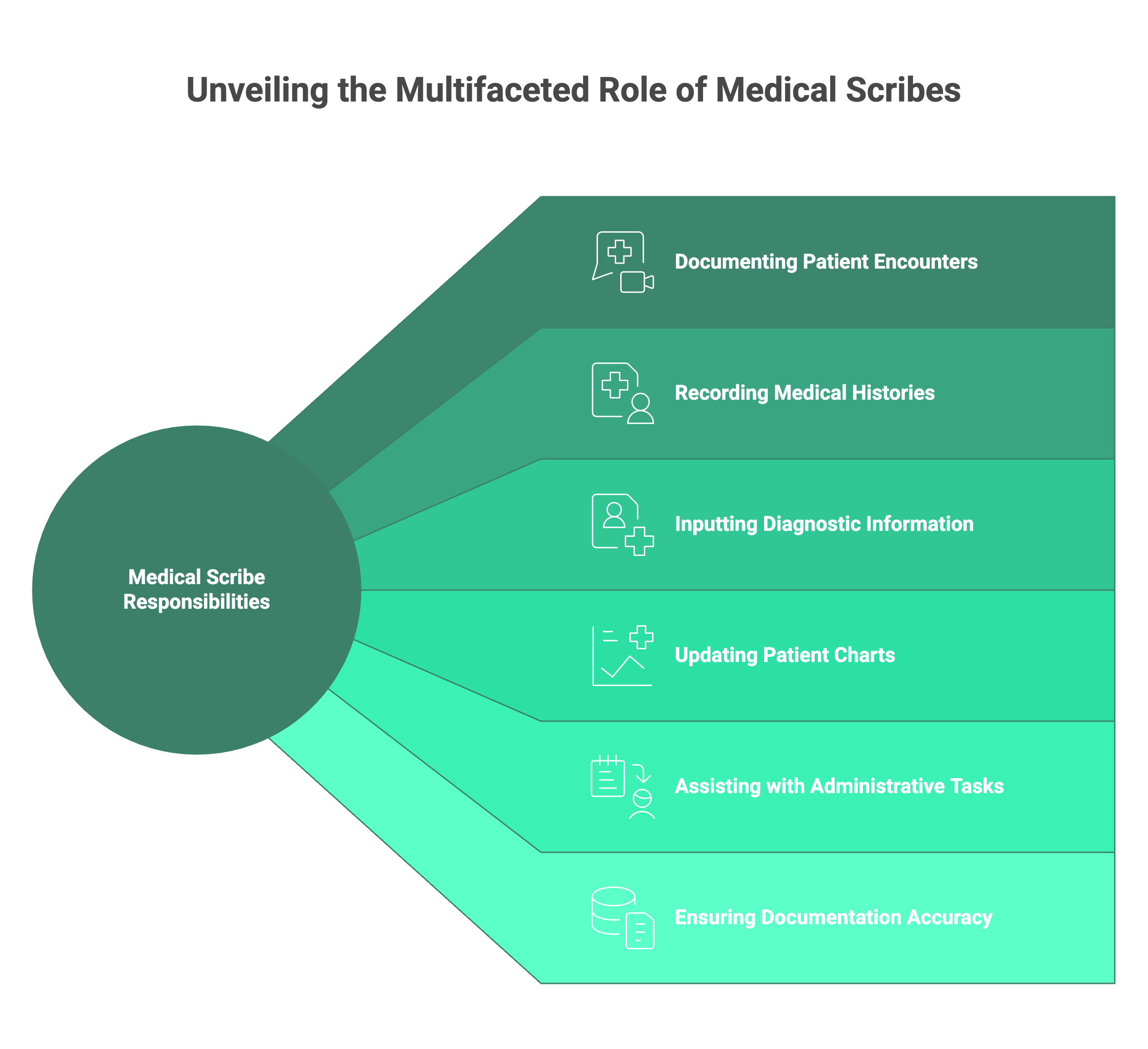
The daily responsibilities of a medical scribe are dynamic and detail intensive. They are the silent partners in the exam room, capturing the narrative of each patient’s visit. Their core duties include:
- Documenting patient encounters in real time as the physician interacts with the patient.
- Recording detailed medical histories, symptoms, and the physician’s physical examination findings.
- Inputting lab results, imaging studies, and other diagnostic information into the patient’s chart.
- Updating patient charts and ensuring all medical records are current and accurate.
- Assisting with administrative tasks like locating past records or preparing charts for upcoming appointments.
- Ensuring the accuracy and completeness of all healthcare documentation for billing and legal purposes.
By masterfully handling these tasks, scribes help create a comprehensive and accurate patient record, freeing the physician to perform at the top of their license.
How to Become a Medical Scribe
One of the most appealing aspects of becoming a scribe is the accessible entry path. You don’t typically need a four year degree to get started. The minimum requirement is usually a high school diploma or GED. However, candidates who are pre med, pre nursing, or have a background in biology or health sciences are often preferred due to their foundational knowledge.
Many companies offer specialized certification programs and provide extensive on the job training to get you up to speed. This training focuses heavily on mastering medical terminology, understanding clinical workflows, and becoming proficient with various Electronic Health Records (EHR) systems. Strong computer skills and a willingness to learn are non negotiable.
Skills Needed to Be a Successful Medical Scribe
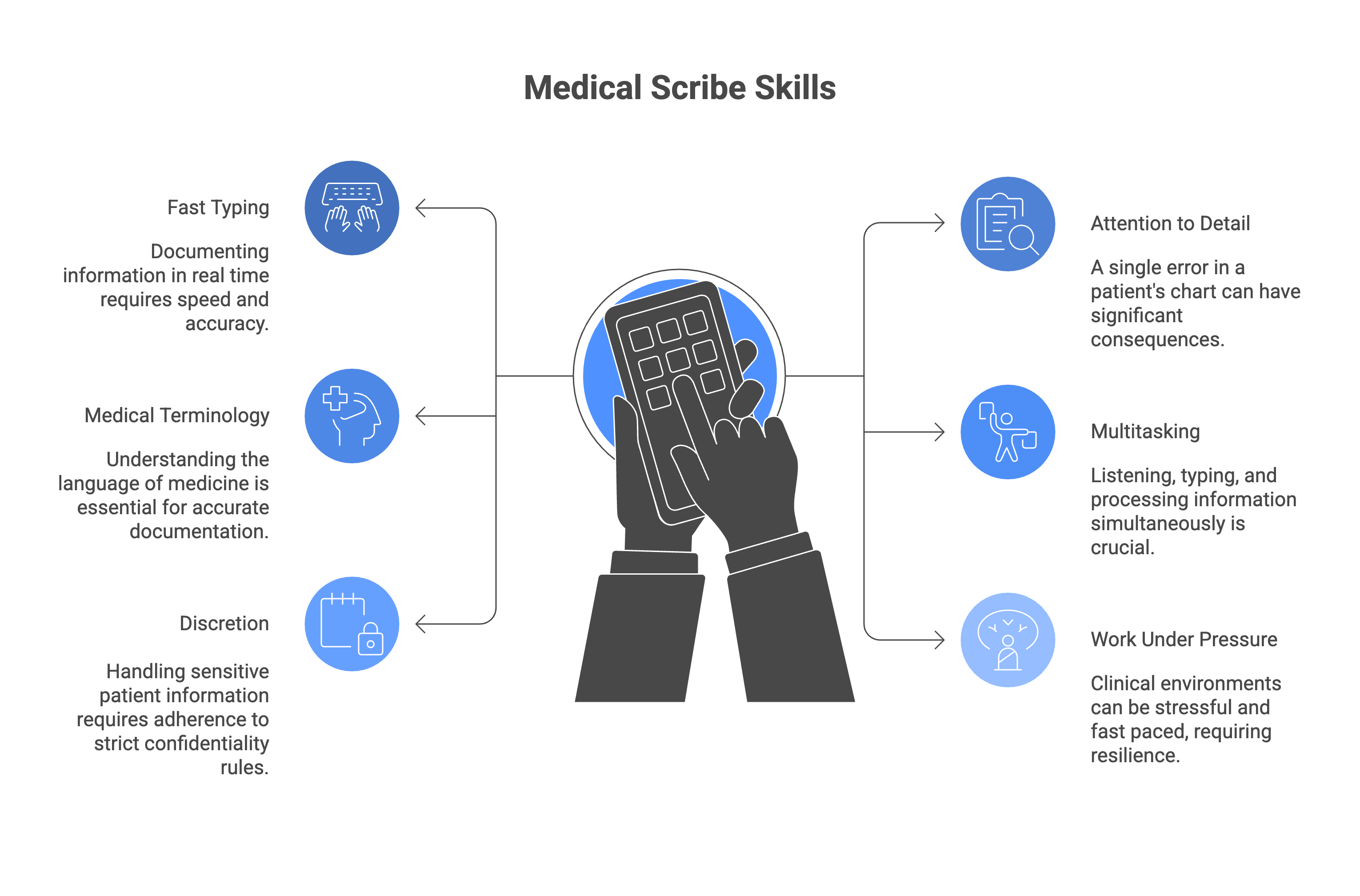
To excel in this role, you need a unique blend of hard and soft skills. It’s not just about being a fast typist; it’s about being a precise and reliable partner in a high stakes environment. Key skills include:
- Fast and Accurate Typing: You’ll be documenting information in real time.
- Keen Attention to Detail: A single error in a patient’s chart can have significant consequences.
- Strong Grasp of Medical Terminology: Understanding the language of medicine is essential.
- Excellent Multitasking Abilities: You’ll be listening, typing, and processing information simultaneously.
- Discretion and Professionalism: You will be handling sensitive patient information and must adhere to strict confidentiality rules under HIPAA (source).
- Ability to Work Under Pressure: Clinical environments can be stressful and fast paced.
Benefits of Being a Medical Scribe
Why do so many aspiring healthcare professionals start here? The benefits are immense. First and foremost, it offers invaluable, front line clinical experience that is highly sought after by medical and nursing schools. You gain a deep understanding of how healthcare decisions are made. Beyond the resume boost, you get to network with physicians and other professionals, get paid a competitive entry level wage, and often enjoy flexible schedules that can accommodate a student’s life. It’s a truly immersive experience in the world of medicine.
Career Growth and Opportunities
While being a medical scribe is an excellent job in its own right, it’s also a powerful stepping stone. The experience is a launchpad for careers in medicine, nursing, physician assisting, and healthcare administration. Within the field, you can advance to roles like a senior scribe or a scribe trainer, mentoring new hires. The job outlook for related healthcare support roles is incredibly strong, with the U.S. Bureau of Labor Statistics projecting much faster than average growth over the next decade (source). This indicates a robust and growing demand for skilled documentation specialists.
Conclusion
Medical scribes are the unsung heroes of the exam room. They enhance the quality of healthcare documentation, reduce physician burnout, and allow for more meaningful patient provider interactions. If you’re looking for a dynamic, challenging, and rewarding way to enter the healthcare industry, exploring a career as a medical scribe is an excellent first step. Check for opportunities at local hospitals or scribe companies today
Health Companion
trusted by
6Mpeople
Get clear medical guidance
on symptoms, medications, and lab reports.

download august