
Health Library
Why Do I Get a Metallic Taste When I Cough?
February 10, 2026
Question on this topic? Get an instant answer from August.
If you have noticed a metallic taste in your mouth when you cough, you are not imagining it. This unusual sensation can happen for several reasons, and most of them are not serious. Your body is sending you signals that something minor is going on, whether it's irritation in your airways, a bit of blood from coughing hard, or even a side effect from medication.
What Causes a Metallic Taste When Coughing?
The metallic taste you experience during coughing usually comes from blood or inflammation in your respiratory tract. When you cough forcefully, tiny blood vessels in your throat or lungs can break, releasing a small amount of blood. This blood contains iron, which gives it that distinct metallic flavor. Even a tiny amount can be noticeable to your taste buds.
Sometimes taste comes from mucus mixed with blood or just from inflamed tissues. Your airways might be irritated from infection, allergies, or environmental triggers. When tissues are swollen or raw, they can bleed slightly or produce secretions that taste different than usual. This is your body's way of responding to irritation.
Respiratory Infections
Respiratory infections like bronchitis or pneumonia often cause persistent coughing. When you cough repeatedly, lining of your airways becomes inflamed and sensitive. This inflammation can cause small amounts of bleeding, which you taste as metallic. The infection itself also produces thick mucus that can carry traces of blood.
Bronchitis happens when bronchial tubes in your lungs become inflamed. You might cough up mucus that looks yellow, green, or streaked with blood. The metallic taste often appears when cough is particularly forceful. Your chest may feel tight, and breathing might seem harder than usual.
Pneumonia is a lung infection that causes deeper inflammation. The air sacs in your lungs fill with fluid or pus. Coughing becomes more intense as your body tries to clear this material. The metallic taste here often signals that delicate lung tissue is irritated enough to bleed slightly.
Forceful Coughing
Even without infection, coughing hard can damage tiny blood vessels. Your throat and airways contain many small capillaries close to surface. When you cough with force, pressure builds quickly in your chest and throat. This pressure can rupture these delicate vessels, releasing small amounts of blood.
You might notice this metallic taste after a coughing fit that leaves you breathless. The taste usually fades within minutes to hours. If it happens occasionally and resolves quickly, it typically means you just coughed hard enough to cause minor irritation. Your body will heal these tiny tears on its own.
Medications and Supplements
Certain medications can create a metallic taste in your mouth. Antibiotics like metronidazole or clarithromycin are common culprits. Blood pressure medications, particularly ACE inhibitors, can also cause this sensation. When you cough, taste becomes more pronounced because coughing brings saliva and medication residue from your throat into your mouth.
Iron supplements and multivitamins containing minerals may contribute to this taste. Zinc lozenges, often used for colds, can leave a metallic flavor that intensifies when you cough. Chemotherapy drugs and some antidepressants also affect taste perception. If you recently started a new medication and noticed this symptom, that connection is worth mentioning to your doctor.
Sinus Infections and Postnasal Drip
Sinus infections cause mucus to drain down back of your throat. This postnasal drip can trigger coughing and carry an unpleasant metallic taste. The sinuses produce thick, discolored mucus when infected. This mucus can contain trace amounts of blood from inflamed sinus tissues.
When you cough to clear this drainage, you taste whatever is in that mucus. Sinus infections also create inflammation that extends to your throat. This inflammation makes tissues more fragile and prone to minor bleeding. The combination of infected mucus and slight bleeding creates that metallic sensation.
Dental and Gum Problems
Gum disease and dental infections can cause bleeding in your mouth. When you cough, this blood mixes with saliva and creates a metallic taste. Gingivitis, which is inflammation of gums, makes them bleed easily. Even gentle pressure from coughing can trigger this bleeding.
Dental abscesses or infections around teeth can also contribute. These infections sometimes drain into your mouth, especially when you cough or exert pressure. If you notice metallic taste comes with swollen gums, tooth pain, or bad breath, your mouth might be source rather than your lungs.
Environmental Irritants
Breathing in certain chemicals or pollutants can irritate your airways. Cleaning products, paint fumes, or industrial chemicals may cause inflammation and coughing. Some of these substances have metallic components that affect your taste directly. Others irritate tissues enough to cause minor bleeding.
Smoking or vaping also damages delicate lining of your respiratory tract. This damage makes bleeding more likely when you cough. If you work around dust, fumes, or strong chemicals without protection, your airways might be chronically irritated. This chronic irritation increases chance of tasting metal when you cough.
What Are Rare but Serious Causes?
While most causes of metallic taste with coughing are not dangerous, some rare conditions need medical attention. It helps to know these possibilities exist so you can recognize warning signs. These conditions are uncommon, but awareness empowers you to seek help when something feels wrong.
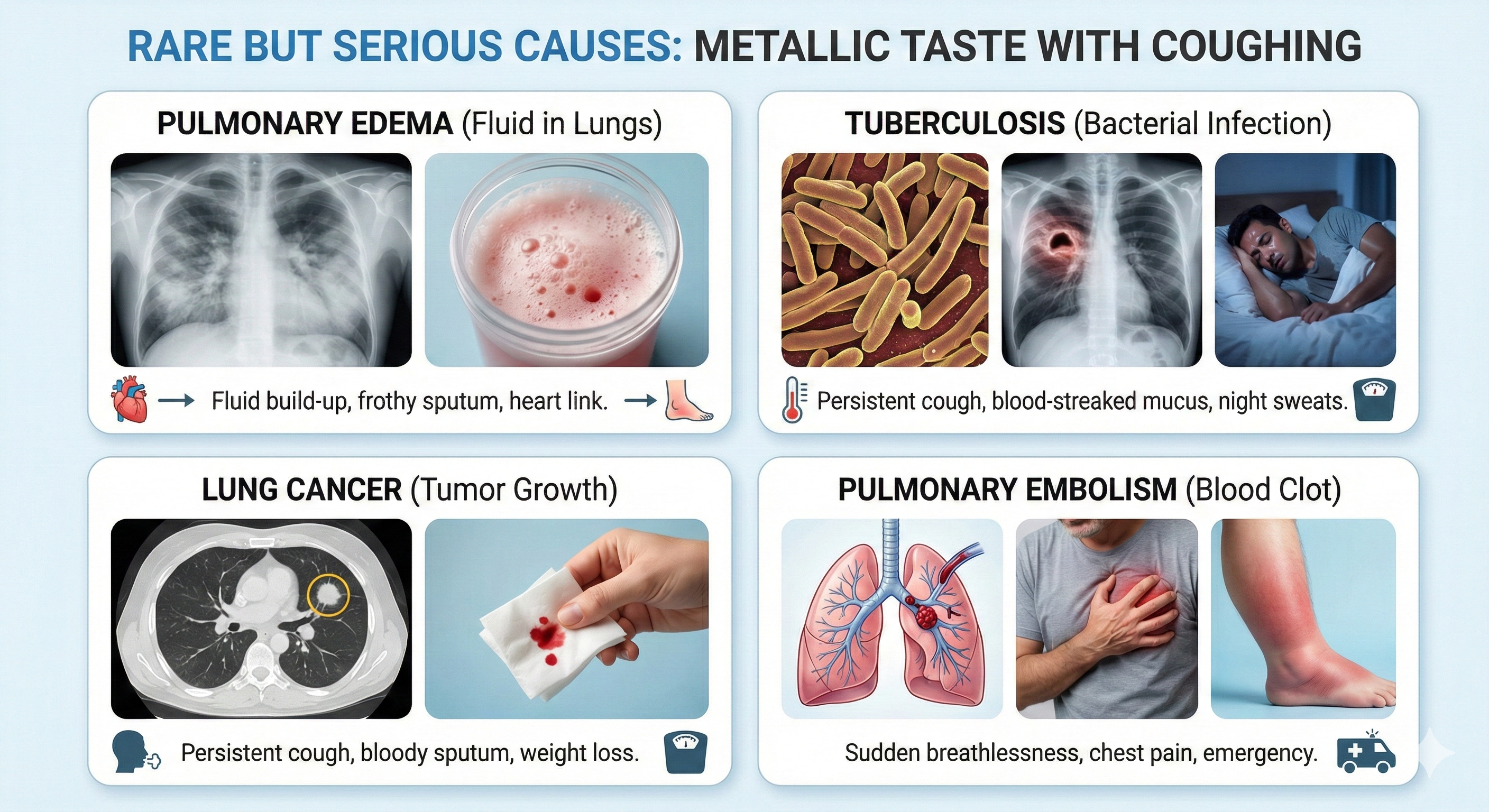
Pulmonary Edema
Pulmonary edema means fluid builds up in your lungs. This condition makes breathing difficult and causes coughing that brings up frothy, sometimes blood-tinged sputum. The metallic taste comes from blood mixing with lung fluid. This is a serious condition often related to heart problems.
You would likely notice other symptoms too. Shortness of breath, especially when lying down, is common. Your legs might swell, and you may feel extremely tired. If you experience these symptoms along with metallic taste when coughing, seek medical care promptly. This condition requires treatment to prevent complications.
Tuberculosis
Tuberculosis is a bacterial infection that primarily affects lungs. It causes persistent cough, sometimes with blood-streaked mucus. The metallic taste comes from lung tissue damage and bleeding. Other symptoms include night sweats, unexplained weight loss, and fever lasting weeks.
This condition is rare in many countries but still exists. If you have been exposed to someone with tuberculosis or traveled to areas where it is common, consider this possibility. Early treatment is important and highly effective. Testing is straightforward, and your doctor can guide you through it.
Lung Cancer
Lung cancer can cause coughing with blood, creating a metallic taste. This is a rare cause, especially if you are young or have never smoked. However, it is worth mentioning because early detection improves outcomes significantly. The cough typically persists for weeks or months and may worsen over time.
Other warning signs include unexplained weight loss, chest pain, and shortness of breath. Coughing up blood, even small amounts, should always prompt a medical evaluation. Your doctor can order imaging and other tests to rule out serious causes. Most people with persistent cough do not have cancer, but checking is important for peace of mind.
Blood Clots in Lungs
A pulmonary embolism is a blood clot that travels to your lungs. It can cause sudden shortness of breath, chest pain, and coughing. Some people cough up blood, which tastes metallic. This is a medical emergency requiring immediate attention.
Risk factors include recent surgery, long periods of sitting, or certain medical conditions. If you experience sudden severe symptoms, especially with one-sided leg swelling or sharp chest pain, call for emergency help. This condition is treatable when caught early, and quick action saves lives.
When Should I See a Doctor?
Most cases of metallic taste when coughing resolve on their own. However, certain signs indicate you should seek medical evaluation sooner rather than later. Your body gives clear signals when something needs professional attention. Trusting these signals is important for your health.
Here are situations that warrant a visit to your doctor, so you can feel confident about when to reach out:
• Coughing up visible blood or blood clots, even if small amounts
• Metallic taste that persists for more than a week without improvement
• Difficulty breathing or shortness of breath that worsens
• Chest pain that feels sharp or gets worse with deep breaths
• Fever lasting more than three days or higher than 101 degrees Fahrenheit
• Unintentional weight loss accompanying your cough
• Night sweats soaking your clothes or sheets
• Swelling in your legs or feet along with breathing problems
These symptoms do not automatically mean something serious is happening. They simply indicate that professional evaluation will help identify cause and provide appropriate treatment. Your doctor can examine you, possibly order tests, and give you peace of mind.

Conclusion
For most people, a metallic taste when coughing resolves within days to weeks. As underlying cause heals, symptom disappears. Your body is remarkably good at repairing minor damage to airways and tissues. Patience and proper care support this natural healing process.
If you have a respiratory infection, expect gradual improvement. Your cough may linger even after other symptoms fade. This is normal and does not necessarily mean infection is still active. Airways need time to fully heal after inflammation. The metallic taste usually disappears before cough does.
Pay attention to patterns and triggers. If metallic taste returns with certain activities or exposures, that information helps identify cause. Maybe it happens after exercise, around certain chemicals, or during allergy season. Sharing these observations with your doctor provides valuable diagnostic clues.
Health Companion
trusted by
6Mpeople
Get clear medical guidance
on symptoms, medications, and lab reports.

download august