
Health Library
Can You Take Prednisone and Gabapentin Together?
February 18, 2026
Question on this topic? Get an instant answer from August.
Yes, you can generally take prednisone and gabapentin together. There is no direct drug interaction between these two medications, which is reassuring. Doctors actually prescribe them together quite often, especially for conditions that involve both inflammation and nerve pain, like sciatica or shingles.
That said, "no direct interaction" does not mean "no concerns at all." Both medications come with their own side effects, and some of those effects can overlap. So let us walk through what you need to know before taking them at the same time.
How Do Prednisone and Gabapentin Work Differently?
These two medications tackle pain and discomfort from completely different angles.
Prednisone is a corticosteroid. It mimics cortisol, a hormone your adrenal glands naturally produce. When you take prednisone, it lowers inflammation throughout your body by calming down your overactive immune response. Doctors prescribe it for conditions like arthritis, lupus, severe allergies, asthma flares, and inflammatory bowel disease. It works fast and can provide dramatic relief.
Gabapentin, on the other hand, targets your nervous system. It calms overactive nerve signals by affecting calcium channels in your nerve cells. This makes it helpful for nerve pain (doctors call this neuropathic pain), seizures, and conditions like shingles pain or diabetic neuropathy. You can think of gabapentin as turning down the volume on pain signals that your damaged or irritated nerves keep sending.
Because they work through entirely different pathways, they do not compete with each other inside your body. Prednisone breaks down in your liver, while gabapentin passes through your kidneys mostly unchanged. This separation is one reason they are generally safe to combine.
Why Would a Doctor Prescribe Both Together?
Doctors often pair these medications when a condition involves both inflammation and nerve irritation.
Sciatica is one of the most common examples. When a herniated disc presses on a spinal nerve, the surrounding tissue gets inflamed and the nerve becomes irritated. Prednisone can help reduce that swelling around the nerve root, while gabapentin can quiet the nerve pain signals traveling down your leg. A clinical trial found that short courses of oral prednisone modestly improved function in people with sciatica caused by a herniated disc.
Shingles is another situation where both medications might show up on your prescription list. Prednisone can help reduce the acute inflammation during a shingles outbreak. Gabapentin can manage the burning nerve pain that sometimes lingers long after the rash clears.
If you are curious about how gabapentin interacts with other commonly prescribed pain medications, this guide on gabapentin and muscle relaxants covers helpful details.
What Side Effects Can Overlap?
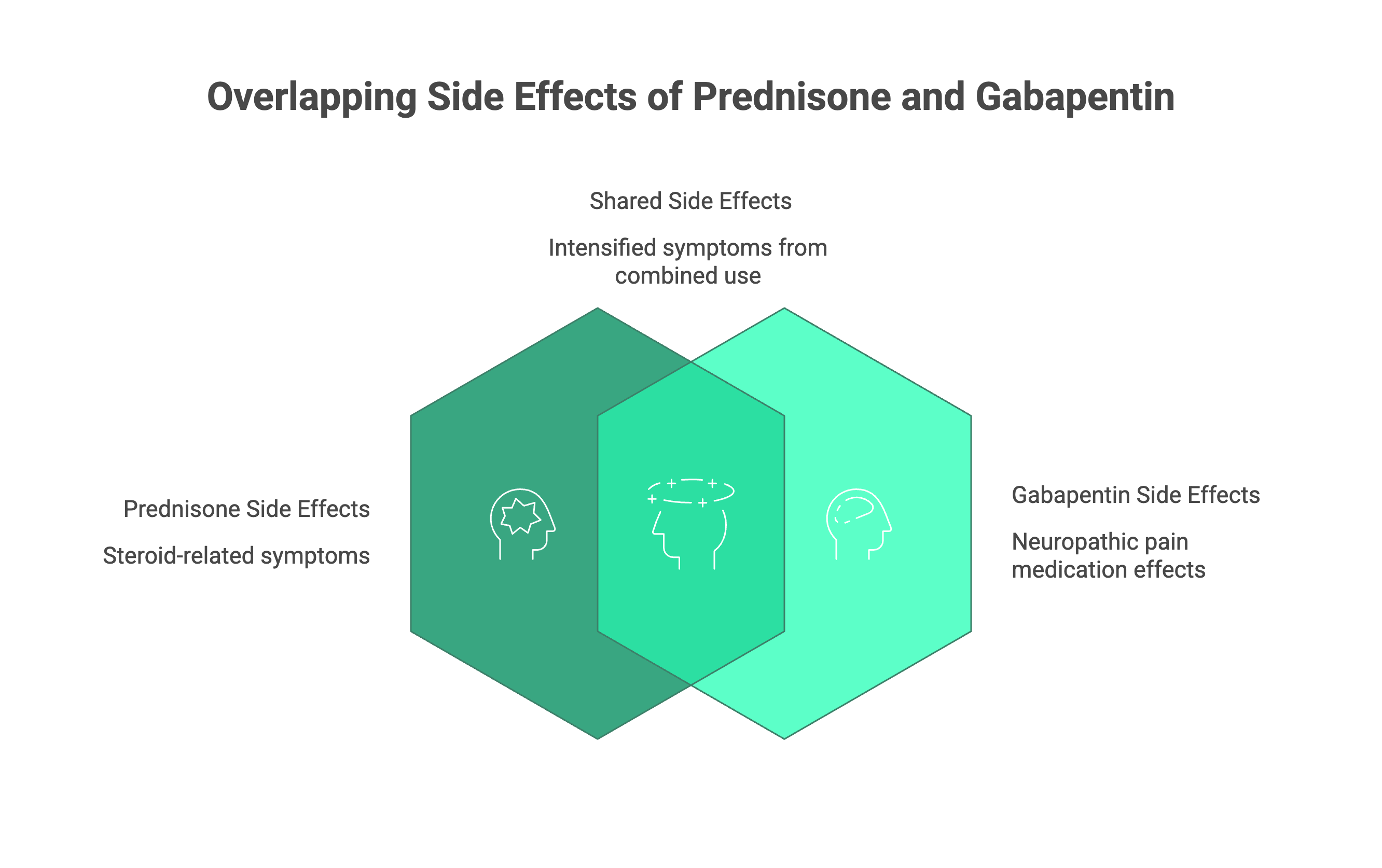
Even though these drugs do not directly interact, both can cause some similar side effects. When you take them together, those overlapping effects may feel stronger.
Here are the side effects worth watching for when you combine them.
- Dizziness and lightheadedness. Both medications can make you feel unsteady, especially when you first start taking them or when doses change.
- Mood changes. Prednisone is well known for causing irritability, anxiety, and even feelings of sadness. Gabapentin can also affect mood in some people. Together, emotional shifts may feel more noticeable.
- Sleep problems. Prednisone can make it hard to fall asleep, especially if you take it later in the day. Gabapentin usually causes drowsiness but can sometimes disrupt sleep patterns too. This push-and-pull effect on sleep can be confusing for your body.
- Stomach discomfort. Prednisone can irritate your stomach lining, especially at higher doses. While gabapentin is gentler on the stomach, nausea is still a possible side effect for some people.
- Fatigue and brain fog. Gabapentin commonly causes drowsiness. Prednisone can sometimes drain your energy too, particularly during longer courses. You might feel more mentally foggy than usual.
Most of these overlapping effects are manageable. They tend to be most noticeable in the first few days of treatment and often ease as your body adjusts.
Who Should Be Extra Careful With This Combination?
While most people tolerate both medications together, certain groups should have closer monitoring.
People with diabetes need to be especially watchful. Prednisone can raise blood sugar levels significantly, sometimes within hours of taking a dose. If you monitor your glucose at home, check it more frequently while on prednisone. Your doctor may need to temporarily adjust your diabetes medications.
Older adults face higher risks with both drugs. Gabapentin's sedating effects can increase fall risk, and prednisone can weaken bones over time. Together, the combination of unsteadiness and fragile bones becomes a real concern. If you are over 65, your doctor will likely start with lower doses of both.
Anyone with kidney problems should mention this to their doctor right away. Gabapentin is almost entirely cleared by your kidneys. If your kidney function is reduced, gabapentin can build up in your system and cause stronger side effects. Prednisone can also contribute to fluid retention and elevated blood pressure, which can further stress your kidneys.
People with a history of mood disorders deserve extra attention too. Both prednisone and gabapentin carry warnings about mood changes. Prednisone, in particular, has been linked to anxiety, agitation, and depressive symptoms in some people, especially at higher doses or when started for the first time. If you notice unusual changes in how you feel emotionally, reach out to your healthcare provider. Understanding how gabapentin affects your nervous system and mood can help you feel more prepared.
What About Stopping Either Medication?
This is really important. Neither prednisone nor gabapentin should be stopped suddenly.
If you have been taking prednisone for more than a few days, your body's own cortisol production slows down because the medication is doing that job. Stopping abruptly can leave your body without enough cortisol, which can cause fatigue, weakness, joint pain, and in rare cases, a dangerous drop in blood pressure called adrenal crisis. Your doctor will taper your dose gradually to give your adrenal glands time to wake back up.
Gabapentin also requires a slow taper. Stopping it suddenly can lead to withdrawal symptoms like anxiety, insomnia, nausea, and sweating. For people who take gabapentin for seizures, abrupt discontinuation can trigger seizure activity. A recommended approach is reducing your dose by no more than 300 mg every four days. You can find more about how gabapentin is safely managed in this government drug reference.
When Should You Call Your Doctor?
Most people do well on this combination with basic monitoring. But there are times when you should reach out to your healthcare provider quickly. These include sudden or severe mood changes, unusually high blood sugar readings, signs of infection like fever or chills (prednisone suppresses your immune system), extreme drowsiness or confusion, and trouble breathing.
Your pharmacist is also a wonderful resource here. They can review your full medication list and flag any concerns specific to your situation. If your doctor has prescribed both prednisone and gabapentin, it means they have weighed the benefits against the risks for your particular condition. For additional medication safety guidance, this drug safety reference may help.
The Bottom Line
Prednisone and gabapentin do not directly interact and are commonly prescribed together for conditions that involve both inflammation and nerve pain. The main concern is overlapping side effects like dizziness, mood changes, sleep problems, and fatigue. People with diabetes, kidney issues, or a history of mood disorders should have closer monitoring. And when it comes time to stop either medication, always taper slowly under your doctor's guidance.
Health Companion
trusted by
6Mpeople
Get clear medical guidance
on symptoms, medications, and lab reports.

download august