
Health Library
What are cirrhosis rash pictures?
February 8, 2025
Have any health related queries? August is here for your help 24 x 7
Cirrhosis is a serious condition that affects liver. It happens when healthy liver tissue is slowly replaced by scar tissue, which makes it hard for liver to work properly. This condition usually happens due to long-lasting liver diseases, like hepatitis, and problems from drinking alcohol. Other reasons can include nonalcoholic fatty liver disease and autoimmune disorders.
The symptoms of cirrhosis can vary a lot. Many people may not notice any symptoms in early stages. As disease gets worse, common signs include feeling very tired, yellowing of skin and eyes (called jaundice), and swelling in belly. These signs show that liver struggles to filter toxins, make important proteins, and control blood flow.
One important but often ignored sign of cirrhosis is skin changes. People with cirrhosis may develop different rashes and skin issues due to liver problems. For example, a rash connected to cirrhosis can cause severe itching, often because bile salts build up in blood. Other skin changes, like spider veins and red palms, can also indicate a liver issue. Being aware of these skin symptoms important for early diagnosis and treatment.
Cirrhosis Rash
Cirrhosis rash refers to skin changes or abnormalities that occur in individuals with cirrhosis, a chronic liver condition characterized by severe scarring of liver tissue. These rashes are often linked to impaired liver function and systemic complications.
Causes of Cirrhosis Rash
1. Bile Salt Buildup: Impaired bile excretion leads to accumulation of bile salts under skin, causing itching and rashes.
2. Reduced Detoxification: The liver's inability to filter toxins can result in skin irritation and discoloration.
3. Poor Blood Clotting: Reduced clotting factor production can lead to easy bruising and rash like spots (petechiae).
Types of Cirrhosis Rashes
1. Pruritus (Itchy Skin): Severe itching due to bile salt accumulation common.
2. Spider Angiomas: small spider-like blood vessels visible on skin, often on chest or face.
3. Jaundice Associated Rash: Yellowing of skin with patchy rashes due to bilirubin buildup.
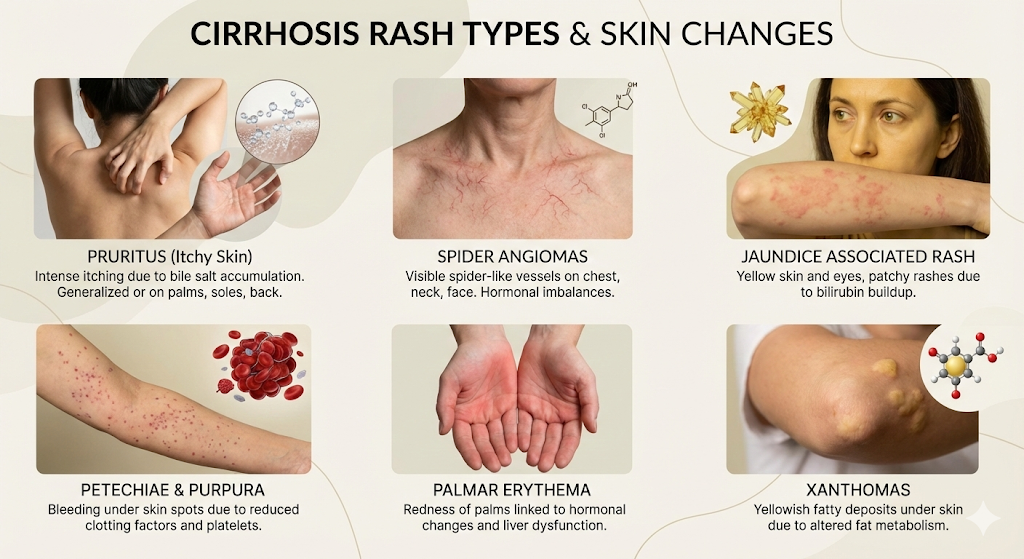
Cirrhosis Rash types
Cirrhosis can lead to various skin manifestations due to impaired liver function and systemic complications. Below are common types of rashes and skin changes associated with cirrhosis:
• Pruritus (itchy skin):
Its caused by bile salt accumulation under skin, leading to intense itching. Its often generalized but may be more severe on palms, soles, or back.
• Spider Angiomas:
Tiny, spider like blood vessels are visible just beneath skin's surface. These are commonly seen on chest, neck, and face and result from hormonal imbalances linked to liver disease.
• Jaundice Associated Rash:
The skin and eyes are yellowed due to bilirubin buildup, often accompanied by patchy, irritated rashes.
• Petechiae and Purpura:
Small red or purple spots are caused by bleeding under skin due to reduced clotting factors and platelet abnormalities.
• Palmar Erythema:
Redness of palms is often linked to hormonal changes and liver dysfunction.
• Xanthomas:
Fatty deposits under skin, often seen as yellowish bumps, are caused by altered fat metabolism in cirrhosis patients.
Diagnosing Cirrhosis Based on Skin Symptoms
| Skin Symptom | Description | Diagnostic Implications |
|---|---|---|
| Pruritus | Intense itching is caused by bile salt buildup under skin. | Suggests bile flow obstruction or advanced liver dysfunction. |
| Spider Angiomas | Small, spider-like blood vessels were visible on skin, especially on chest. | Indicates hormonal imbalance, common in cirrhosis due to estrogen buildup. |
| Jaundice | Yellowing of skin and eyes is caused by bilirubin accumulation. | Sign of significant liver damage and impaired bilirubin processing. |
| Petechiae and Purpura | Small red or purple spots due to bleeding under skin. | Reflects reduced clotting factor production and platelet abnormalities. |
| Palmar Erythema | Redness of palms, typically bilateral. | Associated with altered hormone levels and chronic liver disease. |
| Xanthomas | Yellowish fatty deposits under skin, often around eyes or joints. | Indicates disrupted fat metabolism, common in liver disease. |
Summary
Skin symptoms are valuable indicators of cirrhosis and its progression. Common signs include pruritus (intense itching from bile salt buildup), spider angiomas (spider-like blood vessels from hormonal imbalance), jaundice (yellowing of skin and eyes due to bilirubin accumulation), and petechiae or purpura (small red or purple spots caused by bleeding under skin). Other notable symptoms include palmar erythema (red palms linked to hormonal changes) and xanthomas (yellowish fatty deposits caused by disrupted fat metabolism).
These skin manifestations, combined with clinical evaluation and laboratory tests, can help in diagnosing cirrhosis and monitoring its severity. Early detection is critical for effective management.
FAQs
1. What causes cirrhosis rash?
Bile salt buildup, hormonal changes, and reduced liver function are common causes.
2. Is itching a symptom of cirrhosis?
Yes, severe itching (pruritus) often occurs due to bile salt accumulation under skin.
3. What do spider angiomas indicate?
Spider angiomas suggest hormonal imbalances associated with liver dysfunction.
4. Can skin symptoms be first sign of cirrhosis?
Yes, symptoms like jaundice, red palms, or itching may appear early in liver disease.
5. Should I see a doctor for a cirrhosis rash?
Yes, consult a doctor for any skin changes, especially if accompanied by other liver related symptoms.
Health Companion
trusted by
6Mpeople
Get clear medical guidance
on symptoms, medications, and lab reports.

download august