
A positive ovulation test shows test line that is as dark as or darker than control line. That is key thing to look for. If test line matches or is bolder than control, your body is surging with luteinizing hormone (LH). This surge signals that ovulation likely within next 24 to 36 hours. If you are trying to conceive, a positive result means your most fertile window open right now.
Reading these tests can feel confusing first few times. A faint line does not count as positive. And different test types show results in different ways. Let's break down what to look for so you can read your results with confidence.
How Do Ovulation Tests Work?
Ovulation tests, sometimes called ovulation predictor kits or OPKs, measure the level of luteinizing hormone in your urine. LH made by the pituitary gland and stays at low levels for most of your cycle. But right before ovulation, LH surges sharply. This spike triggers the ovary to release mature egg.
Ovulation tests detect that surge. They are considered about 99 % accurate at picking up the LH spike when used correctly.
What Does Positive Result Look Like on a Line Test?
Most standard ovulation test strips have two lines. One is the control line, which confirms the test working. other test line, which reacts to LH in your urine.
Here is how to read result:
- Positive: The test line is same color as control line or darker. This means LH surging and ovulation likely within 12 to 36 hours.
- Negative: test line is lighter than control line or barely visible. This means no surge has been detected yet.
- Invalid: No control line appears at all. This means test did not work properly and you should try again with new strip.
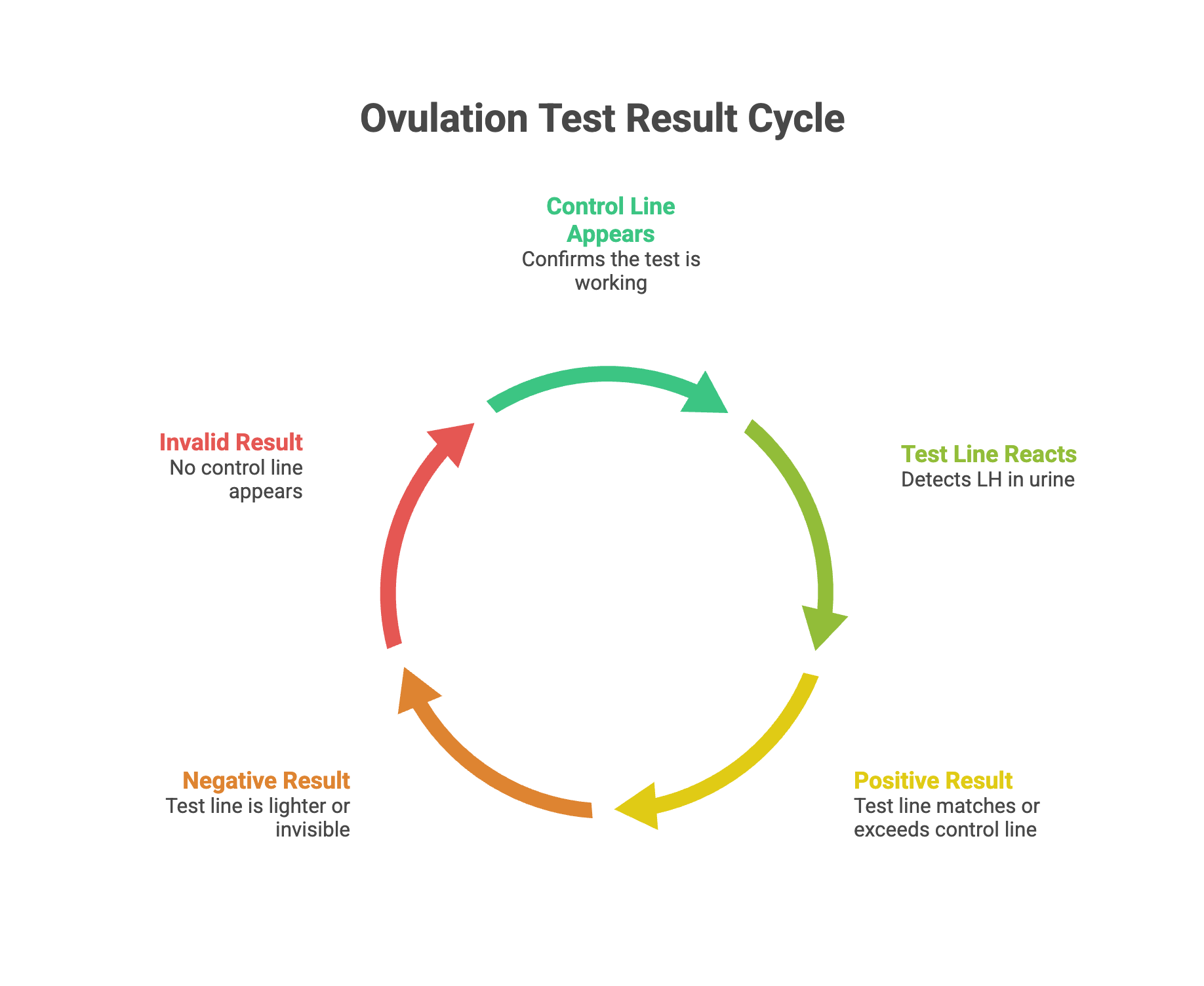
One important thing to remember is that faint line does not mean positive. Unlike pregnancy tests, where even faint line can indicate positive, ovulation tests require test line to match or exceed control line. A light line simply means LH present at its normal low level.
As you test over several days, you may notice test line getting gradually darker. That LH building up. Once it matches or passes control line, you have your positive.
People also ask
A faint line on an ovulation test is typically considered negative because it indicates your hormones have not reached the necessary surge threshold. Unlike pregnancy tests where any line counts, these tests require the test line to be as dark or darker than the control line.
Yes, it is possible because some people have very short surges that happen between testing windows. If you suspect you are missing your peak, testing twice a day can increase your chances of catching the surge.
What Does a Positive Look Like on Digital Test?
Digital ovulation tests take guesswork out of comparing lines. Instead of two lines, they display a clear symbol on small screen. Depending on brand, a positive result may appear as smiley face, word "yes," or solid circle. A negative result typically shows an empty circle or word "no."
Some advanced digital tests also show a flashing smiley for "high fertility" days before solid smiley for "peak fertility." The solid symbol confirms LH surge. Digital tests are especially helpful if you find it hard to compare line shades.
When Should You Start Testing?
Ovulation usually happens about 12 to 16 days before your next period starts. To catch LH surge in time, it helps to start testing a few days before you expect to ovulate.
If your cycle around 28 days, a good starting point day 11. If your cycles are shorter or longer, adjust from there. Many test kit instructions include a chart based on cycle length to help you pick right day.
For best accuracy, test at same time each day. It also helps to reduce liquid intake for about two hours before testing so your urine stays concentrated. Unlike pregnancy tests, ovulation tests do not need to be taken first thing in morning.
People also ask
If your cycles vary in length, it is best to look at your shortest cycle from the last six months to determine your starting day. You may need to begin testing earlier than someone with a predictable cycle to ensure you catch the surge.
Reducing your fluid intake for about two hours before testing helps ensure your urine is concentrated enough to detect hormone levels accurately. Diluted urine can sometimes lead to a false negative result, especially if your surge is mild.
What Should You Do After Positive Result?
Once you see a positive, your fertile window at its peak. Since ovulation typically happens within 24 to 36 hours of LH surge, and released egg survives for only about 12 to 24 hours, timing matters.
The good news that sperm can survive in reproductive tract for up to five days. Having intercourse on day of your positive test and day after gives you a strong chance of conception.
You can also keep testing for day or two after your positive to see line fade. This rising, peaking, and fading pattern is called LH surge curve and completely normal.
Can You Get a False Positive?
It does not happen often, but false positives are possible. There are few situations where an ovulation test might show positive even when ovulation is not actually happening.
Here are some reasons false positive can occur:
- PCOS (polycystic ovary syndrome): People with PCOS can have elevated LH levels throughout their cycle. This can make tests appear positive for several days even without actual ovulation happening.
- Pregnancy: If you are already pregnant, pregnancy hormone hCG has similar structure to LH. An ovulation test may pick up hCG and show positive result even though you are not ovulating.
- Perimenopause: As body approaches menopause, LH levels can rise and become erratic. This can cause positive readings that do not reflect true ovulation.
- Certain medications: Fertility medications, especially those containing hCG or drugs that stimulate ovulation, can cause false surge on test.
- Luteinized unruptured follicle syndrome (LUFS): In this rare condition, LH surges but egg is not actually released from ovary. The test reads positive but ovulation does not occur.
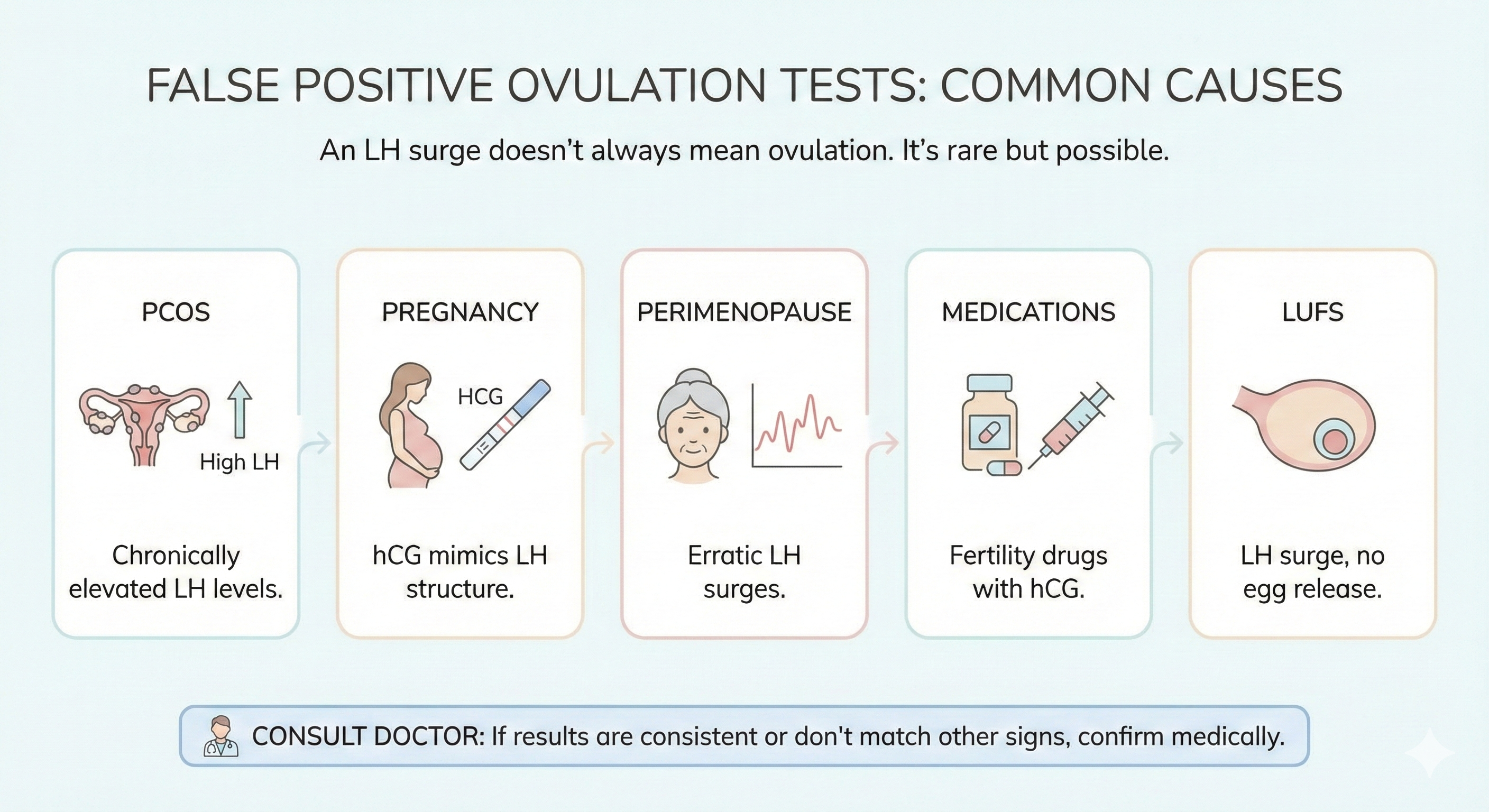
If you consistently get positive results over many days, or if your positive tests do not line up with other signs of ovulation like changes in cervical mucus or basal body temperature, it worth talking to your doctor. They can confirm ovulation with blood tests or ultrasound.
People also ask
Certain fertility treatments, particularly those containing hormones, can trigger a positive result on an ovulation test even if you are not ovulating. If you are undergoing medical treatment, your test results may not accurately reflect your natural cycle.
PCOS can cause consistently elevated LH levels, which often leads to misleading or repeatedly positive test results. It is common for people with this condition to find home ovulation tests difficult to interpret.
What if You Never See Positive?
If you test through an entire cycle without a positive, try not to worry right away. You may have tested too early or too late. Your urine may have been too diluted. Or your LH surge may have been very short and happened between tests.
Testing twice a day can help catch a quick surge. If you go through two or three cycles without positive, check in with your healthcare provider. They can look into whether ovulation happening and guide you on next steps.
Can You Combine Ovulation Tests With Other Tracking Methods?
Absolutely. Ovulation tests work best alongside other signs your body gives you. Tracking cervical mucus one helpful method. Around ovulation, cervical mucus often becomes clear, slippery, and stretchy, similar to raw egg whites.
Basal body temperature tracking is another option. After ovulation, your resting temperature rises slightly, confirming that ovulation did happen. While ovulation tests predict ovulation before it occurs, basal body temperature confirms it after fact. Using both together gives you a fuller picture of your cycle and helps you feel more in tune with your body.
