
Most of time, one sided throat pain when swallowing comes from an infection or irritation that happens to be affecting one side more than the other. Your throat is not one uniform structure. It has tonsils, lymph nodes, and tissue on both left and right sides, and it is completely normal for inflammation, swelling, or infection to develop more on one side. Even something as simple as sleeping on one side can cause mucus to drain and irritate that side of your throat more overnight.
So while it can feel alarming to have pain that is only on one side, cause is usually something common and treatable.
Could It Be Tonsillitis?
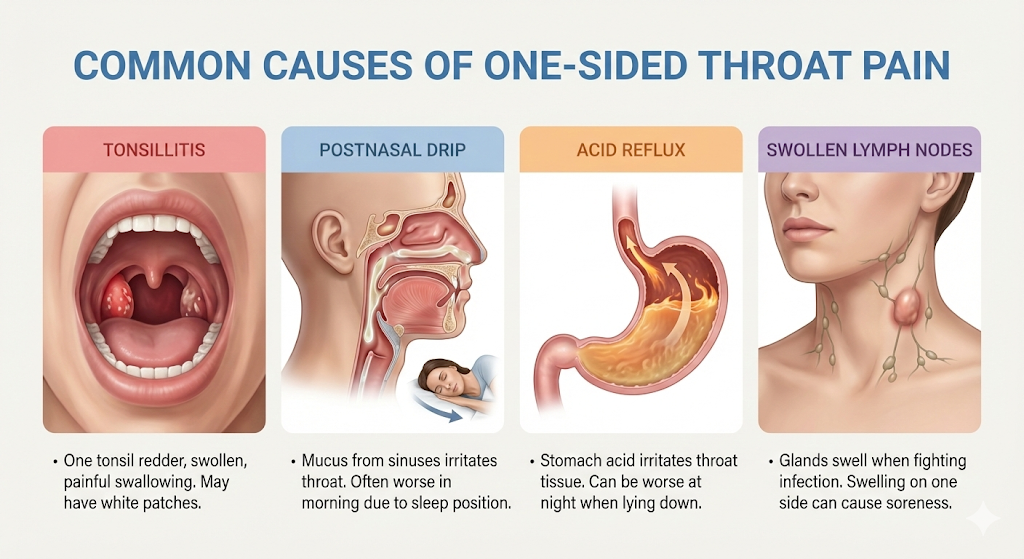
This one of the most frequent culprits. Your tonsils sit on both sides of back of your throat, and when they get infected, infection can be worse on one side than other. You might notice that one tonsil looks redder or more swollen, and swallowing may hurt sharply on that side.
Tonsillitis can be caused by a virus or by bacteria. If it’s bacterial, especially from group A streptococcus (strep throat), you may also have a fever, swollen lymph nodes in your neck, and white patches on your tonsils. Strep throat typically does not come with a cough or runny nose, which can help distinguish it from a cold. A quick strep test at your doctor's office can confirm diagnosis, and antibiotics will clear it up.
People also ask
Bacterial infections like strep throat often present with a sudden fever and white patches on the tonsils without a runny nose or cough. Viral infections typically come with cold symptoms like sneezing or congestion. You should track your specific symptoms for a few days to see if they follow a clear pattern.
It is quite common for one tonsil to appear more swollen or inflamed if an infection is concentrated on that side. Persistent asymmetry can sometimes indicate other issues, though. You should look for any other changes like texture differences or new lumps in your neck.
What About Postnasal Drip?
When your sinuses produce extra mucus from a cold, allergies, or a sinus infection, that mucus drips down the back of your throat. This is called postnasal drip, and it can irritate and inflame your throat over time.
The reason it might hurt on just one side often related to how you sleep. If you tend to sleep on your left side, for example, gravity pulls mucus toward that side of your throat. Over course of a night, that steady drip can leave one side raw and sore by morning. You might notice pain is worse when you first wake up and eases a bit as day goes on.
Staying hydrated, using a saline nasal spray, and treating the underlying cause of mucus (whether that allergies or a sinus infection) can help a lot.
Could Acid Reflux Be Cause?
It might surprise you, but acid reflux can cause throat pain on one side, especially at night. When stomach acid travels up into your esophagus and throat, it irritates tissue. If you sleep on one side, acid tends to pool and irritate that side more.
Other clues that reflux may be cause include a burning feeling in your chest, a sour taste in your mouth, hoarseness, or a dry cough. You might not even feel classic heartburn. Sometimes throat irritation is only symptom, which is called silent reflux or laryngopharyngeal reflux. Over counter antacids, elevating the head of your bed, and avoiding late night meals can ease discomfort.
People also ask
Yes, laryngopharyngeal reflux often occurs without the burning chest pain associated with classic heartburn. Symptoms might include a persistent dry cough, hoarseness, or just a strange sensation in your throat when swallowing. Paying attention to whether your throat pain feels worse in the morning can help identify this pattern.
Pain that fluctuates based on your sleeping position is often linked to gravity influencing the drainage of mucus or the movement of stomach acid. If you notice your throat feels raw specifically on the side you sleep on, this indicates local irritation. Adjusting your pillow height or changing sleep positions may provide immediate comfort.
Are Swollen Lymph Nodes Playing a Role?
Your lymph nodes are small glands that sit on both sides of your neck, and they swell up when your body is fighting an infection. If the infection is more concentrated on one side, like a one sided ear infection or a dental abscess, the lymph nodes on that same side can become tender and swollen. This swelling can make that side of your throat feel sore, especially when you swallow.
Swollen lymph nodes from a common cold or flu usually go down on their own as the infection clears. If they stay swollen for more than two weeks or keep getting bigger, it a good idea to have them checked.
Could a Peritonsillar Abscess Cause This?
This is a less common but more serious possibility. A peritonsillar abscess forms when a pocket of pus develops in the tissue next to one of your tonsils, usually after a bout of tonsillitis that gets worse instead of better. It causes severe pain on one side of the throat, difficulty swallowing, fever, and sometimes trouble opening your mouth fully. Your voice may also sound muffled.
This condition needs medical attention right away. A doctor may need to drain the abscess and will prescribe antibiotics. If you have a rapidly worsening sore throat concentrated on one side with difficulty swallowing or breathing, do not wait to be seen.
People also ask
A peritonsillar abscess usually causes severe, rapidly worsening pain on one side, often making it difficult to fully open your mouth or speak clearly. You might also notice a muffled voice or a fever that does not go away. This condition presents as a more acute and intense pain than a standard sore throat.
You should seek emergency care if you have trouble breathing, drooling, or an inability to swallow even your own saliva. These signs suggest the airway could be compromised by swelling. Never wait for an appointment if you feel your breathing is becoming restricted.
What About Dental Problems?
It is easy to forget that your teeth and throat are closely connected. A tooth infection or abscess can send pain radiating into your jaw, ear, and the same side of your throat. Impacted wisdom teeth can cause similar referred pain. If your one sided throat pain comes with jaw discomfort, earache on the same side, or visible swelling around a tooth, a dental issue may be worth looking into.
Are There Rarer Causes?
In some cases, one sided throat pain when swallowing can come from less common conditions. Glossopharyngeal neuralgia is a rare nerve condition that causes sudden, severe, stabbing pain on one side of the throat, tongue, or ear. The pain often lasts just seconds to minutes but can be intense. It is triggered by swallowing, talking, or even coughing.
Throat or mouth cancers can also cause persistent one sided pain, though this uncommon. Warning signs include a sore throat lasting longer than two weeks, a lump in neck, unexplained hoarseness, ear pain on one side, or blood in your saliva. These symptoms do not mean you have cancer, but they do mean it is time to have a doctor take a closer look.
What Can You Do at Home Right Now?
While you sort out the cause, a few simple things can ease pain. Gargling with warm saltwater (about one teaspoon of salt in eight ounces of warm water) several times a day can reduce swelling and soothe tissue. Over the counter pain relievers like ibuprofen or acetaminophen can help with pain and inflammation. Sipping warm tea with honey, staying well hydrated, and using a throat spray to numb area can all provide relief.
Avoid very hot, spicy, or acidic foods that could further irritate your throat. And try to rest your voice when possible, especially if talking makes pain worse.
When Should You See a Doctor?
A one sided sore throat that lasts a day or two and starts to improve is usually nothing to worry about. But you should see a doctor if pain lasts more than a week, gets worse instead of better, or comes with a fever over 101°F. Difficulty swallowing, trouble breathing, visible swelling on one side, or an inability to fully open your mouth are all signs to get checked right away.
