
Health Library
What is Presbyopia? Symptoms, Causes, & Treatment
October 10, 2025
Question on this topic? Get an instant answer from August.
Presbyopia is a natural vision change that makes it harder to see things up close, like reading a book or checking your phone. It's not a disease or eye condition you need to worry about. Instead, it's a normal part of aging that affects nearly everyone, usually starting in your 40s.
Think of it as your eyes gradually losing their ability to switch focus from far to near objects. Just like other parts of your body change as you age, your eyes' focusing power naturally decreases over time. The good news is that presbyopia is easily corrected with glasses, contacts, or other treatments.
What is presbyopia?
Presbyopia happens when the lens inside your eye becomes less flexible with age. Your eye's lens normally changes shape to help you focus on objects at different distances. When you're young, this lens is soft and flexible, easily adjusting to help you see clearly whether you're looking at something far away or reading something close up.
As you get older, the lens gradually hardens and loses its flexibility. This makes it increasingly difficult for your eye to change focus from distant objects to nearby ones. The result is that close-up tasks like reading, sewing, or using your smartphone become blurry and challenging.
This condition affects nearly everyone as they age. It's so common that eye doctors consider it a normal part of the aging process rather than a vision problem or disease that needs to be "cured."
What are the symptoms of presbyopia?
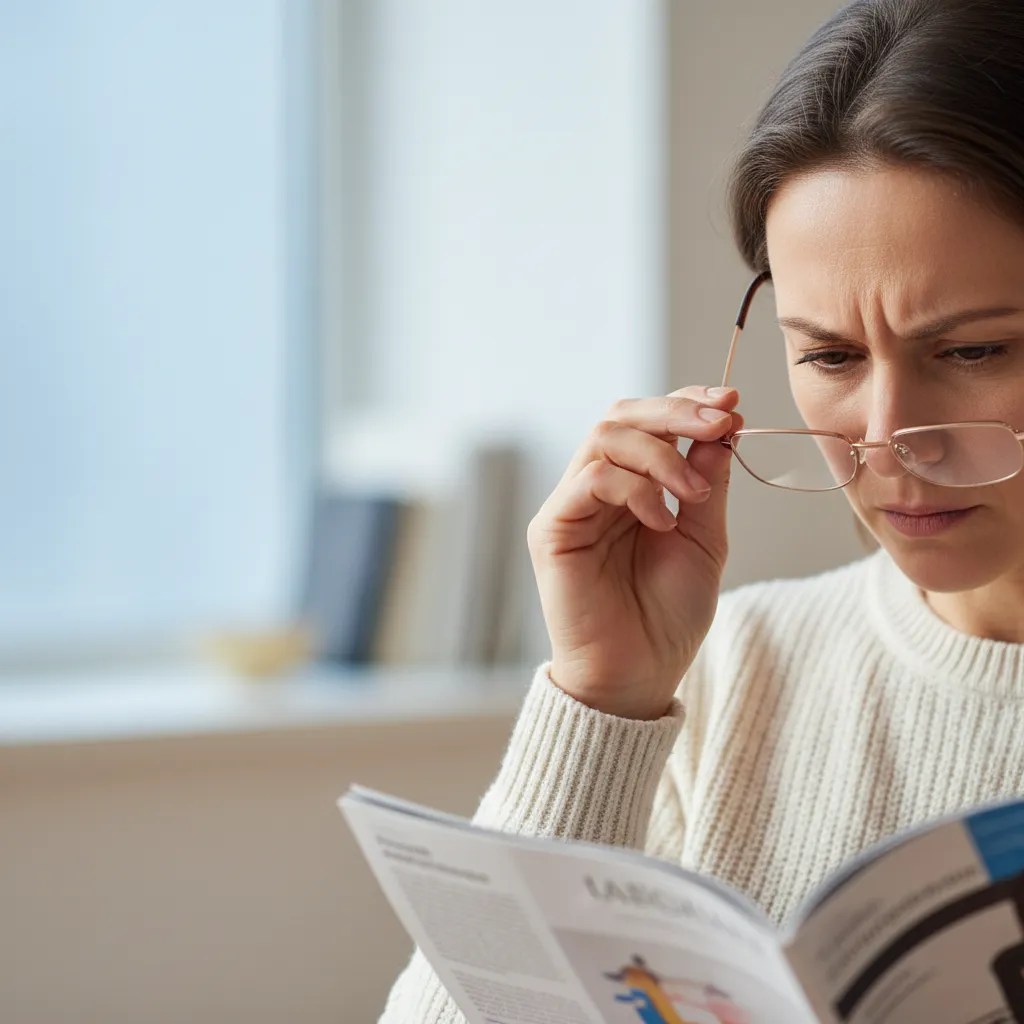
The most obvious sign of presbyopia is difficulty seeing things clearly up close. You might notice that you need to hold books, menus, or your phone farther away from your face to read them clearly.
Here are the common symptoms you might experience:
- Blurry vision when reading or doing close work
- Holding reading materials at arm's length to see them clearly
- Eye strain or fatigue after reading or doing detailed work
- Headaches after prolonged close-up tasks
- Difficulty seeing in dim lighting when reading
- Problems threading needles or doing other precise tasks
- Squinting to try to see small print more clearly
These symptoms typically develop gradually over several years. You might first notice them when you're tired or in poor lighting conditions. Many people initially think they just need better lighting or that they're having a "bad vision day."
The symptoms tend to be most noticeable when you're switching between looking at something far away and then trying to focus on something close. Your eyes may take longer to adjust, or the close-up object may remain blurry no matter how hard you try to focus.
What causes presbyopia?
Presbyopia is caused by natural changes in your eye's lens as you age. The lens in your eye is made of water and proteins arranged in a way that keeps it clear and flexible when you're young.
Several age-related changes contribute to presbyopia:
- The lens becomes less elastic and more rigid over time
- The muscles around the lens may lose some of their strength
- The lens continues to grow throughout your life, becoming thicker and less flexible
- The proteins in the lens change structure, making it harder for the lens to change shape
These changes happen to everyone as part of normal aging. Unlike other vision problems that might be caused by injury, disease, or genetics, presbyopia is simply the result of your eyes getting older. It's similar to how your joints might become stiffer or your hair might turn gray as you age.
The process typically begins in your late 30s or early 40s, even though you might not notice symptoms until later. By age 50, most people have some degree of presbyopia, and it continues to progress until around age 60 when it usually stabilizes.
When to see a doctor for presbyopia?
You should see an eye doctor when you start having trouble with close-up vision or notice any of the symptoms mentioned earlier. Even though presbyopia is normal, it's important to get a proper eye exam to confirm the diagnosis and rule out other conditions.
Schedule an appointment if you experience:
- Sudden changes in your vision
- Eye pain along with vision changes
- Difficulty with close-up tasks that's interfering with your daily life
- Frequent headaches when reading or doing detailed work
- Problems seeing clearly even when holding objects at arm's length
Don't wait until your vision problems become severely limiting. Early treatment can help you maintain your quality of life and continue enjoying activities like reading, crafting, or using digital devices comfortably.
Remember that presbyopia often occurs alongside other age-related eye conditions. A comprehensive eye exam can detect issues like cataracts, glaucoma, or macular degeneration that might need different treatments.
What are the risk factors for presbyopia?
Age is the primary risk factor for presbyopia, and it affects virtually everyone as they get older. However, some factors might influence when presbyopia develops or how quickly it progresses.
The main risk factors include:
- Age - presbyopia typically starts between ages 40-45
- Certain medications like antidepressants, antihistamines, or diuretics
- Medical conditions such as diabetes, multiple sclerosis, or cardiovascular disease
- Previous eye surgery or injury
- Prolonged use of reading glasses at a young age
Some people may notice presbyopia symptoms earlier if they already wear glasses for distance vision. Others might not realize they have presbyopia if they're nearsighted, since taking off their distance glasses might actually help them see close objects more clearly.
While you can't prevent presbyopia from developing, understanding these risk factors can help you prepare for the changes and seek appropriate treatment when needed.
What are the possible complications of presbyopia?
Presbyopia itself doesn't cause serious health problems, but leaving it untreated can affect your quality of life and potentially lead to other issues. The main concern is how it impacts your daily activities and overall well-being.
Potential complications from untreated presbyopia include:

- Increased risk of accidents due to poor close-up vision
- Chronic eye strain and fatigue
- Frequent headaches from squinting or straining to see
- Reduced quality of life and difficulty with hobbies or work tasks
- Social isolation if reading or detailed activities become too challenging
These complications are easily preventable with proper vision correction. Most people find that glasses, contact lenses, or other treatments completely resolve their presbyopia symptoms and allow them to return to their normal activities.
In rare cases, people might develop more serious eye problems that coincide with presbyopia. This is why regular eye exams are important, especially as you age, to catch and treat any additional conditions early.
How is presbyopia diagnosed?
Diagnosing presbyopia involves a comprehensive eye examination with an eye care professional. The process is straightforward and painless, typically taking about 30-60 minutes to complete.
Your eye doctor will perform several tests:
- Visual acuity test using an eye chart to check distance and near vision
- Refraction test to determine the exact prescription you need
- Eye muscle movement test to ensure your eyes work together properly
- Pupil response test using a small light
- Eye pressure measurement to check for glaucoma
- Dilated eye exam to examine the inside of your eyes
The most telling test for presbyopia is the near vision assessment. Your doctor will ask you to read text at various distances and may use different lenses to see which ones help you see clearly up close.
During the refraction test, your doctor will place different lenses in front of your eyes and ask which ones make your vision clearer. This helps determine the exact strength of reading glasses or bifocals you'll need.
What is the treatment for presbyopia?
Several effective treatments can correct presbyopia and restore your ability to see clearly up close. The best option for you depends on your lifestyle, other vision needs, and personal preferences.
Common treatment options include:
- Reading glasses - simple, affordable, and effective for most people
- Bifocal glasses - have two different prescriptions in one lens
- Progressive lenses - provide smooth transition between distance and near vision
- Multifocal contact lenses - offer convenience without glasses
- Monovision contact lenses - one eye corrected for distance, one for near
For people seeking permanent solutions, surgical options are available:
- LASIK surgery modified for presbyopia correction
- Intraocular lens implants that replace your natural lens
- Corneal inlays that improve near vision
- Conductive keratoplasty using radiofrequency energy
Most people start with reading glasses because they're simple, effective, and inexpensive. You can even buy them over-the-counter in many cases, though a prescription from your eye doctor will give you the most accurate correction.
Progressive lenses are popular because they provide clear vision at all distances without the visible line that bifocals have. However, they can take some time to get used to and may not work well for everyone.
How to manage presbyopia at home?
While you can't cure presbyopia at home, several strategies can help you manage symptoms and make daily activities more comfortable. These approaches work best when combined with proper vision correction from your eye doctor.
Here are helpful home management techniques:
- Ensure adequate lighting when reading or doing close work
- Use larger print books, magazines, or increase font sizes on devices
- Take frequent breaks during close-up tasks to rest your eyes
- Hold reading materials at a comfortable distance (usually arm's length)
- Keep reading glasses in multiple convenient locations
- Use magnifying glasses for very detailed work
Good lighting is especially important as presbyopia often makes it harder to see in dim conditions. Use bright, direct lighting when reading, and consider getting adjustable desk lamps for detailed work.
Many digital devices now have accessibility features that can help. You can increase text size on smartphones, tablets, and computers, or use voice-to-text features when typing becomes difficult.
How should you prepare for your doctor appointment?
Preparing for your eye appointment can help ensure you get the most accurate diagnosis and appropriate treatment recommendations. A little preparation beforehand will make the visit more efficient and informative.
Before your appointment:
- Write down all vision symptoms you've noticed and when they occur
- List all medications and supplements you're taking
- Bring your current glasses or contact lenses
- Prepare questions about treatment options and lifestyle considerations
- Arrange transportation if your eyes will be dilated
- Gather information about family eye health history
Think about your daily activities and which ones are most affected by your vision changes. This information helps your doctor recommend the best treatment options for your specific needs and lifestyle.
If you're considering surgical options, prepare questions about risks, benefits, recovery time, and costs. Don't hesitate to ask about anything you don't understand - your eye doctor wants to ensure you're fully informed about your options.
What's the key takeaway about presbyopia?
Presbyopia is a completely normal part of aging that affects nearly everyone in their 40s and beyond. It's not a disease or serious condition, just a natural change in how your eyes focus as you get older.
The most important thing to remember is that presbyopia is highly treatable. Whether you choose reading glasses, contact lenses, or surgical options, you can continue to enjoy all your favorite activities that require clear close-up vision.
Don't let presbyopia symptoms frustrate you or limit your quality of life. With proper treatment, most people adapt quickly and continue to read, work, and pursue hobbies comfortably. The key is getting regular eye exams and working with your eye care professional to find the best solution for your needs.
Frequently asked questions about Presbyopia
Can presbyopia be prevented?
Can presbyopia be prevented?
Unfortunately, presbyopia cannot be prevented since it's a natural part of the aging process. However, maintaining good overall eye health through regular exams, UV protection, and a healthy diet may help slow its progression. The changes in your eye's lens that cause presbyopia happen to everyone as they age, regardless of lifestyle factors.
Will presbyopia continue to get worse over time?
Will presbyopia continue to get worse over time?
Presbyopia typically progresses gradually from your 40s until around age 60, when it usually stabilizes. You may need stronger reading glasses or adjustments to your prescription during this time. After age 60, most people find that their presbyopia doesn't change significantly, and their prescription remains fairly stable.
Can I wear over-the-counter reading glasses instead of getting a prescription?
Can I wear over-the-counter reading glasses instead of getting a prescription?
Over-the-counter reading glasses can work well for many people, especially if you don't need distance vision correction. However, prescription glasses are more accurate and can address any differences between your eyes. If you have astigmatism or other vision issues, prescription lenses will provide better, more comfortable vision correction.
Is it normal for presbyopia symptoms to be worse when I'm tired?
Is it normal for presbyopia symptoms to be worse when I'm tired?
Yes, presbyopia symptoms often feel worse when you're tired, stressed, or in poor lighting conditions. Your eye muscles work harder to focus when you're fatigued, making it more difficult to see clearly up close. This is completely normal and another reason why proper lighting and taking breaks during close work are so important.
Can presbyopia affect my ability to drive safely?
Can presbyopia affect my ability to drive safely?
Presbyopia primarily affects near vision, so distance driving usually isn't impacted. However, you might have trouble reading your dashboard, GPS, or maps while driving. If you need bifocals or progressive lenses, there may be a brief adjustment period. Always ensure your vision correction is up-to-date and consider having a backup pair of glasses in your car.
Health Companion
trusted by
6Mpeople
Get clear medical guidance
on symptoms, medications, and lab reports.

download august