
If you are dealing with a cold sore and wondering whether to reach for lysine or Abreva, you are not alone. Both are popular choices, but they work very differently. Abreva is an FDA-approved antiviral cream that can shorten healing time. Lysine is an amino acid supplement that may help reduce how often cold sores come back.
What Causes Cold Sores in First Place?
Cold sores are caused by herpes simplex virus type 1, or HSV-1. Over half global population carries this virus. Once you catch it, it stays in your nerve cells for life. Most of time it causes no problems at all.
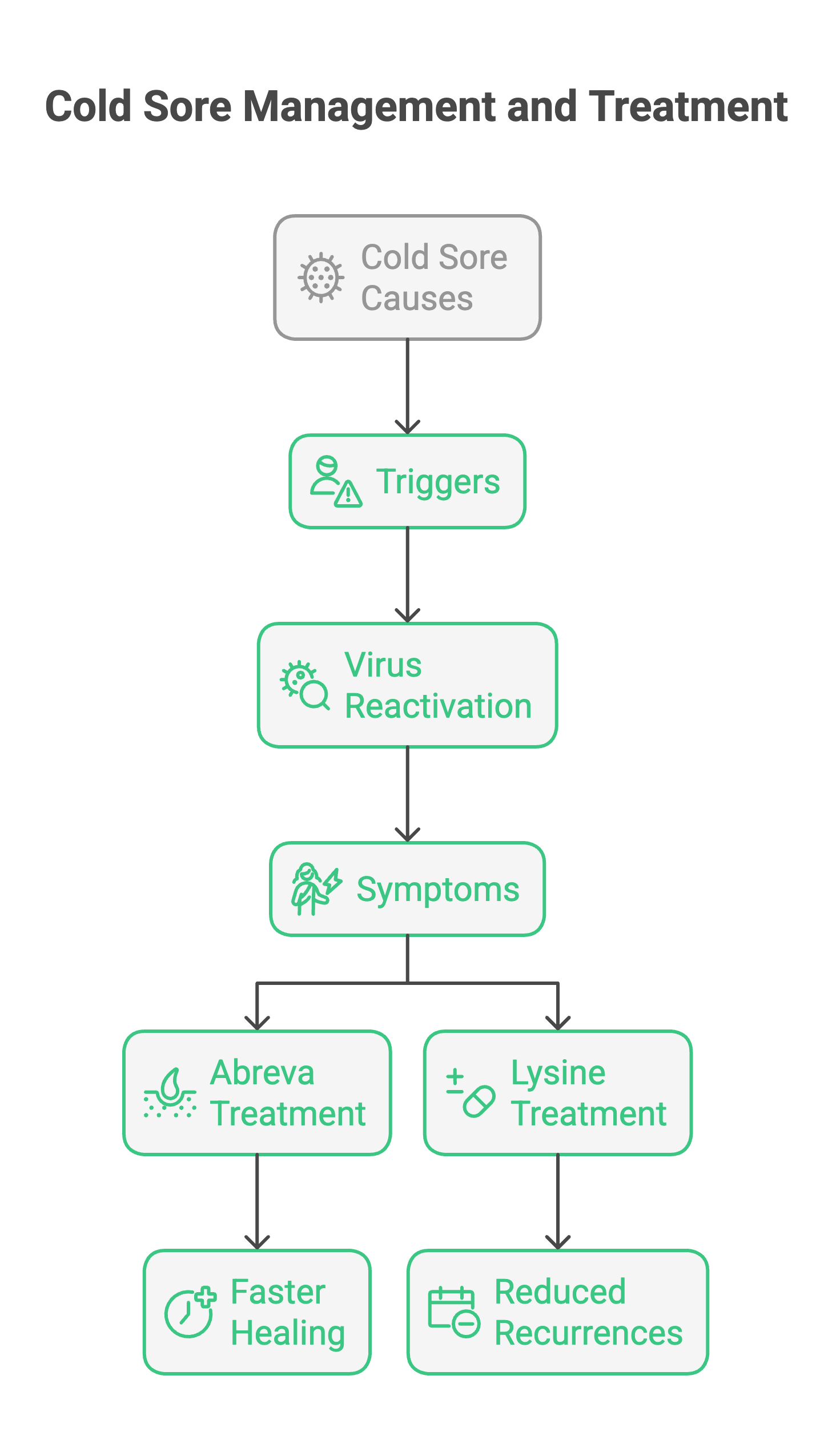
Certain triggers can wake it up. Stress, illness, fatigue, sun exposure, and hormonal changes are common ones. When virus reactivates, it travels to skin near your lips. That is when tingling starts, followed by painful blisters. The good news is you have options to manage them.
How Does Abreva Work on Cold Sores?
Abreva contains docosanol at a 10% concentration. Its only FDA approved nonprescription antiviral cream for cold sores. Instead of attacking virus directly, docosanol creates a shield around your healthy skin cells. This blocks virus from getting inside and making copies of itself.
Clinical trials found that people who used Abreva at first sign of symptoms healed in about 4 days on average. That roughly 18 hours faster than using nothing at all.
The key is timing. Abreva works best when you apply it at very first tingle, before blisters appear. You apply it five times daily until sore heals. If you wait until blisters have already formed, it still helps but will not be as effective. Abreva for treating active outbreaks, not daily prevention.
How Does Lysine Help with Cold Sores?
Lysine, also called L-lysine, is an essential amino acid your body cannot make on its own. You get it through food or supplements. Chicken, fish, eggs, cheese, and beans are naturally rich in lysine.
The idea behind lysine for cold sores involves a balance between two amino acids. HSV-1 needs arginine to replicate. Lysine competes with arginine in your body. When lysine levels are higher, there is less arginine available for virus to use.
A well-known trial gave participants 3 grams of lysine daily for six months. The lysine group had significantly fewer recurrences and less severe symptoms. Other research found that at least 1 gram per day may help reduce outbreak frequency, though results have been mixed. Doses below 1 gram did not show strong benefits.
So lysine appears most helpful as a preventive measure when taken as an oral supplement. The evidence for topical lysine cream is weak. If you get cold sores often, daily oral lysine might be worth discussing with your doctor.
Can You Use Lysine and Abreva Together?
Yes, you can use both at same time. They work through completely different pathways and do not interfere with each other.
A reasonable approach might look like this. Take oral lysine daily to help keep outbreaks at bay. Then if a cold sore breaks through, apply Abreva right away at first tingle. If you use both topically, apply Abreva first and let it absorb before using a lysine-based lip balm.
What Are Side Effects of Each?
Both lysine and Abreva are considered safe for most adults.
- Abreva may cause mild redness or slight burning at application site. These reactions are uncommon and usually go away quickly. It is not recommended for children under 12.
- Oral lysine is well tolerated at doses up to 3 grams per day for short periods. Some people experience mild stomach discomfort. If you take calcium supplements, be careful because lysine increases calcium absorption.
People who are pregnant, breastfeeding, or have kidney disease should talk to a doctor before starting lysine. When your skin reacts unusually to any treatment, that always worth checking, especially if you notice spreading redness or swelling. If you tend to experience unexpected skin reactions, understanding what your skin breakouts might be telling you can offer useful context.
When Should You See a Doctor Instead?
Most cold sores heal on their own within one to two weeks. Over-the-counter options like Abreva and lysine work well for occasional outbreaks.
But consider doctor for cold sores, if it happens more than six times a year, last longer than two weeks, spread near your eyes, or come with a high fever. People with weakened immune systems should also seek medical guidance early.
A doctor may prescribe oral antiviral medications like valacyclovir or acyclovir. These prescription options can both treat active outbreaks and prevent future ones when taken daily.
Cold sores can sometimes look like other conditions too. If you are unsure whether what you are seeing actually a cold sore, learning how some infections show subtle or unexpected symptoms gives helpful perspective.
So Which One Should You Choose?
It depends on what you need right now. If you have an active cold sore, Abreva is stronger choice. It has clinical evidence, FDA approval, and specific dosing instructions.
If you get cold sores regularly and want to reduce how often they show up, daily oral lysine at 1 gram or more may help. Its gentler, supplement-based approach that some people find useful.
And if outbreaks are frequent or severe, talk to your doctor about prescription antivirals. There no reason to push through when effective treatments exist.
The most important thing is catching a cold sore early. That first tingle is your signal to act. Starting treatment quickly gives you best shot at a shorter outbreak.
