
Acne face mapping connects where you break out on your face to what might be causing it. The idea has roots in traditional Chinese medicine, but modern dermatology has updated it with science backed explanations. Instead of linking pimples to internal organs, today's approach focuses on oil production, hormones, bacteria, and everyday habits.
Your breakouts are not random. Where they keep showing up can give you real clues about what is triggering them. Let's go zone by zone.
Why Does Acne Show Up on Your Forehead?
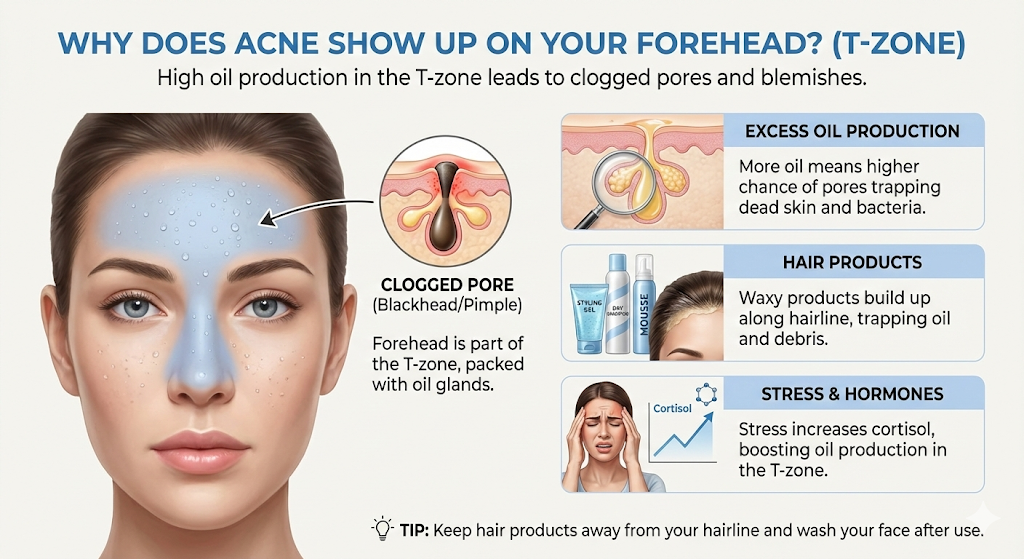
Your forehead is part of the T zone, an area packed with sebaceous glands that produce oil. More oil means more chances for pores to get clogged with dead skin cells and bacteria, which leads to blackheads, whiteheads, and pimples.
Forehead acne is one of the most common types. Excess oil production is the main driver, but a few other things can make it worse. Hair products like mousse, dry shampoo, and styling gels are frequent culprits. These products tend to be waxy and can build up along your hairline and forehead, trapping oil and debris in your pores.
Stress can also play a role here. When you are stressed, your body produces more cortisol, which can increase oil production across your entire face but especially in the T zone.
If your forehead is the main problem area, look at your hair products first. Keep them away from your hairline, and make sure you are washing your face after using them.
What Causes Acne on Your Nose?
Your nose sits right in the center of the T zone and has some of the largest pores on your face. That combination makes it a prime spot for blackheads.
Blackheads on the nose form when oil and dead skin cells collect inside a pore and get exposed to air, which oxidizes and turns them dark. This is not dirt. It is a chemical reaction.
Because nose pores are naturally larger, they are harder to keep clear. Regular cleansing and using a salicylic acid product can help keep buildup in check.
Why Do You Break Out on Your Cheeks?
Cheek acne is interesting because it often has less to do with internal factors and more to do with what is touching your face. Dermatologists call this acne mechanica, which means breakouts caused by friction, pressure, or contact with bacteria.
The most common triggers for cheek acne include dirty cell phones pressed against your skin, unwashed pillowcases, makeup brushes that have not been cleaned, and touching your face throughout the day.
The skin on your cheeks also tends to be drier and more sensitive than other parts of your face. This means it can get irritated more easily from harsh acne treatments. If you are treating cheek acne, use products like salicylic acid or benzoyl peroxide every other day rather than daily to avoid overdrying.
To prevent cheek breakouts, clean your phone screen regularly, change your pillowcase at least once a week, and wash makeup brushes often.
What Does Chin Acne Mean?
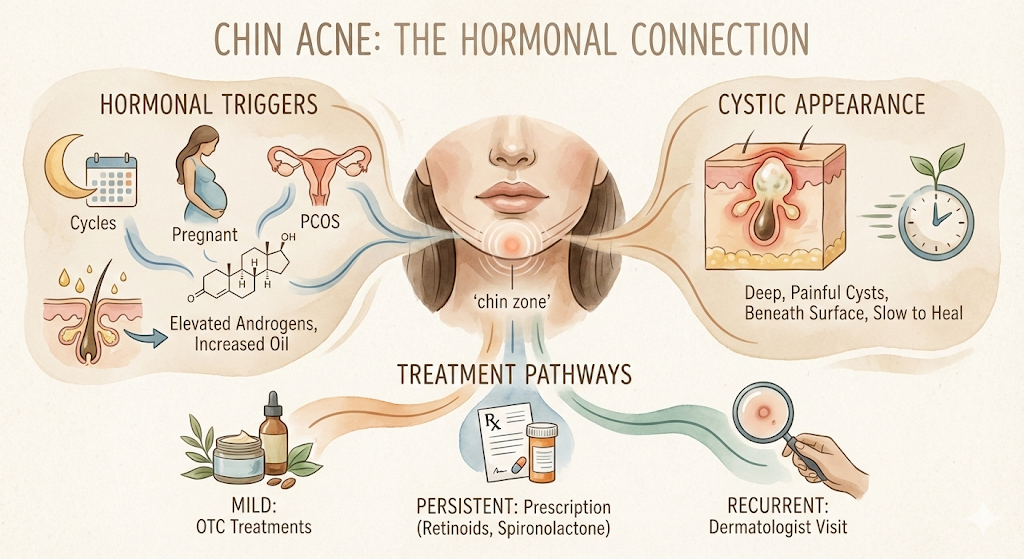
Chin acne is one of the most talked about zones in face mapping because it is strongly linked to hormonal fluctuations. This connection has solid scientific support.
Hormonal acne tends to show up on the chin and along the lower face. It is especially common in women and often flares up around menstrual periods, during pregnancy, or with conditions like polycystic ovary syndrome (PCOS). Elevated androgen levels increase oil production in this area, leading to deep, painful breakouts that sit under the skin.
These pimples tend to be cystic, meaning they form beneath the surface and do not come to a head easily. They can be stubborn and slow to heal.
Over the counter treatments can help mild cases, but persistent hormonal chin acne often needs prescription treatment. Options may include topical retinoids, oral contraceptives, or spironolactone, which blocks androgen activity. If your chin is a repeated trouble spot, a dermatologist visit is worth considering.
Why Does Acne Appear Along the Jawline?
Jawline acne shares the same hormonal roots as chin acne. Breakouts along the jaw often appear as deep, tender cysts that recur in the same spots month after month.
In women, this pattern frequently aligns with the menstrual cycle. Androgens spike before your period, stimulating the oil glands in the lower face. The result is those familiar under the skin bumps that take days to develop and even longer to resolve.
Jawline acne can also be triggered by friction from helmet straps, scarves, or resting your chin in your hands. If the breakouts are only on one side, think about what is consistently touching that area.
Does the Traditional Face Map Actually Work?
Traditional Chinese and Ayurvedic face maps link facial zones to specific internal organs. Forehead acne supposedly reflects digestive issues. Cheek acne points to lung problems.
The honest answer is that there is little scientific evidence to support these organ connections. Modern dermatology does not use organ based mapping to diagnose acne.
However, the general concept still has value. Looking at where you break out can help identify patterns related to oil production, hormones, and daily habits. The key is to focus on evidence based causes rather than organ theories.
When Should You See a Dermatologist?
If your breakouts keep returning in the same spots despite consistent skincare, it is a good idea to get professional input. A dermatologist can determine whether your acne is hormonal, bacterial, or related to something else entirely.
You should also seek help if your acne is leaving scars, causing significant pain, or affecting your confidence. Prescription treatments are effective for types of acne that over the counter products cannot reach.
Acne face mapping is not a diagnosis tool. But it is a helpful starting point for understanding your skin. Pay attention to where your breakouts cluster, consider the habits and products connected to those areas, and adjust accordingly. Your skin is giving you information. The goal is to listen to it.
