
If you have started Ozempic and noticed burps that taste or smell like rotten eggs, you are experiencing what is commonly called sulfur burps. This is one of the more unpleasant gastrointestinal side effects that people report while using semaglutide, and you are definitely not the only one dealing with it.
Sulfur burps are not dangerous in most cases, but they can be uncomfortable and embarrassing. Understanding why they happen can help you take steps to reduce them.
Why Does Ozempic Cause Sulfur Burps?
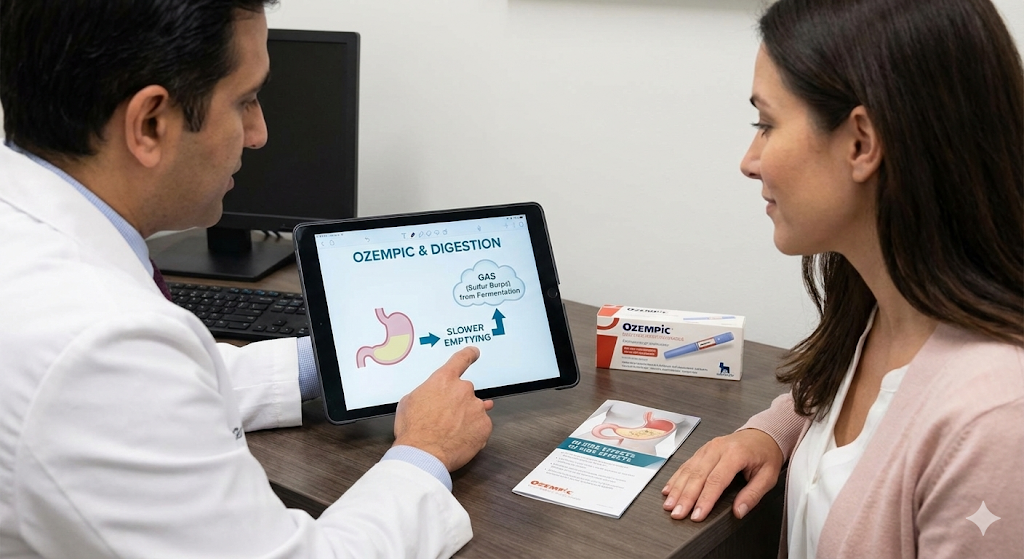
Ozempic (semaglutide) belongs to a class of medications called GLP-1 receptor agonists. These drugs work by mimicking a natural hormone that helps regulate blood sugar and appetite. But one of the key ways they do this is by slowing down how quickly your stomach empties food into the small intestine. This process is called delayed gastric emptying or gastroparesis-like effects.
When food stays in your stomach longer than usual, it has more time to ferment. Bacteria in your gut break down sulfur-containing proteins found in foods like eggs, meat, dairy, and certain vegetables. That fermentation produces hydrogen sulfide gas, which is the compound responsible for the rotten egg smell.
So the sulfur burps are essentially a byproduct of food sitting in your stomach longer than your body used to. The slower digestion gives gut bacteria extra time to produce sulfur gas, and that gas has to go somewhere.
This is closely related to other common GI side effects of Ozempic. According to the official prescribing information maintained by the FDA, the most frequently reported side effects of semaglutide include nausea, vomiting, diarrhea, abdominal pain, and constipation. You can review the full list of documented side effects here: Ozempic FDA Prescribing Information
When Do Sulfur Burps Usually Start?
Most people notice sulfur burps during the first few weeks of treatment or shortly after a dose increase. Ozempic is typically started at a low dose (0.25 mg weekly) and gradually increased over several weeks to a target dose of 0.5 mg, 1 mg, or 2 mg.
Each time the dose goes up, the effect on gastric emptying becomes stronger. This means your stomach slows down even further, and the fermentation cycle may intensify temporarily. For many people, the sulfur burps improve as the body adjusts to the new dose. This adjustment period can take anywhere from a few days to several weeks.
If you have been experiencing these burps consistently at the same dose for more than four to six weeks, it is worth discussing with your doctor. They may suggest adjusting your dose schedule or exploring ways to ease the symptoms.
Which Foods Make Sulfur Burps Worse?
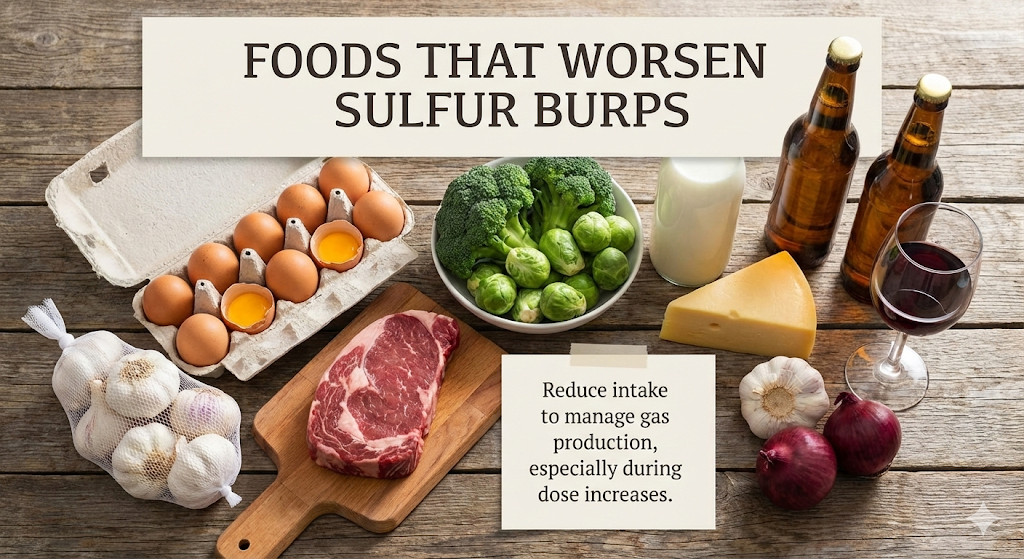
Certain foods are naturally high in sulfur and can fuel the gas production that causes these burps. If you are already dealing with delayed gastric emptying from Ozempic, eating these foods can make the problem noticeably worse.
Here are the main foods to watch:
- Eggs, especially the yolks, are one of the richest sources of sulfur in the diet.
- Red meat and poultry contain sulfur-containing amino acids like cysteine and methionine.
- Cruciferous vegetables like broccoli, cauliflower, Brussels sprouts, and cabbage are high in sulfur compounds.
- Dairy products, especially milk and cheese, can contribute to sulfur gas in people who are sensitive to lactose.
- Garlic and onions contain sulfur-based compounds that break down in the gut and produce gas.
- Beer and wine can also contribute because of the sulfites used during processing.
You do not necessarily need to cut all of these foods out entirely. But reducing your intake of the biggest offenders, especially during dose increases, can make a meaningful difference.
What Can You Do to Reduce Sulfur Burps?
There are several practical strategies that can help manage sulfur burps while you are on Ozempic:
Eat smaller, more frequent meals. Large meals sit in the stomach longer and give bacteria more material to ferment. Smaller portions are easier for your slowed digestive system to process.
Eat slowly and chew thoroughly. Swallowing air while eating quickly can add to gas and belching. Taking your time with meals reduces the amount of air you swallow.
Limit high-sulfur foods. As mentioned above, cutting back on eggs, cruciferous vegetables, and red meat during periods of active symptoms can help reduce sulfur gas production.
Stay hydrated. Drinking water throughout the day supports digestion and helps move food through the stomach more efficiently. Avoid carbonated drinks, which introduce extra gas.
Try peppermint or ginger tea. Both of these have mild carminative properties, meaning they can help relax the muscles in your digestive tract and ease gas. Ginger in particular has evidence supporting its use for nausea and bloating.
Consider OTC remedies. Simethicone (Gas-X) can help break up gas bubbles in the digestive tract. Bismuth subsalicylate (Pepto-Bismol) can help neutralize hydrogen sulfide gas specifically. However, check with your pharmacist before combining any over-the-counter product with your current medications.
If you are also dealing with general bloating and gas alongside the sulfur burps, this article explains how antacids and other remedies may help: Does Tums Help With Gas and Bloating?
Are Sulfur Burps a Sign of Something More Serious?
In the vast majority of cases, sulfur burps from Ozempic are simply an uncomfortable side effect of delayed gastric emptying. They are not a sign of a dangerous reaction.
However, there are some situations where you should contact your doctor:
- Sulfur burps are accompanied by severe or persistent vomiting that prevents you from keeping fluids down.
- You experience intense abdominal pain, especially pain that radiates to your back, which could suggest pancreatitis.
- You notice signs of dehydration like dark urine, dizziness, or dry mouth.
- The symptoms are severe enough to interfere with your ability to eat or take medications.
- You develop a fever alongside the GI symptoms, which could suggest an infection.
The U.S. National Library of Medicine notes that patients with a history of severe stomach problems, including gastroparesis, should discuss these issues with their doctor before starting semaglutide. If you have preexisting digestive conditions, your risk of more intense GI side effects may be higher. You can read the full precaution details here: Semaglutide Injection Information
Do Sulfur Burps Go Away Over Time?
For most people, yes. The GI side effects of Ozempic, including sulfur burps, tend to be most intense during the early weeks of treatment and after dose increases. As your body adjusts to the medication, gastric emptying often stabilizes somewhat, and the severity of symptoms typically decreases.
If you are using a GLP-1 medication like Zepbound (tirzepatide) and experiencing similar sulfur burps, the mechanism is essentially the same. This guide explains why it happens with that class of drugs as well: Why Does Zepbound Cause Sulfur Burps?
The Bottom Line
Sulfur burps on Ozempic are caused by delayed gastric emptying, which allows food to ferment in your stomach and produce hydrogen sulfide gas. They are common, especially during the first weeks of treatment or after dose increases. Eating smaller meals, limiting high-sulfur foods, staying hydrated, and using gentle OTC remedies can all help. For most people, the symptoms improve as the body adjusts. If the burps are severe, persistent, or come with warning signs like intense pain or dehydration, your doctor can help you find the right approach.
