
Yes, gabapentin can cause constipation. It is listed as a recognized side effect on official drug information maintained by U.S. National Library of Medicine. While it is not most commonly talked-about side effect, it happens often enough that it is worth understanding why it occurs and what you can do about it.
Why Does Gabapentin Cause Constipation?
Gabapentin works by affecting certain nerve signals in your brain and spinal cord. It is primarily used to treat nerve pain (like kind that follows shingles) and certain types of seizures. But because it acts on nervous system, it can also slow down nerve signaling in your digestive tract.
Your gut depends on a steady rhythm of muscle contractions to move food and waste through your intestines. This process called peristalsis. When gabapentin slows down nerve activity that drives these contractions, everything moves more slowly. The result is harder, drier stools and less frequent bowel movements.
This is not unique to gabapentin. Many medications that affect nervous system, including certain antidepressants, opioids, and other anticonvulsants, can have a similar effect on your gut. But gabapentin tends to cause milder constipation compared to medications like opioids.
https://assets.getbeyondhealth.com/health-lib/blogs/manual_upload_20260223151315_constipation-gabapentin.png]
How Common Is Constipation With Gabapentin?
Constipation is listed among common side effects of gabapentin. The official drug information page for gabapentin includes constipation alongside other frequently reported effects like drowsiness, dizziness, increased appetite, and swelling in hands or feet. You can review complete list of side effects and precautions here: Gabapentin Drug Information
The exact rate varies across studies, but clinical trial data generally places constipation in range of 1% to 4% of users. That may sound low, but real-world numbers tend to be higher because clinical trials often exclude people who already have digestive issues or are taking other medications that contribute to constipation.
Drowsiness most well known side effect of gabapentin, and it tends to get more attention. But constipation can be just as disruptive to your daily comfort. If you are noticing that gabapentin affects your energy levels as well, this article explains why that happens and what you can do about it: Does Gabapentin Make You Sleepy?
Does Dose Matter?
It can. Higher doses of gabapentin are more likely to cause side effects, including constipation. Gabapentin typically prescribed in doses ranging from 300 mg to 3,600 mg per day, depending on condition being treated.
If you are on a lower dose and not experiencing constipation, that does not mean you never will. Side effects can develop over time as your body adjusts to medication. Conversely, some people find that constipation worst in first few weeks and then gradually improves as their body adapts.
If you have recently had your dose increased and noticed a change in your bowel habits, that timing worth mentioning to your doctor.
Who Is More Likely to Be Affected?
Some people are more vulnerable to gabapentin-related constipation than others. Here are factors that can increase your risk:
- Older adults. Gut motility naturally slows with age, so adding a medication that further reduces nerve signaling to digestive tract can have a more noticeable effect.
- People taking other constipating medications. If you are also taking opioids, certain blood pressure medications, iron supplements, or antacids containing calcium or aluminum, combined effect on your gut can be significant.
- People with low fluid or fiber intake. If your diet is already low in fiber or you are not drinking enough water, gabapentin can push you over threshold from occasional sluggishness to real constipation.
- People with preexisting digestive conditions. If you already deal with irritable bowel syndrome (IBS-C), slow transit constipation, or pelvic floor dysfunction, gabapentin may make things worse.
What Can You Do About It?
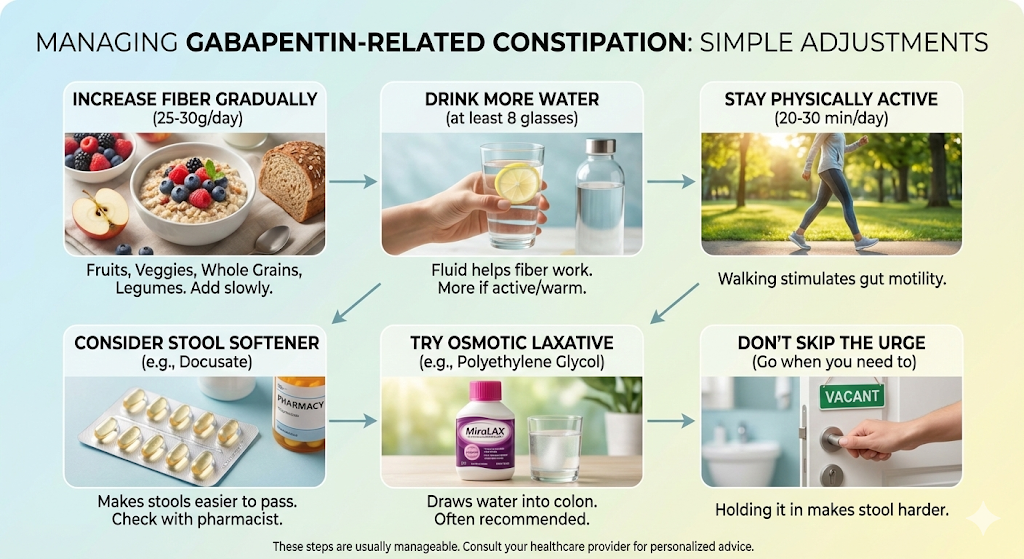
The good news is that gabapentin-related constipation usually manageable with straightforward lifestyle adjustments. Here are some steps that can help:
Increase your fiber intake gradually. Fruits, vegetables, whole grains, and legumes all add bulk to your stool and help move things along. Aim for 25 to 30 grams of fiber per day. Add it slowly to avoid bloating or gas.
Drink more water. Fiber works best when it has enough fluid to absorb. Try to drink at least 8 glasses of water a day, and more if you are physically active or live in a warm climate.
Stay physically active. Even a daily 20 to 30 minute walk can stimulate your gut motility and help prevent constipation. Regular movement keeps your digestive muscles engaged.
Consider a stool softener. Over-the-counter stool softeners like docusate sodium can make stools easier to pass without stimulating your bowel aggressively. They are generally safe for short-term use, but check with your pharmacist or doctor first.
Try an osmotic laxative if needed. Products like polyethylene glycol (MiraLAX) draw water into colon to soften stool. These are often recommended for medication-related constipation and are generally well tolerated.
Do not skip urge. When you feel need to have a bowel movement, go. Holding it in allows more water to be absorbed from stool, making it harder and more difficult to pass.
According to U.S. National Library of Medicine, training your bowels to maintain a regular schedule, eating high-fiber foods, and staying hydrated are most effective self-care strategies for preventing and managing constipation. You can find their full guidance on managing constipation here: Constipation Self-Care
If gentle methods like heat application also interest you, this article explains how warmth can help relax muscles involved in digestion: Can a Heating Pad Help With Constipation?
When Should You Talk to Your Doctor?
Mild constipation that responds to diet and hydration changes usually nothing to worry about. But there are situations where you should reach out to your healthcare provider:
- You have not had a bowel movement in three or more days despite trying self-care measures.
- You are experiencing severe bloating, abdominal pain, or nausea alongside constipation.
- You notice blood in your stool or rectal bleeding.
- Constipation started right after a dose increase and not improving.
- Otc remedies are not making a difference after a week or two.
Your doctor may adjust your gabapentin dose, suggest a different timing for taking medication, or recommend a prescription-strength option if needed. In some cases, switching to a different medication entirely may be best path forward. The important thing is to not suffer in silence, because this a solvable problem.
Bottom Line
Gabapentin can cause constipation by slowing down nerve signals that keep your digestive system moving. It is a recognized side effect, and it more likely at higher doses or when combined with other constipating medications. The good news that most cases respond well to simple changes like increasing fiber, drinking more water, staying active, and using gentle otc products when needed. If those steps are not enough, your doctor can help you find a solution that keeps your treatment on track without sacrificing your comfort.
