
Oseltamivir is one of most commonly prescribed antiviral medications for flu. It works by blocking an enzyme called neuraminidase, which influenza virus needs to spread inside your body. Most people tolerate it well. But like any medication, it can interact with certain drugs and vaccines.
Does Oseltamivir Interact With Many Medications?
The good news is that oseltamivir has a relatively low risk of drug interactions compared to many other medications.
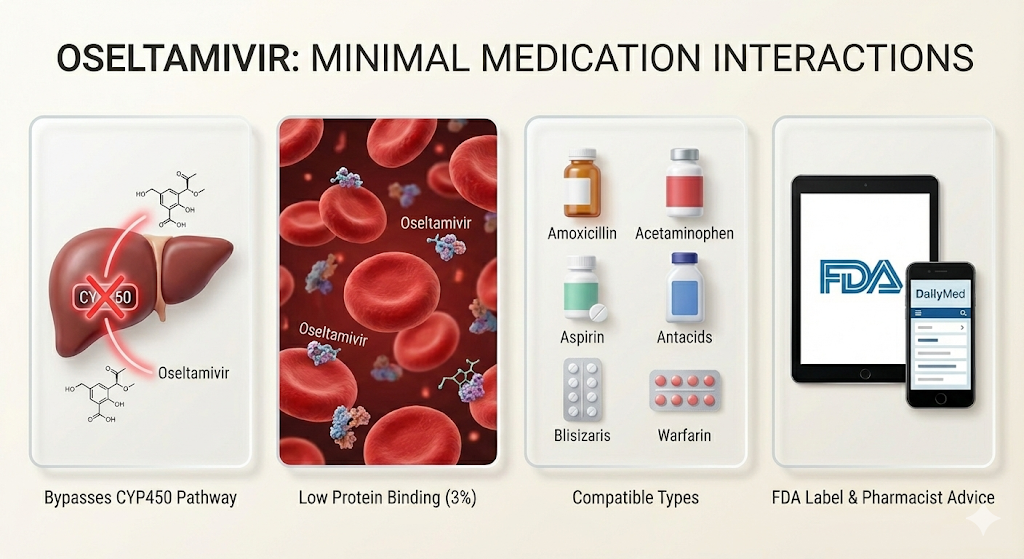
It does not go through cytochrome P450 system in liver, which is pathway where most drug interactions happen. Many common medications compete for these liver enzymes, but oseltamivir skips that process entirely. Instead, it gets converted into its active form by a different group of enzymes called esterases.
Its active form, oseltamivir carboxylate, also has very low protein binding at just 3%. That means it does not push other drugs off their binding sites in blood, which another common source of interactions.
According to the FDA-approved prescribing label available through DailyMed, no clinically relevant interactions have been observed when oseltamivir is taken alongside amoxicillin, acetaminophen, aspirin, cimetidine, antacids, rimantadine, amantadine, or warfarin.
If you are taking amoxicillin alongside oseltamivir for a secondary bacterial infection and want to understand how it clears from your body, this one on how long amoxicillin stays in your system may be helpful.
People also ask
Oseltamivir has a low risk of interactions because it avoids the liver enzymes that process many standard prescriptions. Most common medications have not shown clinically relevant interactions with it. Always double check your specific daily list with your pharmacist.
There is no requirement to space oseltamivir away from other medications due to the way it is absorbed and eliminated. You can take it at the same time as most other pills without reducing its effectiveness. Follow the dosing schedule provided by your doctor for the best results.
What About Probenecid?
Probenecid is a medication used to treat gout. Its one of few drugs with a measurable interaction with oseltamivir.
Probenecid blocks a kidney pathway called anionic tubular secretion. Oseltamivir carboxylate leaves body through this same route. When both are taken together, probenecid slows down clearance, leading to roughly double oseltamivir levels in bloodstream.
The safety margin for oseltamivir is wide enough that no dose adjustment is required. Still, if you take probenecid regularly, make sure your doctor knows before starting oseltamivir. They can monitor for increased side effects like nausea or headaches.
Can You Take Oseltamivir With Pain Relievers?
Yes; Acetaminophen and aspirin have both been studied alongside oseltamivir. Neither one changes how oseltamivir is absorbed, processed, or eliminated. You can safely take acetaminophen to manage fever and body aches while on oseltamivir.
If you are taking acetaminophen on an empty stomach because flu has reduced your appetite, these tips on how to handle that safely are worth reading.
Ibuprofen and naproxen have not been formally studied with oseltamivir in clinical trials. But based on how oseltamivir is metabolized, experts consider risk of interaction to be very low. These anti-inflammatory drugs go through liver enzymes that oseltamivir does not use.
Does Oseltamivir Interact With Flu Vaccines?
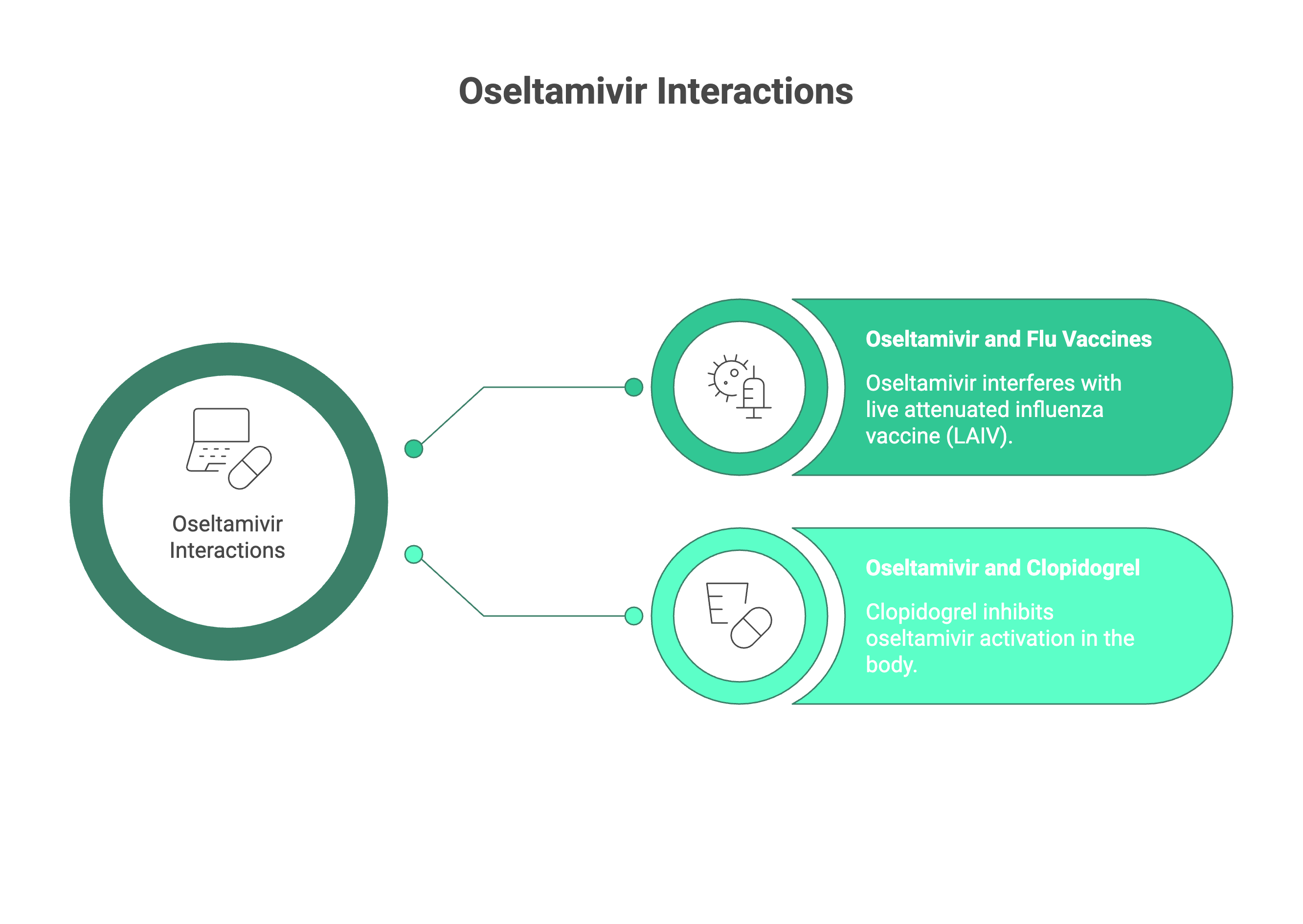
This is an important one. Oseltamivir can interfere with nasal spray flu vaccine, which is called live attenuated influenza vaccine (LAIV).
Because oseltamivir is designed to stop flu virus from replicating, it can also suppress weakened virus in LAIV. That weakened virus needs to replicate just enough to trigger an immune response. If oseltamivir blocks it, vaccine may not work as well.
The CDC recommends against giving LAIV within two weeks before or 48 hours after oseltamivir. If someone does receive LAIV during that window, CDC advises revaccination with a different type of flu vaccine like an inactivated or recombinant version.
Inactivated flu shots, which are standard injected vaccines, are not affected by oseltamivir. You can receive an inactivated flu vaccine at any time while taking oseltamivir.
People also ask
You can safely receive an injected, inactivated flu vaccine at any time while taking oseltamivir. These traditional shots do not rely on a live virus, so the antiviral medication will not interfere with them. You should avoid the nasal spray vaccine, however.
The nasal spray uses a weakened live virus that needs to replicate to trigger an immune response, and oseltamivir is designed to stop virus replication. The standard injected vaccine uses an inactivated virus that does not need to replicate to work. This fundamental difference is why only the nasal spray is affected.
What About Clopidogrel?
Clopidogrel is a blood thinner often prescribed to prevent blood clots. This interaction worth knowing about.
Oseltamivir is a prodrug. That means it needs to be activated in body before it can work. The activation happens through an enzyme called human carboxylesterase 1 (HCE1). Clopidogrel can inhibit this enzyme, which may slow down how quickly oseltamivir converts into its active form.
If conversion is reduced, antiviral effect may not be as strong. This interaction has been observed in lab studies. If you take clopidogrel daily, let your doctor know before starting oseltamivir. They may choose to monitor your response more closely or consider alternative antiviral options.
People also ask
Clopidogrel may slow down the activation of oseltamivir by inhibiting a specific enzyme in your body. While this has been observed in lab settings, the clinical impact on your flu recovery can vary. Your doctor can determine if this minor reduction is significant for your specific health needs.
You should never stop taking blood thinners like clopidogrel without explicit direction from your doctor. The risk of interrupting a heart medication far outweighs the potential for a minor interaction with an antiviral. Always seek medical guidance before changing your prescribed regimen.
Are There Any Rare Interactions to Be Aware Of?
A few less common situations deserve mention.
Vadadustat, a newer medication for anemia related to kidney disease, may increase oseltamivir levels by affecting a kidney transporter called OAT3. If both are used together, monitoring for increased side effects recommended.
Combining oseltamivir with another neuraminidase inhibitor like zanamivir generally not recommended. One clinical study found that using both together was less effective than using either one alone. The current guidance to use one neuraminidase inhibitor at a time.
People with kidney impairment also need adjusted doses because oseltamivir is cleared almost entirely by kidneys. If kidney function reduced, levels can build up and affect how the medication interacts with other drugs cleared same way.
What Should You Tell Your Doctor?
Before starting oseltamivir, share your full medication list with your doctor or pharmacist. That includes prescription drugs, otc medications, and supplements.
Pay special attention to mentioning probenecid, clopidogrel, kidney medications, and whether you have recently received or plan to receive nasal spray flu vaccine.
The Bottom Line
Oseltamivir is considered a well tolerated antiviral with a low overall risk of drug interactions. It does not go through liver pathways where most interactions occur, and it has been safely used alongside common medications like acetaminophen, aspirin, amoxicillin, and warfarin. The main interactions to watch for involve probenecid, clopidogrel, nasal spray flu vaccine, and kidney related concerns. If you are ever unsure about a combination, your pharmacist or doctor can help you sort it out quickly.
