
Your body can ache and feel exhausted for many reasons that have nothing to do with an infection. Stress, poor sleep, nutritional gaps, and even dehydration can leave you sore and drained without your temperature ever going up.
The absence of a fever does not mean nothing going on. It just means the cause is likely something other than a typical infection.
What Are Most Common Causes?
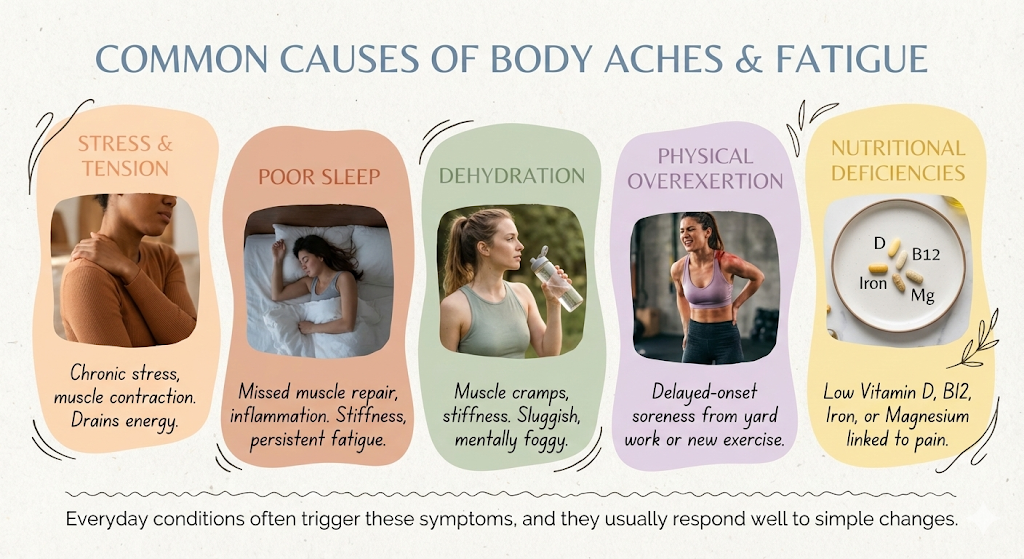
Several everyday factors can trigger body aches and fatigue together. These are the ones that affect people most often, and they usually respond well to simple changes.
Stress and tension are some of the biggest culprits. When you are under chronic stress, your body stays in a low-level "fight or flight" mode. Stress hormones keep your muscles partially contracted, creating soreness in your neck, shoulders, and back. That constant tension also drains your energy, leaving you tired even when you have not done anything physically demanding.
Poor sleep or disrupted sleep can make your whole body feel heavy and achy. Sleep is when your body repairs muscles, clears inflammation, and restores energy. If you are not getting enough quality rest, or if a sleep disorder like insomnia keeping you from deep sleep, your body misses out on that recovery time. The result is stiffness, soreness, and persistent fatigue that rest alone does not seem to fix.
Dehydration easy to overlook. Water plays a key role in muscle function and circulation. When your body does not have enough fluid, muscles can cramp, stiffen, and ache. You may also feel sluggish and mentally foggy. This especially common if you drink a lot of caffeine or simply forget to drink enough water.
Physical overexertion is another straightforward cause. If you did yard work, lifted something heavy, or tried a new exercise, your muscles may respond with delayed-onset soreness. This usually shows up 24 to 72 hours after activity and resolves within a few days.
Nutritional deficiencies can quietly cause body aches and tiredness. Low levels of vitamin D, vitamin B12, iron, or magnesium have all been linked to muscle pain and low energy. A simple blood test can identify them, and once corrected, many people notice a real difference.
Could It Be Something Beyond Everyday Causes?
Sometimes body aches and fatigue without a fever point to something that needs a closer look. These conditions are less common, but they are worth knowing about, especially if your symptoms have been lingering.
Fibromyalgia is a chronic condition that causes widespread pain, tenderness, and deep fatigue. People with fibromyalgia often describe feeling achy all over, and tiredness does not improve with sleep. The exact cause is not fully understood, but it involves way nervous system processes pain signals. If you have been dealing with unexplained body-wide pain for weeks or months, this worth bringing up with your doctor.
Chronic fatigue syndrome, also called myalgic encephalomyelitis, causes extreme tiredness that does not get better with rest. It often comes with muscle pain, joint aches, headaches, and difficulty concentrating. This condition may develop after a viral illness and requires medical evaluation to diagnose.
Thyroid problems can cause both aches and fatigue. An underactive thyroid, called hypothyroidism, slows down your metabolism. This can lead to muscle stiffness, joint pain, weight gain, and a constant feeling of tiredness. A blood test measuring your thyroid hormone levels is all it takes to check for this.
Autoimmune conditions like lupus, rheumatoid arthritis, or polymyalgia rheumatica cause your immune system to mistakenly attack your own tissues. This creates inflammation in muscles and joints, leading to pain and exhaustion. Morning stiffness lasting more than 30 minutes one sign that an autoimmune issue might be involved.
Medication side effects are another possibility. Cholesterol-lowering statins are known to cause muscle pain in some people. Certain blood pressure medications and antivirals can also contribute. If your symptoms started after beginning a new prescription, let your doctor know.
People also ask
Stress-related aches usually fluctuate with your daily pressure and improve with relaxation, while chronic conditions often persist regardless of your stress levels. If your pain is accompanied by joint stiffness or weight changes, it may point to an underlying medical issue. Keep a journal to see if your symptoms correlate with stressful events or occur randomly.
Some common medications, including statins and blood pressure drugs, are known to cause muscle pain and fatigue as side effects. If these feelings started shortly after beginning a new treatment, there could be a direct link. You should check the patient information leaflet for common adverse reactions.
What Can You Do to Feel Better?
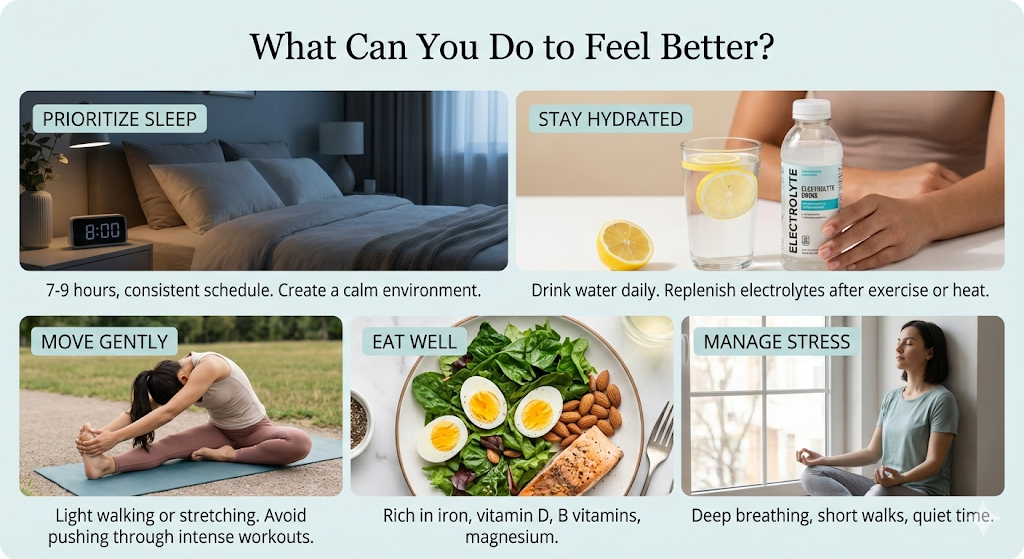
If your aches and tiredness are related to everyday causes, a few practical steps can make a meaningful difference.
- Prioritize sleep. Aim for seven to nine hours each night. Keep a consistent sleep schedule and create a calm environment for rest.
- Stay hydrated. Drink water throughout day. If you exercise or spend time in heat, add an electrolyte drink to help replenish minerals.
- Move gently. Light activity like walking or stretching can ease muscle stiffness and boost your energy. Avoid pushing through intense workouts when your body is already sore and tired.
- Eat well. Focus on foods rich in iron, vitamin D, B vitamins, and magnesium. Leafy greens, lean proteins, eggs, nuts, and fortified foods can all help fill nutritional gaps.
- Manage stress. Deep breathing, short walks, or even a few minutes of quiet time can help calm your nervous system and reduce muscle tension.
These changes may seem simple, but they target most common root causes of body aches and fatigue.
People also ask
Light movement like walking or stretching is often beneficial because it improves circulation and prevents your muscles from becoming even stiffer. The goal is to stimulate blood flow without triggering additional strain. Pay close attention to how your body responds to small amounts of activity.
Addressing nutritional gaps like low vitamin D or iron can often resolve fatigue that is caused by deficiencies. While diet is a powerful foundation for health, severe symptoms might indicate an issue that cannot be corrected by food alone. Start by evaluating your intake of iron and B vitamins to see if you notice a gradual shift in energy.
When Should You See a Doctor?
If your body aches and fatigue have lasted more than a couple of weeks, or are getting worse, talk to your healthcare provider.
You should also seek medical attention if you notice any of following alongside your symptoms:
- Unexplained weight loss
- Swollen or stiff joints, especially in morning
- Night sweats
- Shortness of breath or chest pain
- Severe headaches
- Weakness in your limbs
- Symptoms that interfere with your ability to work or handle daily tasks
Your doctor can run blood tests to check for nutritional deficiencies, thyroid problems, inflammatory markers, and other underlying conditions. Getting answers early means getting right support sooner.
People also ask
When symptoms last longer than two weeks or begin to interfere with your ability to perform daily work and personal tasks, it is time to seek professional advice. Significant physical changes, such as morning stiffness or weight loss, also signal that you need a clinical assessment. Do not feel that your concerns are trivial if they impact your quality of life.
Morning stiffness that lingers for more than thirty minutes can be a hallmark sign of inflammation commonly linked to autoimmune conditions like arthritis. If your joints feel heavy or immobile when you first wake up, this is a distinct symptom worth noting. Track how long the stiffness lasts each day to share with your provider.
Your Body Deserves to Be Heard
Feeling achy and tired without a clear reason can be frustrating. But your symptoms are real, and they deserve attention. Whether the answer turns out to be something simple like better sleep and hydration, or something that needs medical care, understanding cause is first step toward feeling like yourself again.
