
Health Library
Does Norethindrone Cause Weight Gain? Here Is What to Expect
February 19, 2026
Question on this topic? Get an instant answer from August.
If you have started norethindrone and noticed number on scale creeping up, you are not alone in wondering whether medication is to blame. The short answer is that some people do gain a small amount of weight on norethindrone, but it is usually mild and often related to water retention rather than actual fat gain.
What Is Norethindrone and How Does It Work?
Norethindrone is a synthetic form of progesterone. Doctors prescribe it as a progestin only birth control pill ( mini pill), and also to treat endometriosis, abnormal uterine bleeding, and missed periods.
Because it contains only progestin and no estrogen, it is often recommended for people who cannot take combination pills. This includes those with a history of blood clots, migraines with aura, or those who are breastfeeding.
Does Norethindrone Actually Cause Weight Gain?
Weight gain is listed as a possible side effect of norethindrone. But clinical evidence tells a more nuanced story than a simple yes or no.
A large review of 22 studies looking at progestin only contraceptives found that mean weight gain was less than 2 kg over 6 to 12 months for most users. That is roughly 4 to 5 pounds. The review also found that women using other birth control methods or no hormonal method gained about the same amount of weight over time. This suggests that some weight gain may simply be a natural part of life, regardless of what medication you are taking.
One smaller study specifically looking at norethindrone found an average weight gain of about 3.6 pounds. But here key detail. That weight came on quickly after starting medication and resolved quickly after stopping it. This pattern points to water retention rather than fat gain.
So while norethindrone can cause scale to go up slightly, its unlikely to cause significant, lasting weight gain for most people.
Why Does Scale Go Up on Norethindrone?
If it is not fat, then whats going on? There are a few reasons your body may hold onto extra weight.
The most common reason is fluid retention. Progestins like norethindrone cause your body to hold onto more water than usual. This shows up as bloating, puffiness, and a slight bump on scale. It often feels like period bloating turned up a notch.
Another factor is appetite changes. Hormonal shifts can affect how hungry you feel. Some people eat a bit more without realizing it.
Mood changes may also play an indirect role. If norethindrone affects your energy or mood, you might move less or reach for comfort foods more often. That is completely normal.
If you have been feeling unusually tired or achy since starting your medication, understanding what might be behind those symptoms can offer some reassurance.
How Much Weight Gain Is Normal?
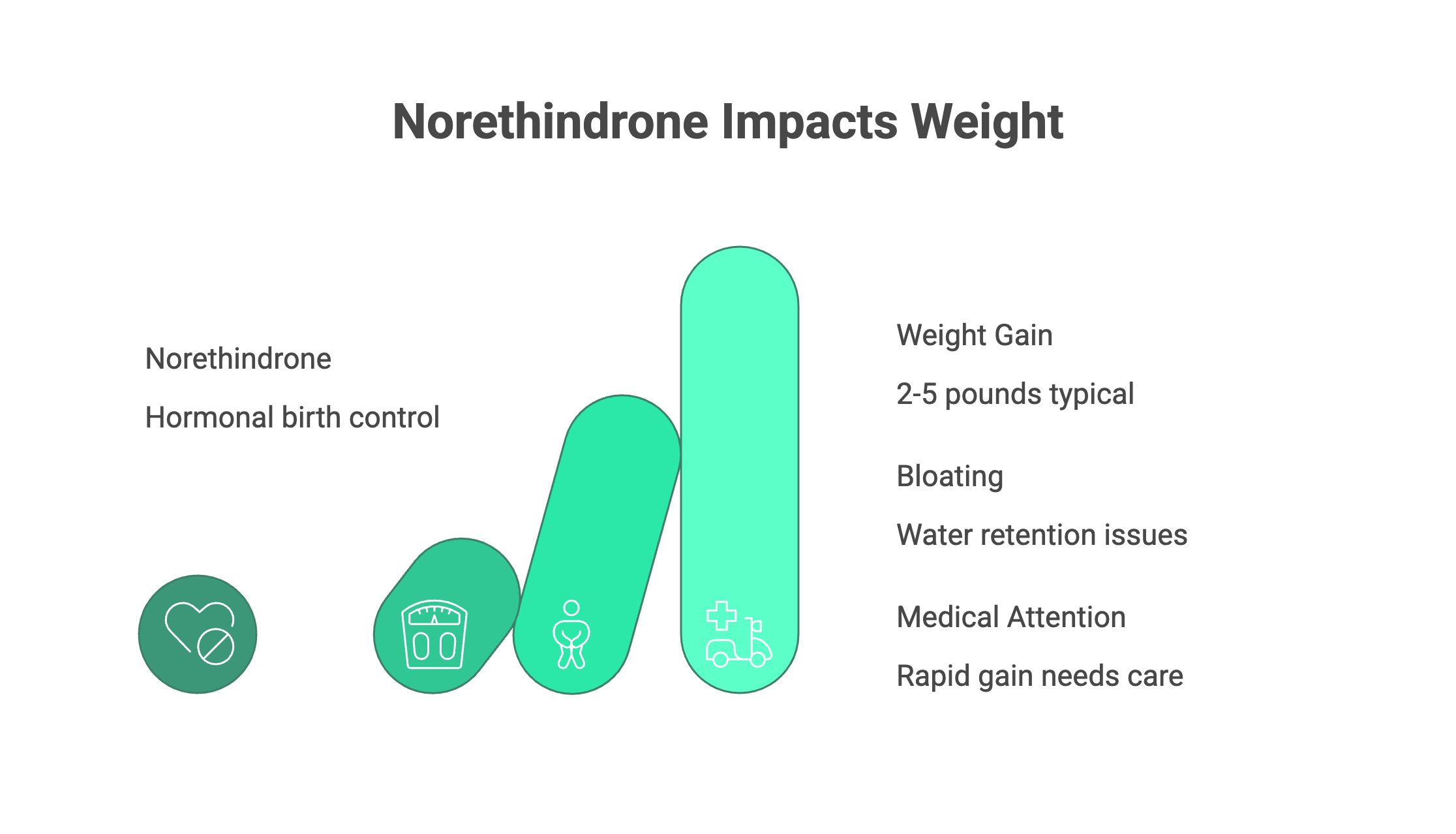
For most people, any weight gain from norethindrone modest. Research suggests 2 to 5 pounds is typical, usually water weight that fluctuates rather than steadily climbs.
If you are gaining significantly more, like 10 or 15 pounds quickly, other factors are worth considering. These include changes in diet, stress, sleep, thyroid function, or other medications. Your doctor can help sort through what might be contributing.
Rapid weight gain with unusual swelling, severe headaches, or vision changes needs prompt medical attention.
What Can You Do to Manage Weight on Norethindrone?
If bloating and weight changes are bothering you, there are practical steps that can help:
- Stay well hydrated. Drinking plenty of water actually helps your body release excess fluid.
- Reduce sodium in your diet. Salt encourages water retention. Cutting back on processed foods can ease bloating.
- Move your body regularly. Even light walking helps with fluid retention, mood, and energy.
- Track your weight over weeks rather than days. Daily fluctuations are normal. A longer view gives a clearer picture.
If bloating significant, your doctor may suggest a mild diuretic. But most people find simple lifestyle adjustments make enough difference.
Does the Dose of Norethindrone Matter?
Yes, dose can make a difference. For birth control, typical dose is 0.35 mg daily. For endometriosis or abnormal bleeding, it can go up to 15 mg daily.
Higher doses tend to be more strongly linked to side effects like bloating and weight changes. If you are on a higher dose and noticing uncomfortable weight gain, talk to your doctor. There may be room to adjust or explore other options.
If you have been curious about how hormonal changes can affect your body in unexpected ways, this article on what your skin breakouts might be telling you could be a useful read.
Should You Stop Norethindrone Because of Weight Gain?
For most people, mild weight gain or bloating not a reason to stop. The benefits, whether preventing pregnancy, managing endometriosis, or controlling heavy bleeding, often outweigh a few extra pounds of water weight.
That said, your experience matters. If weight changes are affecting your quality of life, talk to your doctor. There are other progestin only options and non hormonal alternatives. You deserve a treatment plan that works for your body.
The FDA label for norethindrone lists weight changes as a known side effect but classifies them as generally mild.
The Bottom Line
Norethindrone can cause some weight gain, but for most people it is small, temporary, and related to fluid retention. The clinical evidence does not support norethindrone as a major driver of lasting weight gain. Simple strategies like staying hydrated, watching sodium intake, and staying active can help you feel more comfortable while on the medication. And if something feels off, your doctor is always best person to help you figure out the next step.
Health Companion
trusted by
6Mpeople
Get clear medical guidance
on symptoms, medications, and lab reports.

download august