
If your skin has started feeling different since you began Mounjaro, you are not imagining things. Skin sensitivity is a real side effect that some people experience. It can show up as injection site redness, dry skin, or even a sunburn-like feeling with no visible cause.
Most skin reactions are mild and manageable. Let's go through what can happen, why it happens, and how to stay comfortable on your treatment.
What Kinds of Skin Sensitivity Can Mounjaro Cause?
Mounjaro (tirzepatide) can affect your skin in a few different ways. The most common is a localized reaction at injection site. But some people notice changes across other parts of their body too.
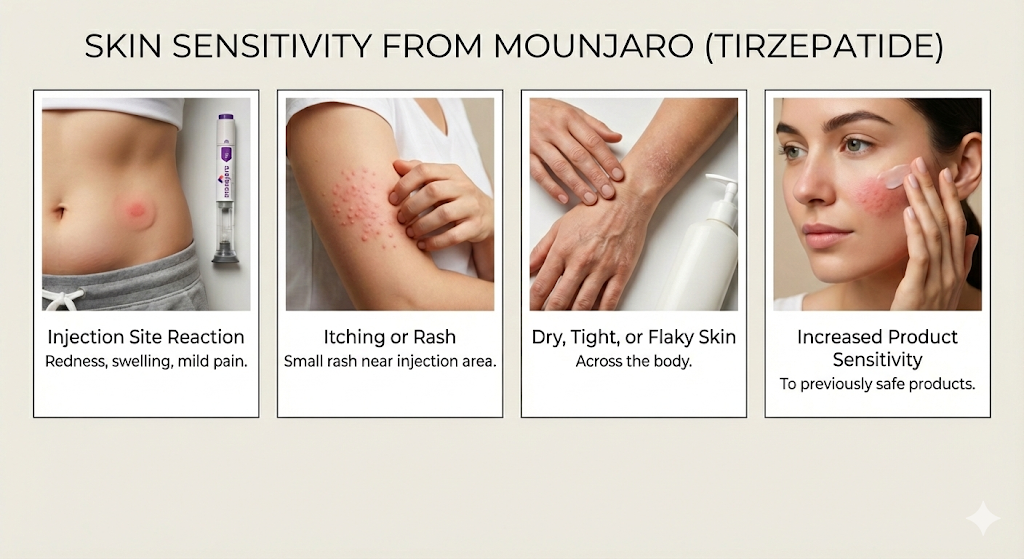
Here skin effects that come up most often:
- Redness, swelling, or mild pain a injection site
- Itching or a small rash near injection area
- Dry, tight, or flaky skin across body
- Increased sensitivity to products that never bothered you before
Clinical trials show that about 3% of users experience injection site reactions. These usually appear within hours, look like a red or pink patch, and fade on their own within a few days. Some people also notice mild bruising, which is less common but still harmless.
If you already live with eczema or psoriasis, you may notice flare ups. Changes in immune response and reduced food intake can sometimes tip balance for sensitive skin.
Why Does Mounjaro Make Your Skin Sensitive?
There are a few reasons this happens. Understanding them can help you feel less worried.
First, Mounjaro is delivered through injection. Any time a needle break skin, your immune system responds with a small inflammatory reaction. That is redness, warmth, and tenderness you feel. For most people, this calms down quickly.
Second, Mounjaro reduces appetite significantly. When you eat and drink less, mild dehydration can happen without you realizing it. This shows up as dryness, tightness, and flaking on your skin.
Third, some people develop a mild immune sensitivity to the tirzepatide peptide itself. Your body may recognize it as foreign and mount a small allergic type response. This can appear as hives, itching, or a delayed rash 48 to 72 hours after injection. A published case report found that anti-drug antibody formation may play a role in these reactions.
Can Mounjaro Cause a Sunburn Feeling Without a Sunburn?
This is one of the more puzzling effects some people report. Your skin feels raw or sunburned, but there is no redness or rash when you look.
Doctors call this allodynia or dysesthesia. In simple terms, your nerves send pain signals in response to things that normally would not hurt. Clothing brushing against your skin might sting. Light touch can feel uncomfortable. This often shows up after a dose increase or during early treatment.
A recent medical report documented this in a patient on highest Mounjaro dose. The burning sensation affected entire body and resolved whe medication was stopped. This reaction appears to be dose dependent and often eases as your body adjusts.
If you experience nerve related skin sensitivity, talk to your doctor. They may suggest slowing your dose increase or adjusting your plan.
If you have been dealing with unexplained body aches alongside these changes, learning what might be behind those symptoms can offer helpful context.
How Can You Manage Skin Sensitivity on Mounjaro?
There are practical steps you can take to reduce discomfort and protect your skin.
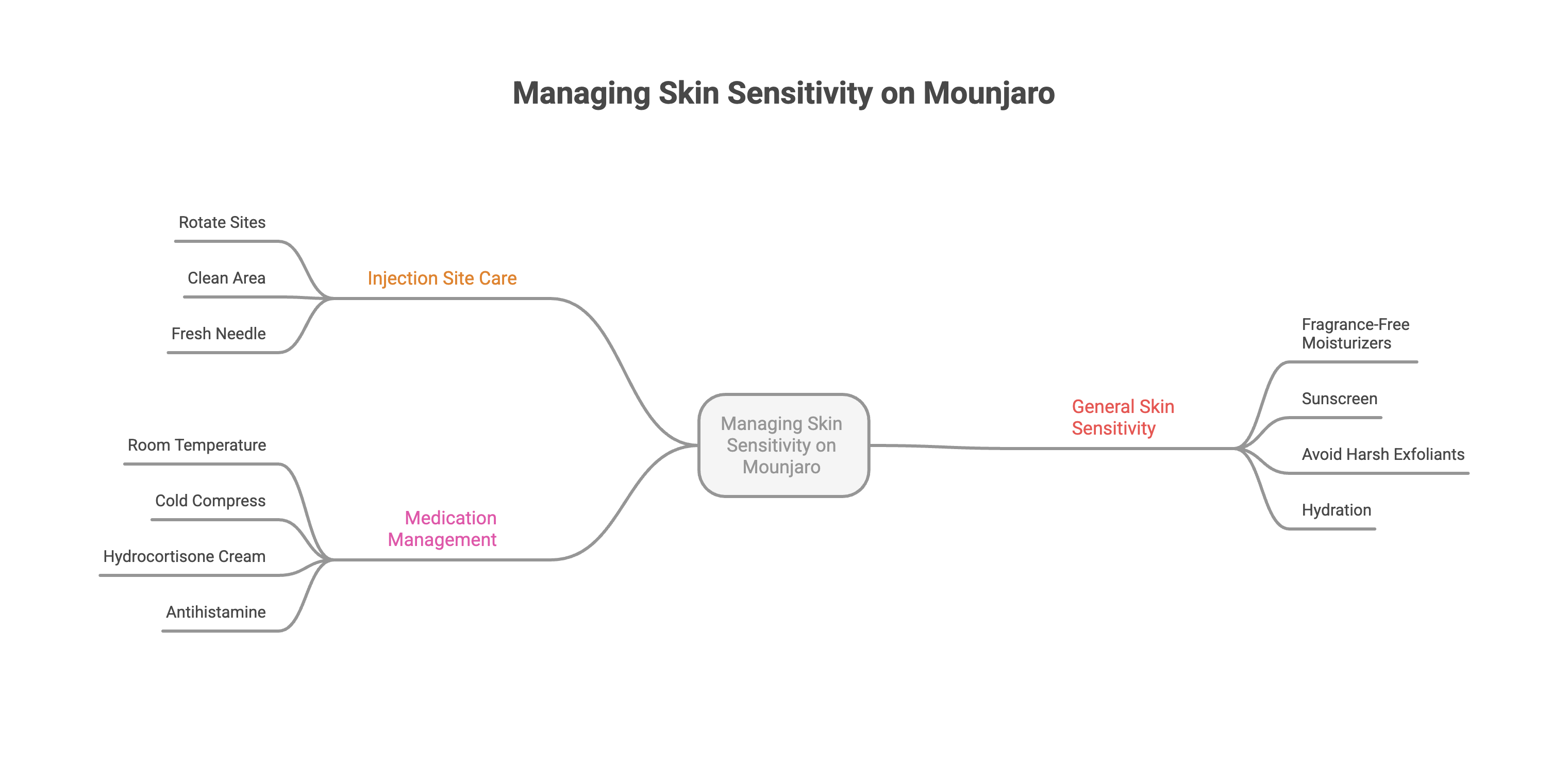
For injection site care:
- Rotate injection sites between stomach, thigh, and upper arm. Wait at least one week before reusing the same spot.
- Clean the area with an alcohol wipe and use a fresh needle every time.
- Let pen reach room temperature for 30 minutes before injecting. Cold medication can sting more.
- Apply a cold compress for 10 to 15 minutes after injecting if you notice redness.
For general skin sensitivity, keep your routine simple. Use fragrance free moisturizers daily. Apply sunscreen when going outside. Avoid harsh exfoliants or retinol if your skin feels reactive. Drink plenty of water throughout day to counteract dehydration from reduced appetite.
Otc hydrocortisone cream can ease mild itching. An antihistamine may help with hives or widespread itching. Check with your doctor before adding anything new.
When Should You Call Your Doctor?
Most skin reactions are harmless and settle on their own. But there are situations where you should reach out to your provider.
Contact your doctor if you notice:
- A rash that spreads beyond injection site or keeps getting worse
- Hives covering large areas of your body
- Swelling of your face, lips, tongue, or throat
- Difficulty breathing along with skin symptoms
- Burning or nerve pain that does not improve after several weeks
Severe allergic reactions like anaphylaxis are very rare. They affect fewer than 1% of users. But they require immediate medical attention. The FDA prescribing information for tirzepatide highlights these warnings.
If your skin has been acting up in other ways too, understanding what breakouts in different areas of your face might mean can be worth a read.
Does Skin Sensitivity Mean You Should Stop Mounjaro?
For most people, no. Mild injection site reactions and temporary skin changes are a normal part of adjusting to medication. They usually improve within first few weeks as your body gets used to tirzepatide.
However, if your reactions are severe, spreading, or accompanied by breathing difficulty or facial swelling, those need medical evaluation right away. Your doctor can help you decide whether to continue at same dose, lower your dose, or try a different treatment option.
Your comfort matters throughout this process. With right care and open communication with your provider, most people find a way to manage skin sensitivity and continue their treatment successfully.
